

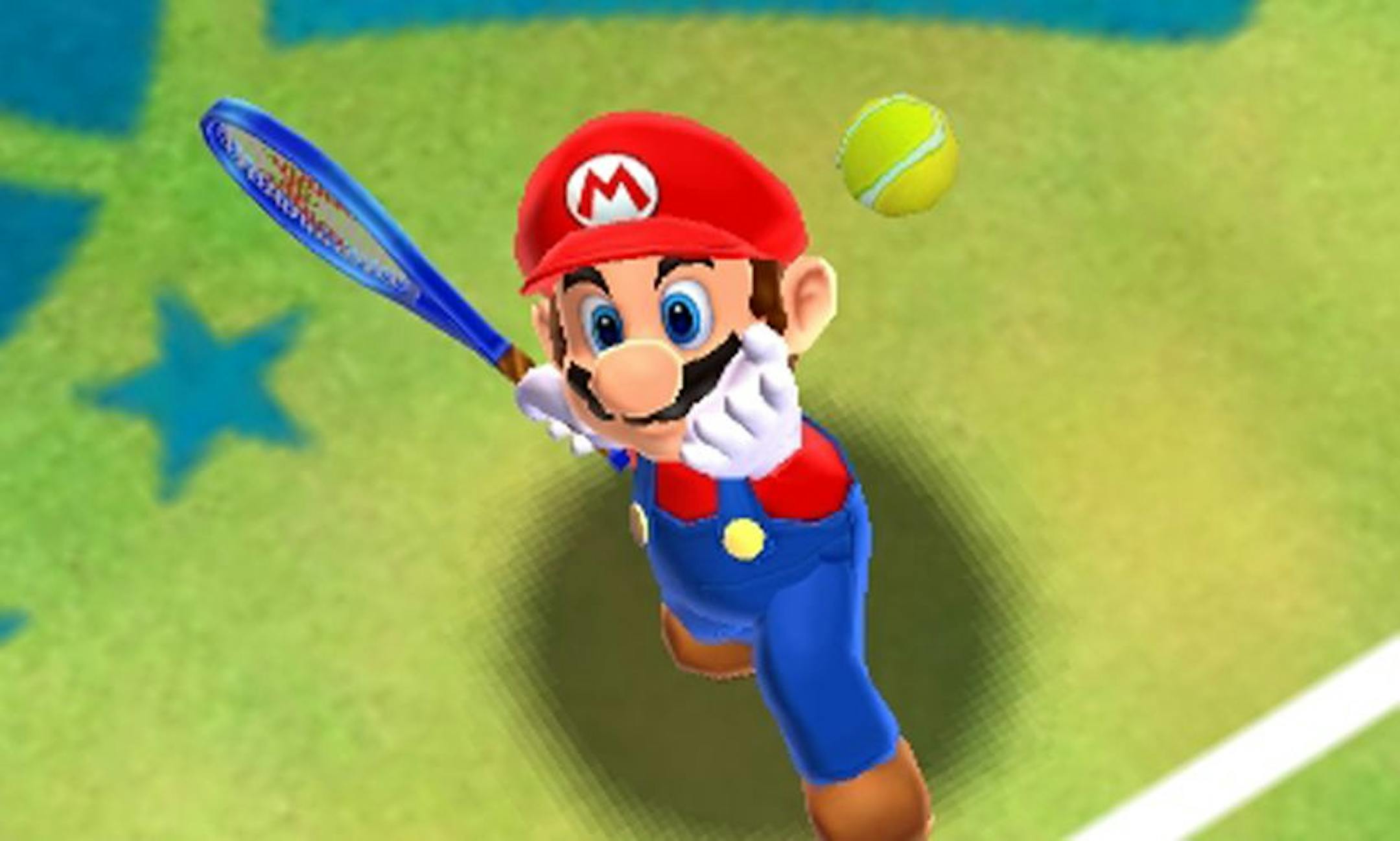
At its core and where it counts most, "Mario Tennis Open" has a lot in common with the preceding six games that had some variation of "Mario Tennis" in their titles. For many, that's probably all that matters.
In terms of the finer game play details -- control responsiveness, A.I. competency and the balance struck between pure tennis and the fantastical nature of the "Super Mario" universe -- it's the most polished game of tennis Nintendo has published since the Nintendo 64 got its version 12 years ago.
Or rather, it will be once you go into the options screen, select "Gyro Sensor" and, perhaps regretfully, disable it.
Along with the overdue addition of online play, "Open's" neatest new trick might be the ability to dynamically change the camera angle by holding the 3DS differently. Holding the 3DS flat and looking down at it produces an overhead view of the court, while holding it upward and looking forward toward the screen switches, appropriately, to a behind-the-back perspective.
Problem is, "Open" degenerates into a mess when the behind-the-back view is active. The gyroscope allows you to tilt the 3DS to tweak the camera's horizontal angle, but it also handles shot aim (which the circle pad capably handles by itself in the top-down view). The circle pad can still be used to control your player's position on the court, but whenever you aren't using it, the game automatically moves your player for you.
Compared with the top-down view's classically simple controls, the weird mix of motion, auto and traditional controls is a clumsy mess. And because "Open's" flimsy options screen makes the dynamic perspective a package deal with all those control conditions, you might be best off disabling the whole thing completely. There's no way to have complete control while dynamic camera control is active.
Perhaps fortunately (although not really), "Open's" use of stereoscopic 3-D is so tepid during game play that you're not missing much by disabling the feature. The 3-D pops beautifully during menus and replays, so it's clearly a conscious choice, but it's a puzzling one given the obvious applications for 3-D in a game where a ball flies at you at a fast speed.
The nullification of those features leaves us, for better or worse, in pretty much the same place "Mario Tennis" always has been.


