

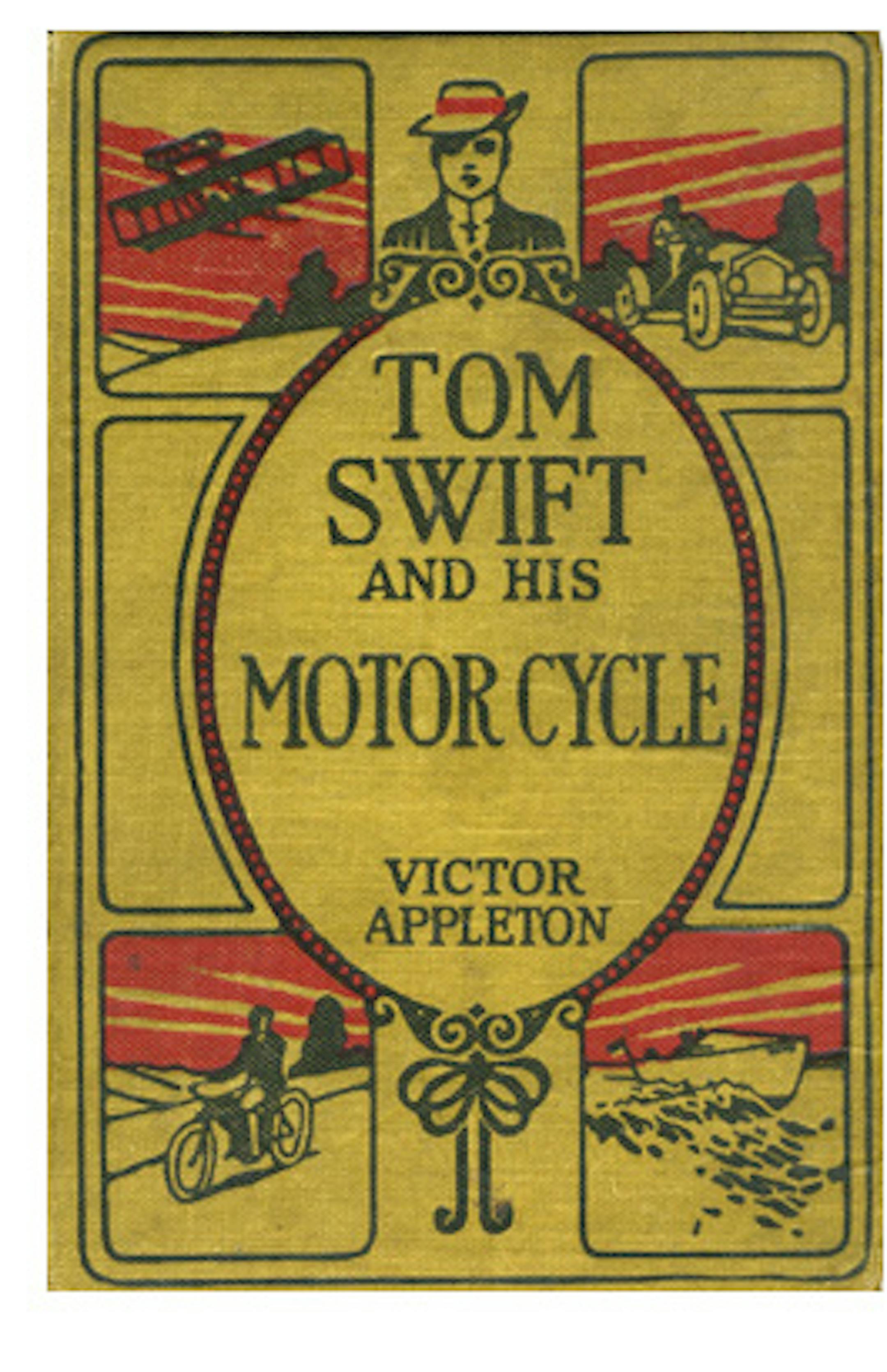
Here's a look at the undying machine behind teen serialized novels. Atlantic:
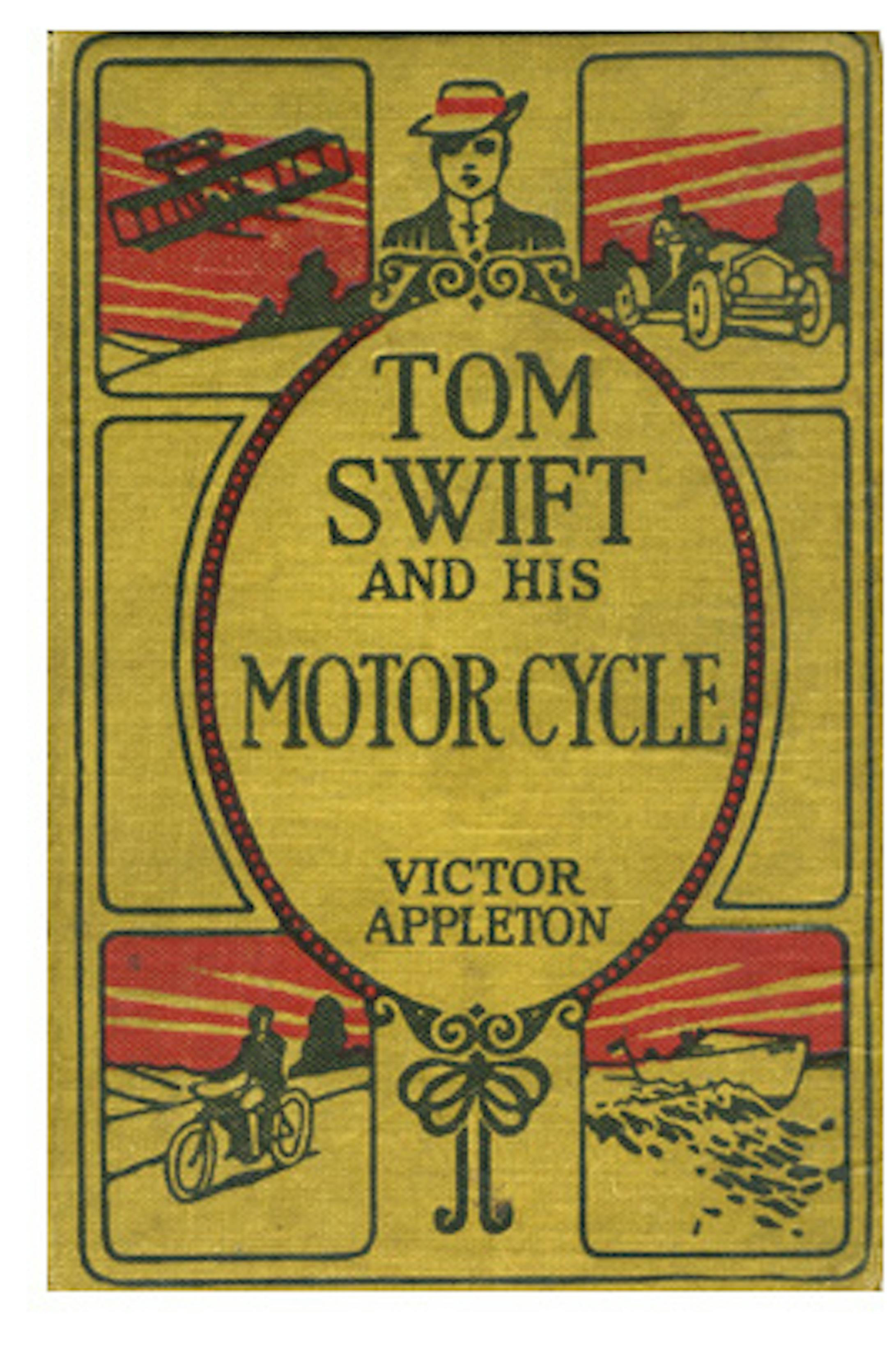
Hey, let's not forget Victor Appleton. That was the name of the guy who wrote the Tom Swift books. Victor Appleton II was the name they slapped on Tom Junior's series, and I remember those well.
When I was a kid I couldn't figure out why they used fictional countries. Same with "Mission: Impossible." The USSR would be insulted? Who cared? Anyway, the wikipedia article says "The Tom Swift books have been credited with laying the foundations for success of American science fiction and with establishing the edisonade (stories focusing on brilliant scientists and inventors) as a basic cultural myth." Well . . . no. They may have reinforced the idea, but Tom Swift came along in 1910, decades after Frank Reade. You know, the inventor of this thing:
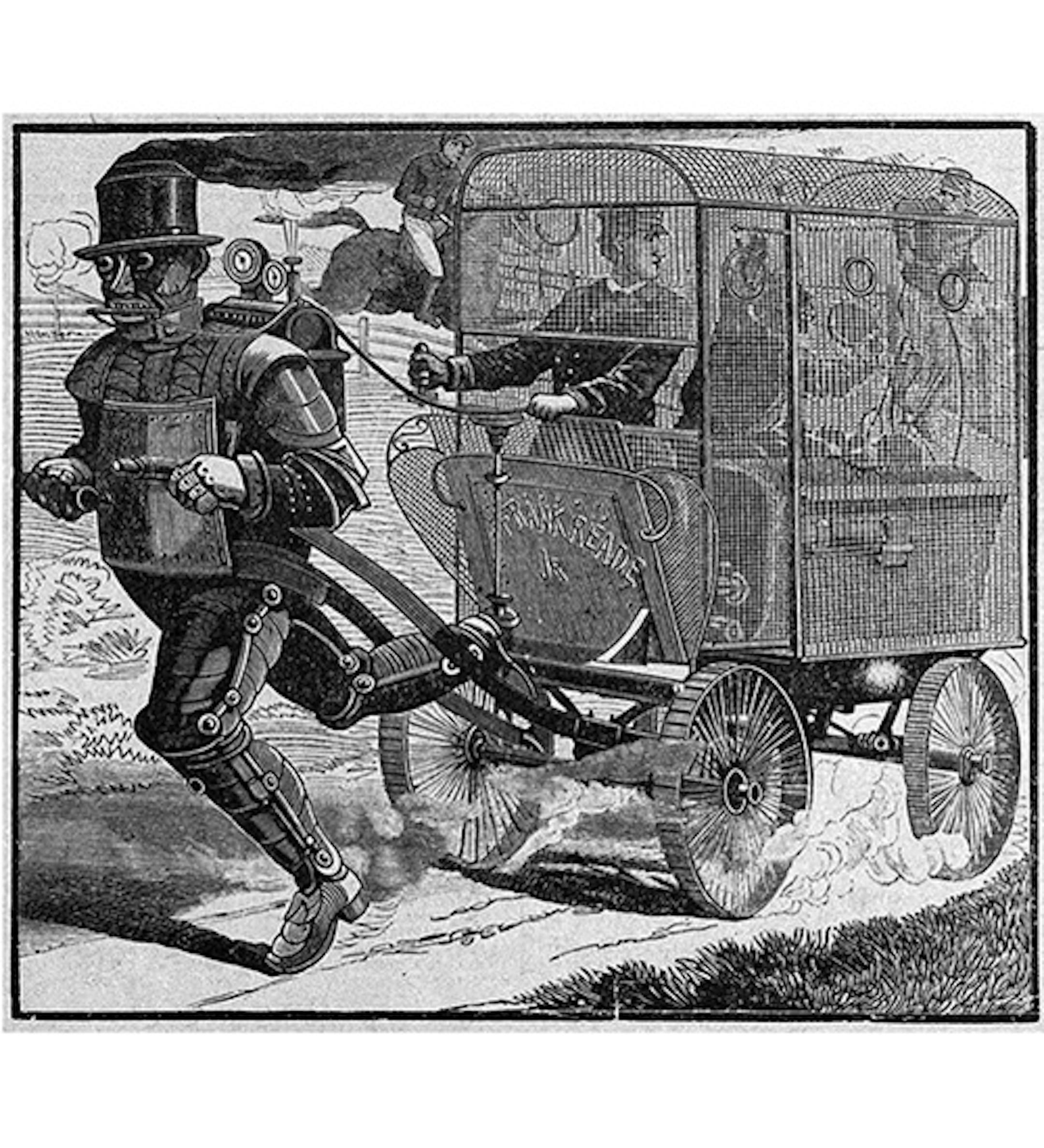
He was literally the father of the genre: after a while they started a Frank Reade Jr. series, and steam-powered men and horses gave way to electrical miracles. Tom Swift grew out of those books.
HELL ON EARTH Conor Friesdorf has a great piece in the Atlantic about the moral quandaries of uploading consciousness to computers. Would we punish Hitler for 6 million years? Or:
It's like consigning Zod to the Phantom Zone.
ART This has bothered me for a long time. There are some old games I'd love to play again, but you just can't. Do companies feel any obligation to keep their stories and plays from vanishing forever, with only a few YouTube clips and screenshots as evidence they ever existed? You know the answer to that. The vast, unplayable history of video games, on BoingBoing.


