

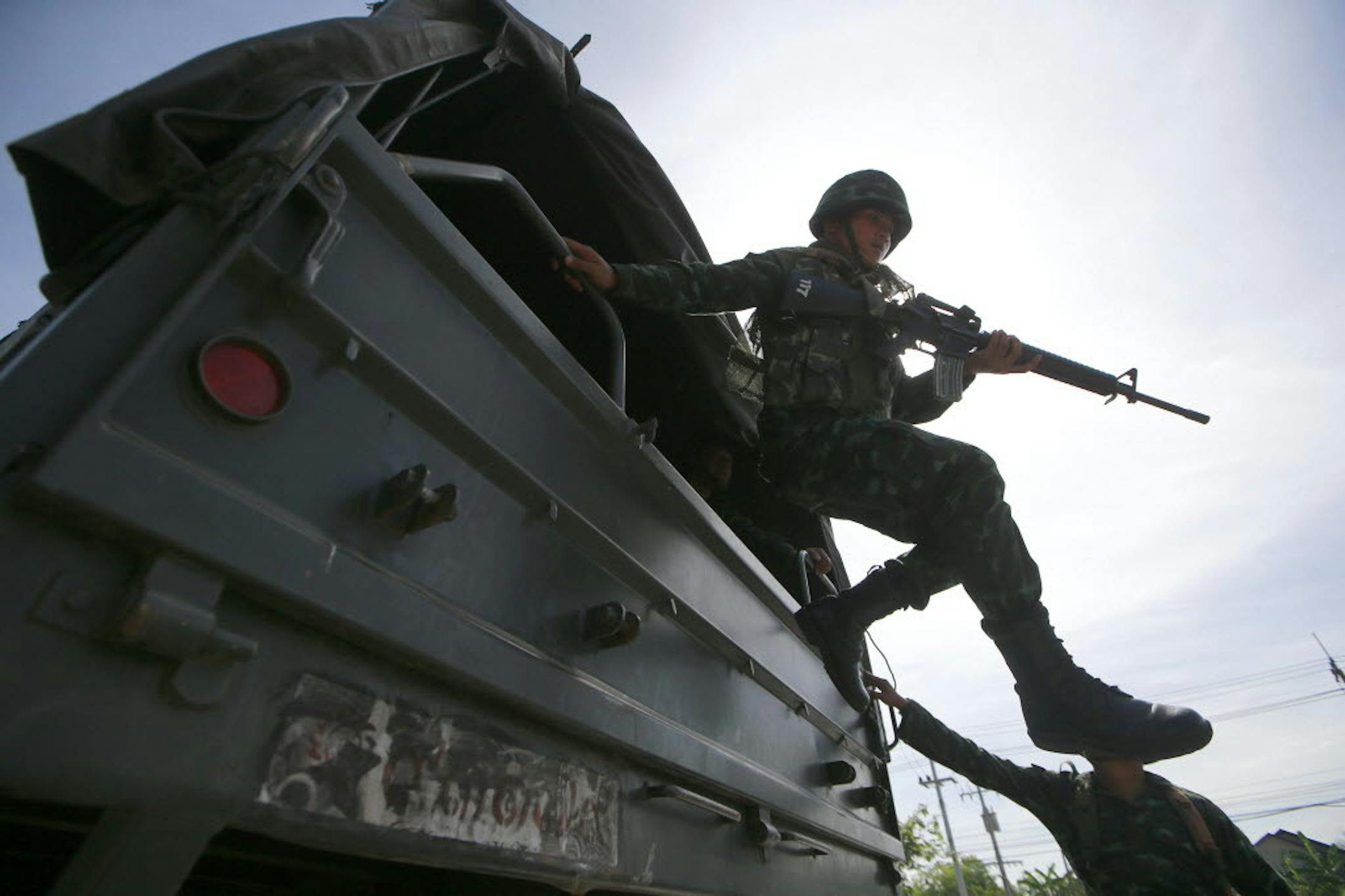
BANGKOK — Thailand began its second day under martial law Wednesday with little visible military presence on the streets of Bangkok as residents tried to make sense of the dramatic turn of events after six months of anti-government protests and political turmoil.
Several meetings were planned behind closed doors among senior government officials, opposition party leaders, the Election Commission and others a day after the country's powerful army chief invoked the military's expanded powers and issued more than a dozen edicts that included broad powers of censorship over the media, the Internet and vaguely defined threats to prosecute opponents.
But around Bangkok, there was little sign of any change, and most soldiers that had occupied key intersections around the capital had withdrawn. People went about their work normally, students went to school, and the traffic was snarled as it would be any other weekday in this bustling city.
"After 24 hours of martial law, I have not spotted a single soldier," said Buntham Lertpatraporn, a 50-year-old vendor of Thai-style doughnuts in the capital's central business district along Silom Road. "I've only seen soldiers on TV."
"My life has not changed at all," he said. "But in my mind I feel a little frightened, because I don't know how it will end."
The army chief Gen. Prayuth Chan-Ocha provided little clarity or a path forward during a press conference Tuesday amid speculation both at home and abroad that the declaration of martial law was a prelude to a military coup.
Prayuth, who is known to be gruff with the media, deflected questions about the likelihood of a coup with flippant answers that added to the confusion. Asked if a coup was taking shape, he replied: "That's a question that no one is going to answer."
Asked if the army was keeping in contact with the government, he answered: "Where is the government right now? Where are they now? I don't know."


