

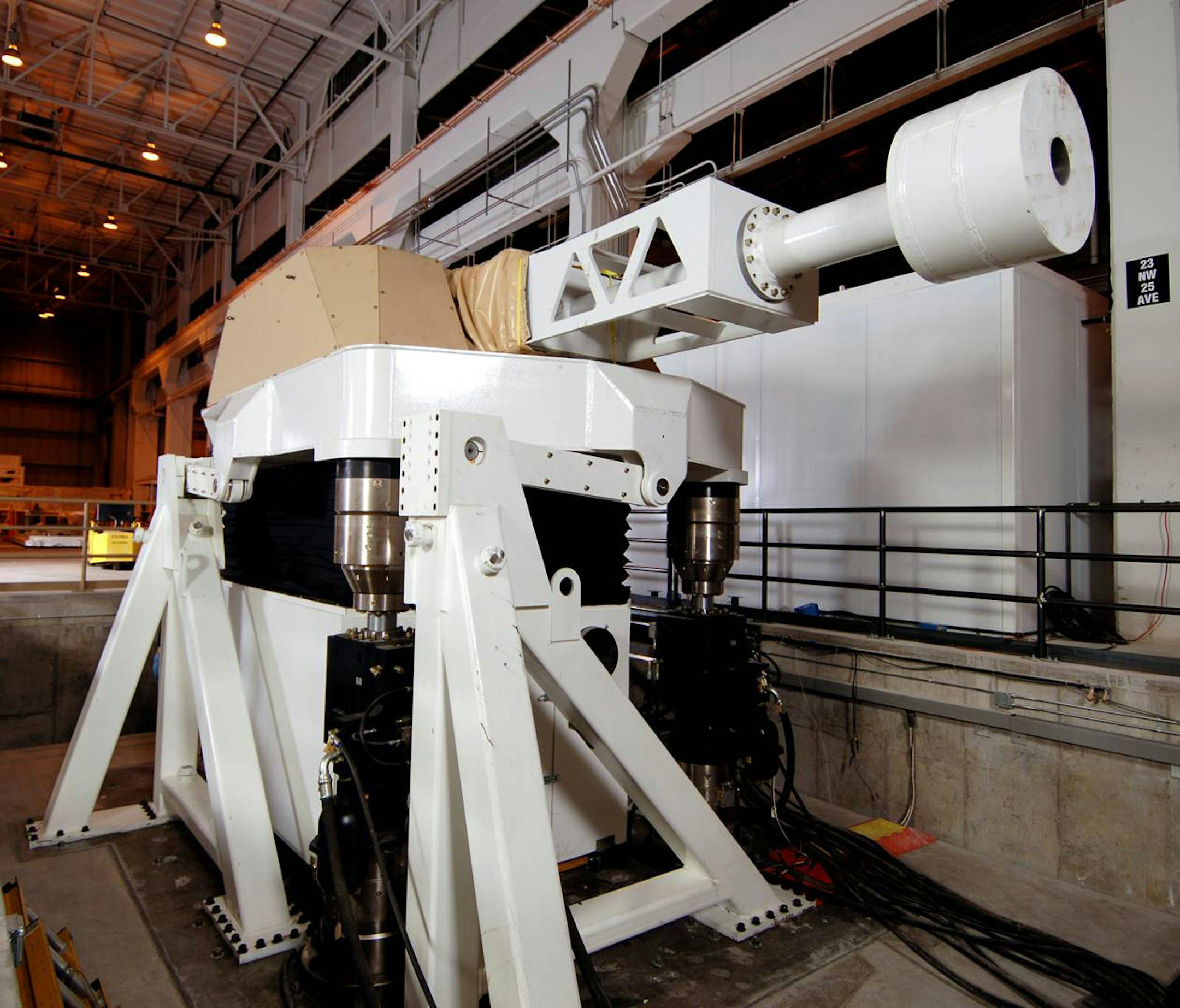
Three towering jackhammers shook workers to the core as they gyrated BAE Systems' new 20-ton cannon through its 10,000th mile of "ruggedization" testing last week inside the company's Armament Systems plant in Fridley.
The first-of-its-kind vibration table has "shaken the snot out" of BAE's revolutionary Non-Line-of-Sight cannon (NLOS) prototype since October, in a test meant to simulate the rigors of battle, said BAE principal project engineer Deepak Bazaz.
Four years of engineering, data collection and refinement have led some 300 BAE workers in Fridley to this point -- final tests for every ounce of the massive machine with simulators that were designed and built on site.
Come June 14, the first cannon prototype will be lifted out of its concrete vibration room, mated with its vehicle chassis and rolled out of the factory and to the Army, which intends to use it to phase out traditional howitzers. Other prototypes will get turned over to the Army before the end of the year.
Combined, BAE's hefty robotic cannon/vehicle will weigh 27 tons, self-load, target and fire 100-pound shells with the mere press of a button by soldiers inside an armored cab. That's a vast improvement over the manual hoisting of shells soldiers must do today while exposing themselves to potential enemy fire. If all goes well, the NLOS beast will win BAE a $1 billion contract, prevent soldier death and injury and automate the grueling, antiquated shell-loading process that's changed little in 100 years.
But first, more tests
Just days ago, a handful of engineers dashed from one end of BAE's enormous plant, past platform after platform armed with 20-foot gun barrels to get to the far end of the factory, where the jackhammers were going at it.
"It's not just the jackhammers going off randomly," Bazaz explained, yelling above noise that resembled an airplane screaming into takeoff. "These simulate real driving conditions," terrain laden with rocks, trenches, and jarring enemy blasts. At the same time, huge ducts alternately pumped in subzero temperatures and roasting heat on the testing area.


![Attendees of Frostbike made their way through the convention Saturday at the Quality Bike Products campus in Minneapolis. ] (AARON LAVINSKY/STAR TRIBUNE) aaron.lavinsky@startribune.com Frostbike 2016 was held at the Quality Bike Products Campus on Saturday, Feb. 27, 2016 in Bloomington, Minn.](https://arc.stimg.co/startribunemedia/NH2BSHB74ND2V6GF2G2HI5X4MM.jpg?&w=252&ar=3:2&fit=crop)
