
Technobabble: What Blu-ray's high-def victory means

Warner Home Video's sudden decision to take Blu-ray's side in the high-def disc war might leave consumers with a lot of questions.

January 21, 2008 at 11:20PM
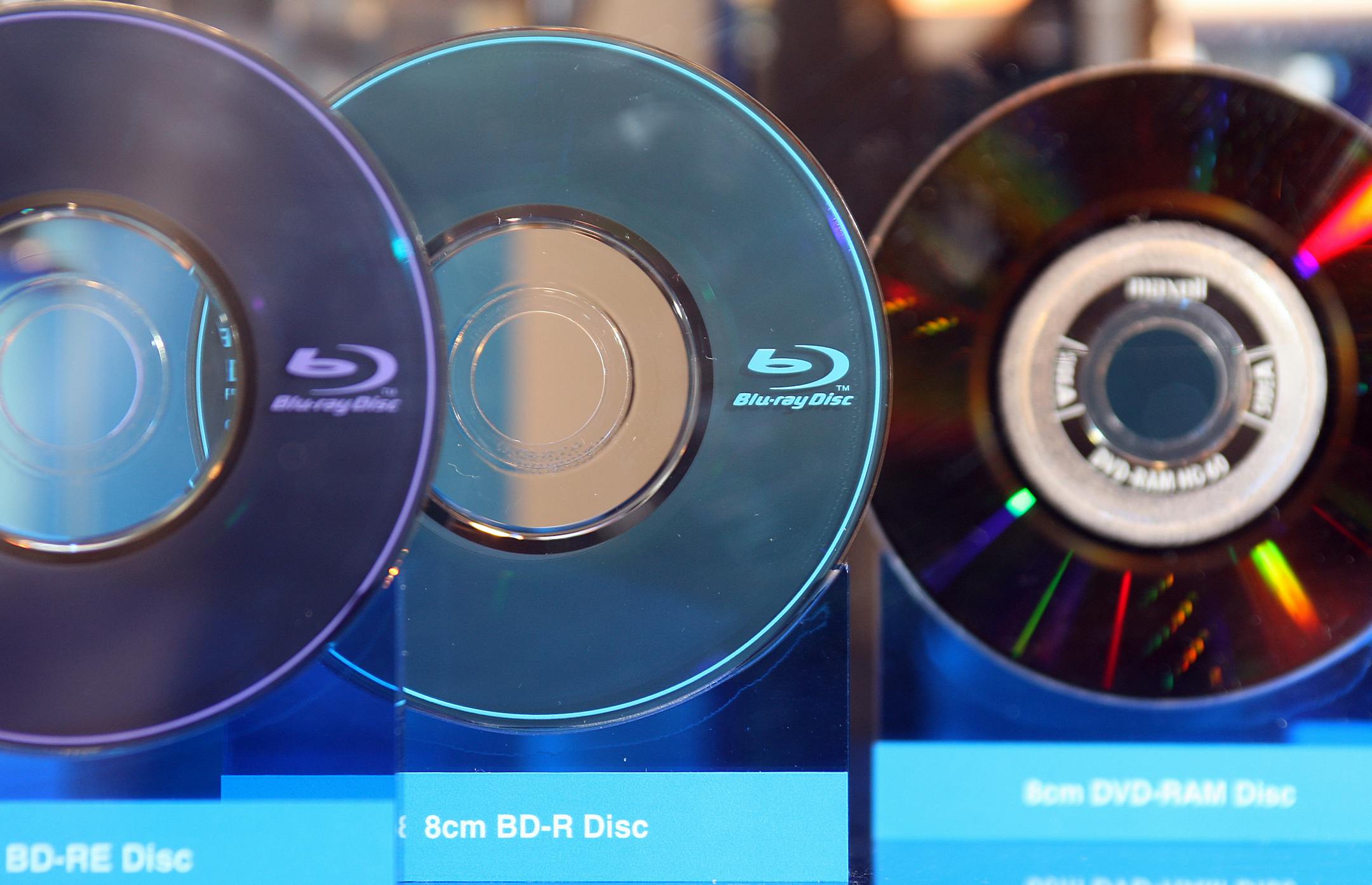
Blu-ray discs are one display at the 2008 Consumer Electronics Show (CES) in Las Vegas, Nevada, 09 January 2008. AFP PHOTO / ROBYN BECK
Blu-ray discs are one display at the 2008 Consumer Electronics Show (CES) in Las Vegas, Nevada, 09 January 2008. (Getty/afp - Afp/getty Images/The Minnesota Star Tribune)

Well, so much for the war of the high-definition discs.

Warner Home Video's unexpected decision to back only Blu-ray over HD DVD caused an industry uproar at the recent Consumer Electronics Show in Las Vegas. Just a few weeks ago, knowledgeable observers were saying that hybrid players capable of playing both formats would end the war. So much for knowledgeable observers.

If you've been ignoring high-def discs, now's the time to start paying attention. With Blu-ray as the apparent winner, you no longer have the excuse of rival formats to justify your apathy or fence-sitting. Here are the answers to some of your Blu-ray questions.

What is Blu-ray? Wow, you really haven't been paying attention, have you?

In short, Blu-ray Discs resemble regular DVDs, but have a higher storage capacity that allows them to play high-definition movies, which have a filmlike quality. To view the discs, you must have a Blu-ray player and an HDTV display.

The major studios that have backed Blu-ray are Sony, Fox, MGM, Disney and Lions Gate. Warner, which is the largest home-video company, had released titles in both formats, but abandoned HD DVD in favor of Blu-ray. Read more background at www.startribune.com/a3858.

Is HD DVD really dead? At best, the rival high-def format is on life support.

Its primary backer, Toshiba, canceled a major news conference about HD DVD at the Consumer Electronics Show but has since restarted an ad campaign. Only two major studios, Universal and Paramount (along with DreamWorks), are left in the HD DVD camp. Neither has announced intentions to switch to Blu-ray, but they could be at the mercy of the market.

Retailers could hasten HD DVD's demise by refusing to stock the discs or players -- or simply not replacing sold inventory. The first full-week sales figures since Warner's announcement showed a dramatic leap in Blu-ray sales.

Did the better disc win? For consumers, it's a draw. Neither format is superior. Although some specs differ between Blu-ray and HD DVD, they both produce the same high-quality picture. From a business standpoint, ironically, HD DVDs are actually cheaper and easier to produce because they can be made using retooled equipment at existing DVD plants. Blu-ray discs require new manufacturing equipment, which is more expensive and has caused production shortages due to a lack of facilities. Blu-ray's victory points to behind-the-scenes dealmaking.

What if I already bought into HD DVD? You can't play a Blu-ray Disc on an HD DVD player. But you still have a library of about 400 HD DVD titles available to watch. Prices for those discs will drop dramatically as retailers inevitably start selling them at clearance prices. If you bought a Toshiba player, you also have a high-quality unit that can make standard DVDs look much better on high-def displays than they would if played on a regular player.

What's available on Blu-ray? About 400 Blu-ray titles have come out so far, and dozens more have been announced for the coming months. Eye-grabbing titles include Disney's "Ratatouille" and "Pirates of the Caribbean" films, Sony's "Spider-Man" movies and "Casino Royale," and Fox's "Die Hard" series and "The Simpsons Movie." Many of Warner's biggest sellers, such as "300," are already out in Blu-ray. Some of Warner's prestige titles that were available solely in HD DVD -- a clear sign that it was once the studio's format of choice -- such as the "Matrix" trilogy, "Casablanca" and "Forbidden Planet" are bound to come out eventually in Blu-ray.

What's a good Blu-ray player? There's only one that's truly worth recommending, Sony's PlayStation 3. Yes, it's a video-game system, but no stand-alone Blu-ray player comes close to matching its power and versatility. More important, the evolving spec of Blu-ray software mandates that a player be able to connect to the Internet, and the PS3 is the only device that can do that now. If you buy a new stand-alone Blu-ray player, eventually it will not be able to handle some features on future Web-enabled discs. (No such titles exist now.) If you don't want to buy a PS3, starting at $399, you should wait until Blu-ray players with so-called Profile 2.0 compliancy hit the market -- probably in the spring.

Will prices come down? With one-format dominance, prices should drop as manufacturers come out with low-budget options to meet mass-market demand -- just as happened with DVDs. One thing is for sure: Blu-ray Discs, at $35 to $40 each, are overpriced. They'll never reach a larger market at those levels. Retailers started offering 2-for-1 sales over the holiday season, so such deep discounts are likely to continue as more people buy in.

Will Blu-ray really catch on? That's the big question. Even with one high-def format, Blu-ray might remain a niche product with people happily getting along with up-converted standard DVDs on their HDTVs. Also, many industry observers believe that high-def discs are just a stopgap for a few years until electronics makers figure out an easy way for viewers to download high-def programming directly to their HDTV, with no need for software. Check back in a year for a better answer.

Randy A. Salas • 612-673-4542

about the writer

about the writer

More from Minnesota Star Tribune

See More
card image
J. SCOTT APPLEWHITE, ASSOCIATED PRESS/The Minnesota Star Tribune

The "winners" have all been Turkeys, no matter the honor's name.

In this photo taken Monday, March 6, 2017, in San Francisco, released confidential files by The University of California of a sexual misconduct case, like this one against UC Santa Cruz Latin Studies professor Hector Perla is shown. Perla was accused of raping a student during a wine-tasting outing in June 2015. Some of the files are so heavily redacted that on many pages no words are visible. Perla is one of 113 UC employees found to have violated the system's sexual misconduct policies in rece