

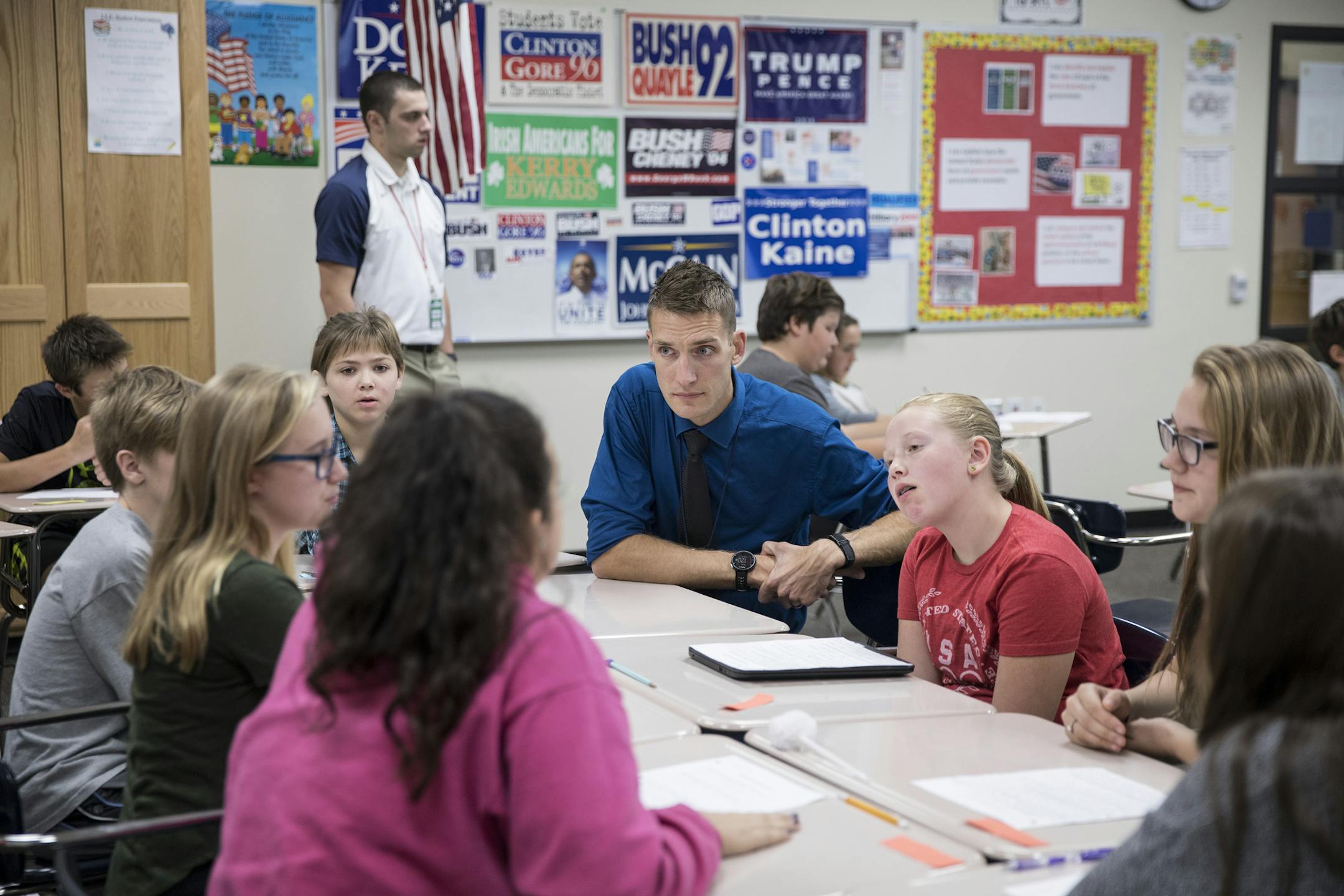
EAU CLAIRE, Wis. – Maybe it's the talk of fat shaming, or adultery, or sexual assault, or bans on Muslims and walls to keep out Mexicans. But Brent Wathke is having a rough time teaching this presidential campaign to his seventh-graders.
He is not planning to show his students the third presidential debate on Wednesday; he feels the debates have long ago crossed over into inappropriate. Television ads, particularly the ones from Hillary Clinton's campaign that heavily quote Donald Trump, are filled with misogynistic comments. Even political cartoons, which Wathke would have liked to use to teach his students about the delicate art of satire, are too risqué.
"It is a total mess," said Wathke, 33, sitting in his classroom at DeLong Middle School one morning last week, near a dry-erase board where he had scrawled "25 Days to Election" in a red marker. "Honestly, I just can't wait until it's over."
Wathke is one of countless teachers across the country who have anguished over the dark and sometimes shocking tone of the presidential campaign. Like many, he has searched for ways to talk about it in class. Some teachers are planning mock debates before the election; others, like Wathke, fear that the format could invite students to spout insulting rhetoric.
His students, most of whom are 12 years old, have been buzzing with talk of the campaign all year. The first group of students poured into the classroom just before 7:30 a.m., clutching notebooks and binders, and sat in desks arranged in circles.
"I believe if Trump is elected, it's going to be like 'The Hunger Games,' " said Payton Foy, prompting nervous giggles around the room. "I'm not trying to be mean to Trump. I just really believe that."
Another student piped up, saying she had watched the second presidential debate the night before. "And?" Wathke asked.
"It was bad," she said.


