

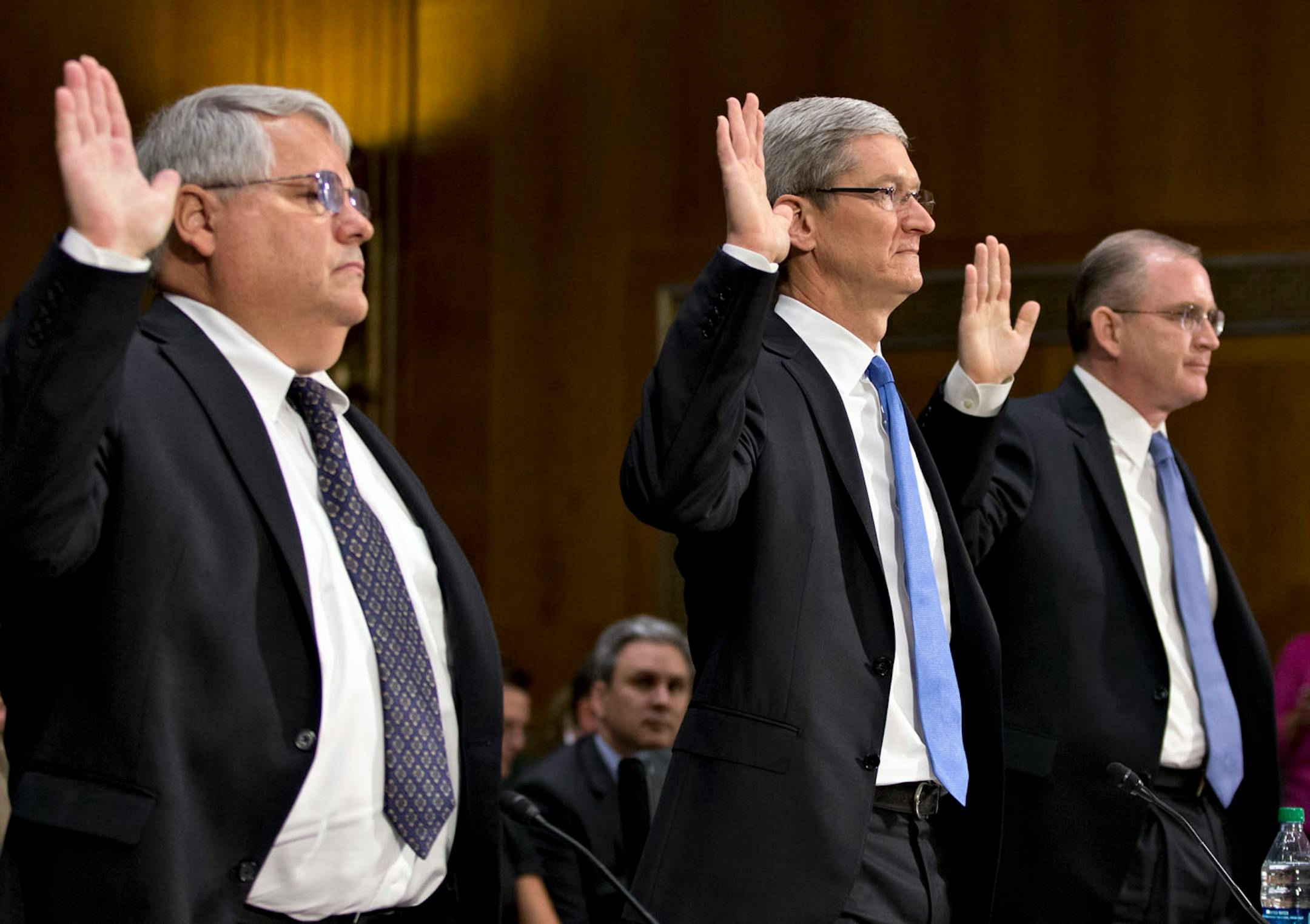
Almost everyone, including members of Congress, believes in tax reform — in theory. But this week's congressional grilling of Apple executives over their firm's avoidance of corporate taxes highlights the reason why major tax reform is a pipe dream. The gulf between theory and practice is unbridgeable.
Let me give you an example to test whether you are a true believer.
According to almost all economists and tax policy wonks, one basic unfairness and inefficiency under the current tax regime is the corporate tax. Any sound tax reform plan should eliminate this tax, since there is no theoretical rationale for it.
Yet this is unthinkable for most people, especially when faced with trying to replace the $287 billion in taxes paid by corporations last year. This represents more than 10 percent of all federal revenue. The lost revenue would have to be made up by taxing individuals in some fashion.
Are you still a believer?
Changes to our tax laws over the years have eliminated any tax benefits of doing business in corporate form. Instead, there is simply a huge reason to avoid being a corporation: double taxation.
Every other way of doing business, whether as a partnership, limited liability company or what is called a Subchapter S corporation, faces only one level of tax. The entity itself, the firm, pays no tax. Rather, any income is flowed through to the owners and taxed there.
There is no sound rationale for treating this one way of doing business differently than any other, particularly when other forms of doing business can be structured to enjoy the same nontax benefits as incorporation.


