

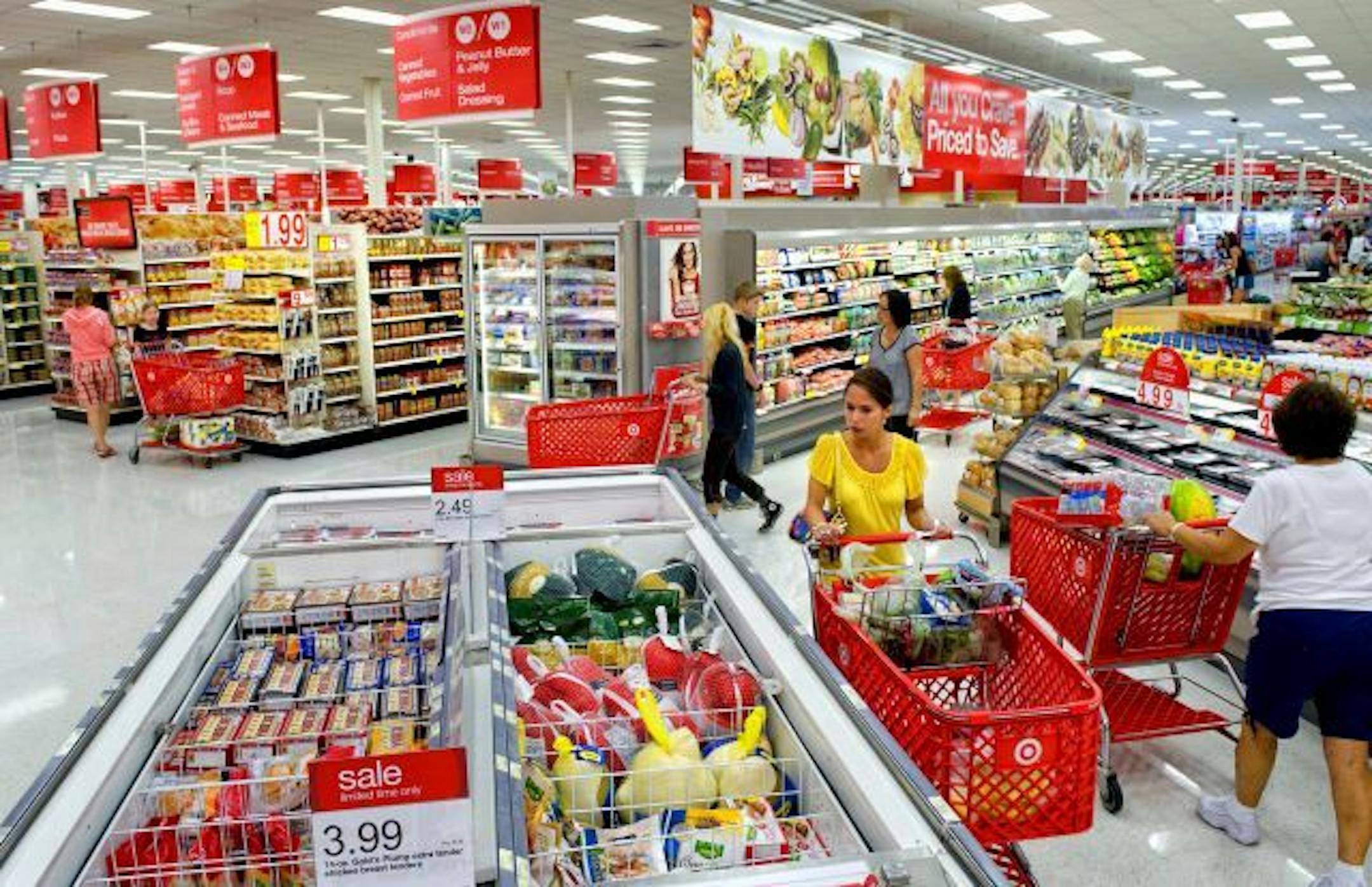
If the volatile economy is unnerving Target Corp., the company's top executives sure aren't showing it.
In a conference call with analysts Tuesday, CEO Gregg Steinhafel suggested Target will continue to weather an economy that has bedeviled many of its peers, including top rival Wal-Mart Stores Inc.
"Serious economic challenges, including inflation, persistent unemployment, weak housing and financial markets and fiscal crises at every level of government continue to limit consumer confidence and spending," Steinhafel said. "Though we are not immune to these factors, which are beyond our control ... I'm confident that our store's teams will continue their record of strong performance."
Steinhafel has reason to feel good about Target's prospects. The Minneapolis-based retailer reported second-quarter profits rose 3.7 percent to $704 million, or $1.03 per share, beating Wall Street estimates by 6 cents a share. Earlier this month, Target said sales at stores open for at least a year rose a solid 3.9 percent, thanks to strong sales in food, health and beauty and household goods. Target also said the company's Redcard 5 percent discount program also lifted sales.
"We're very pleased with our second-quarter results, which benefited from an acceleration in the pace of our comparable same-store sales growth," Steinhafel said in a statement. "We continue to focus on a strong execution of our strategy, preparing Target to perform well in a variety of economic environments."
Target's credit-card business continues to flourish. The company reported a profit of $171 million in the quarter, up from $138 million in the year-ago period. Executives told analysts Tuesday the company still expects to sell its $6.7 billion credit-card-receivable portfolio either late this year or early next year, despite the recent volatility in global capital markets. Target, which plans to retain operational control of its credit-card business, had hired First Annapolis to conduct the sale.
Investors Wednesday rewarded Target's performance by pushing the stock up $1.18, or 2.39 percent, to close at $50.55. Although Target shares have recovered in recent days, the stock still remains down nearly 16 percent since Jan. 3, while its peer group index of retailers is down about 3 percent year-to-date.
But Target is hitting all the right buttons in a down economy, especially compared with Wal-Mart, said Burt Flickinger, managing director of Strategic Resource Group in New York. Flickinger cited Target's merchandising prowess, store remodeling, and focus on fresh food and produce.


![Attendees of Frostbike made their way through the convention Saturday at the Quality Bike Products campus in Minneapolis. ] (AARON LAVINSKY/STAR TRIBUNE) aaron.lavinsky@startribune.com Frostbike 2016 was held at the Quality Bike Products Campus on Saturday, Feb. 27, 2016 in Bloomington, Minn.](https://arc.stimg.co/startribunemedia/NH2BSHB74ND2V6GF2G2HI5X4MM.jpg?&w=252&ar=3:2&fit=crop)
