No hablo español. For our band of travelers, those Spanish words weren't a tourist's plea; they were a job requirement. We were volunteers for Pueblo Ingles, a weeklong English immersion program with 20 Anglos and 20 paying Spaniards.
My fellow English speakers came from Canada, England, Ireland and Australia. Among their ranks were retired teachers, students taking a semester break, bankers, writers and blue-collar workers ages 18 to 80 who had signed on solo or in couples (husband/wife, sister/sister, mother/son). The Spaniards were mainly middle-managers of multinational companies who believed that improving their spoken English would help them get ahead in their careers ("Think on your feet" was one of the first idioms we tackled). They arrived able to read and write but terrified of talking.
But talk we did, starting on the bus that ferried us from Madrid to L'Alberca, a tiny medieval town two hours north. For a week, conversation burbled nonstop from 9 a.m. to after midnight. For the English-speakers, that was the cost of free room and board in a villa in one of the program's remote Spanish towns.
Beyond transportation to Madrid (I used frequent-flier miles and arrived a few days early to explore the city), the only requirement is a sociable nature and an eagerness to mingle with those of another culture, as potential volunteers indicate in a brief essay on the website's application form.
The deep and lasting bond that results between people of diverse nations is the real reward. And for tourists in a foreign country, how often does that happen?
Rewarding, yes, but also tiring. Conducting hourlong conversations with one new face after another turned my brain to Jell-O. But the Spaniards' brains must have been quivering, too. They have a far more grueling time of it, required to listen and respond to English during every waking hour.
Richard Vaughan, a Texan, taught English to Spaniards in a traditional classroom setting until he discovered a better way to do it and launched the program in 2001. "Speak like an English teacher -- e-nun-ci-ate -- and they understand, but that isn't useful," he instructed. "It's important for the Spaniards to understand perfectly, so Anglos should do 60 percent of the talking," he directed.
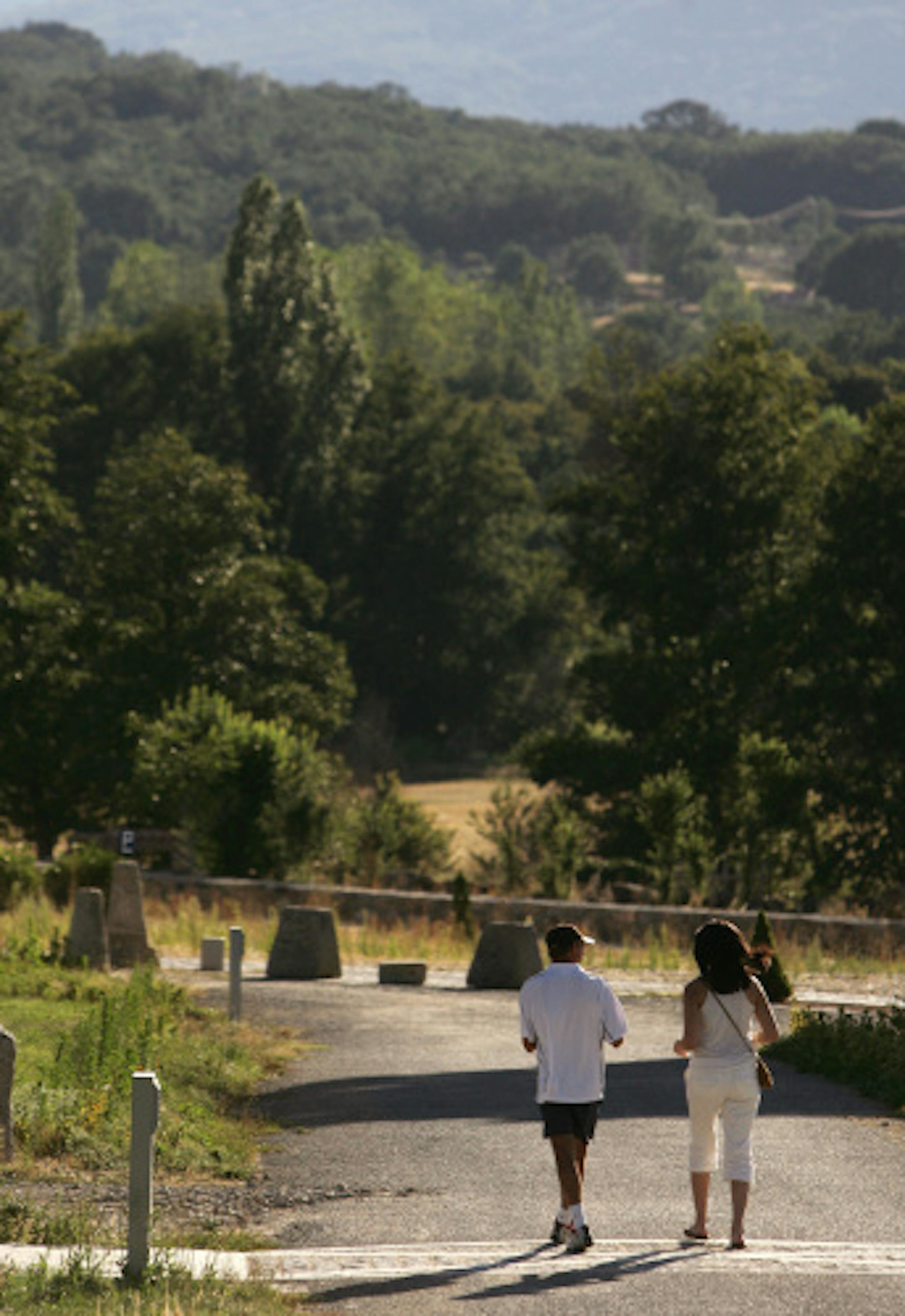
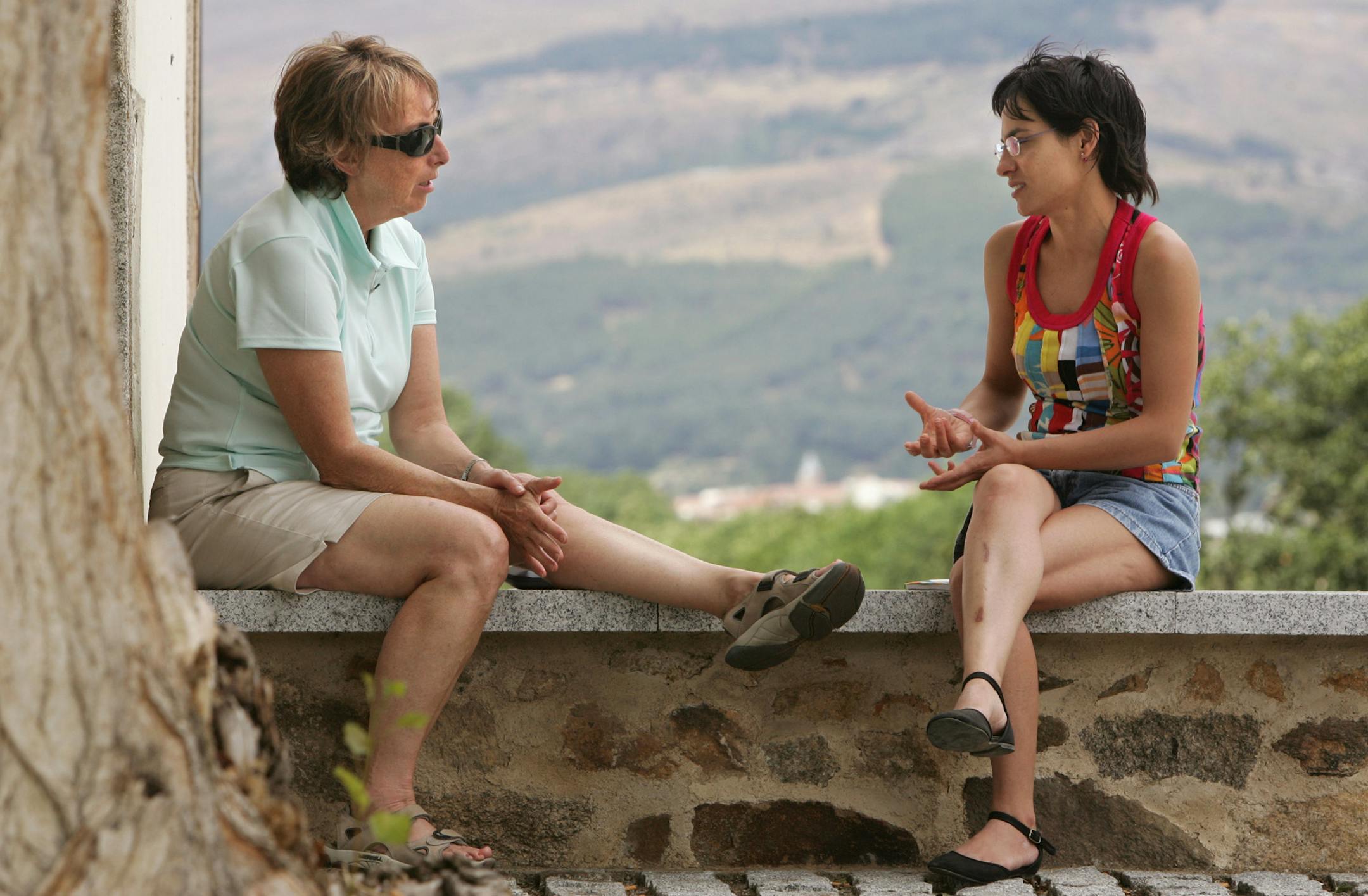
We primed our vocal cords with café con leche and a breakfast that including tortillas, resembling egg pie, and churros, sugar-coated doughnuts. We sat, as we did at every meal, at tables of four, two English-speakers, two Spaniards. Then, from 10 a.m. to 2 p.m., it's verbal musical chairs, pairing a different Spaniard and Anglo each hour for rambling conversations, often conducted on walks through the cobbled streets of the village, stopping to wet our whistles with coffee.