

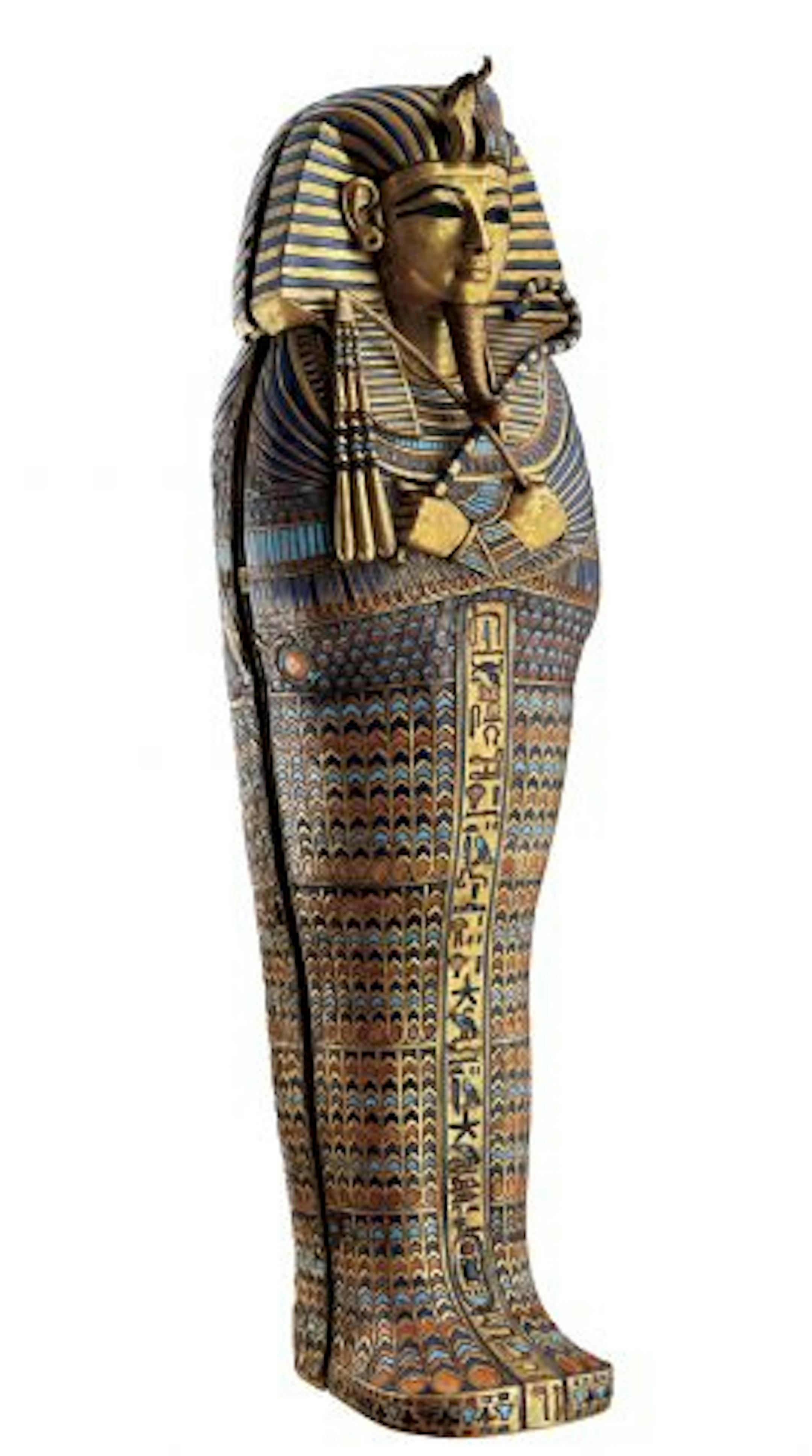
What would King Tut do? The 9-year-old boy who became king more than 3,300 years ago faced turmoil not unlike the crisis that engulfed his country this month. People were angry and mystified by his father who, as pharaoh, had built a new capital city, started a new religion and even changed his name to Akhenaten in honor of a new god, Aten.
"They also were revolutionary times," said David Silverman, curator of "Tutankhamun: The Golden King and the Great Pharaohs," opening today at the Science Museum in St. Paul. "But King Tut seemed to go with the flow of the crowd in returning his country to the orthodoxy they seemed to want. He went back to the traditional beliefs and to Thebes, the previous capital in the south."
Those moves don't exactly certify Tut as a proto-member of the Twitter generation, but they suggest he had better political instincts than Egypt's recently deposed dictator.
That appeals to Silverman, an Egyptologist and University of Pennsylvania professor who has devoted much of his career to helping people understand ancient Egypt by taking them inside the mummy's tomb, as it were. For that he favors a multimedia approach using maps, posters, films, videos, lighting effects and even re-created elements to contextualize ancient objects. The St. Paul show, for example, includes a reproduction of the tent that archaeologist Howard Carter stayed in while excavating Tut's tomb, complete with a (taxidermied) canary, the pet bird the Egyptian workers believed brought them good luck.
"It's theatrical, but people love it," Silverman said. "What I wanted to do was to have an exhibition that would break down the barriers that sometimes exist between people and museums. The Science Museum here is one of the most audience-friendly museums I've ever seen; it really beckons to people."
Back in the 1970s, with a newly minted doctorate from the University of Chicago, Silverman worked on the legendary exhibition that infected the United States with Tutmania. The present show is even better, he thinks, because it has more of everything -- more history, more objects and photos, more interactive gizmos, more authentic atmosphere, and even more new research.
DNA studies, for example, have established that Tut's parents were probably siblings. They've also proven that two mummified infants found in his tomb were his daughters. And while the exact cause of his death is still uncertain, CT scans support the theory that it may have been caused by complications from a broken leg. His left leg was fractured just above the knee but showed no sign of healing, leading to speculation that the injury occurred just days before he died, possibly from an infection or accident that left no other trace.
Egyptian history


