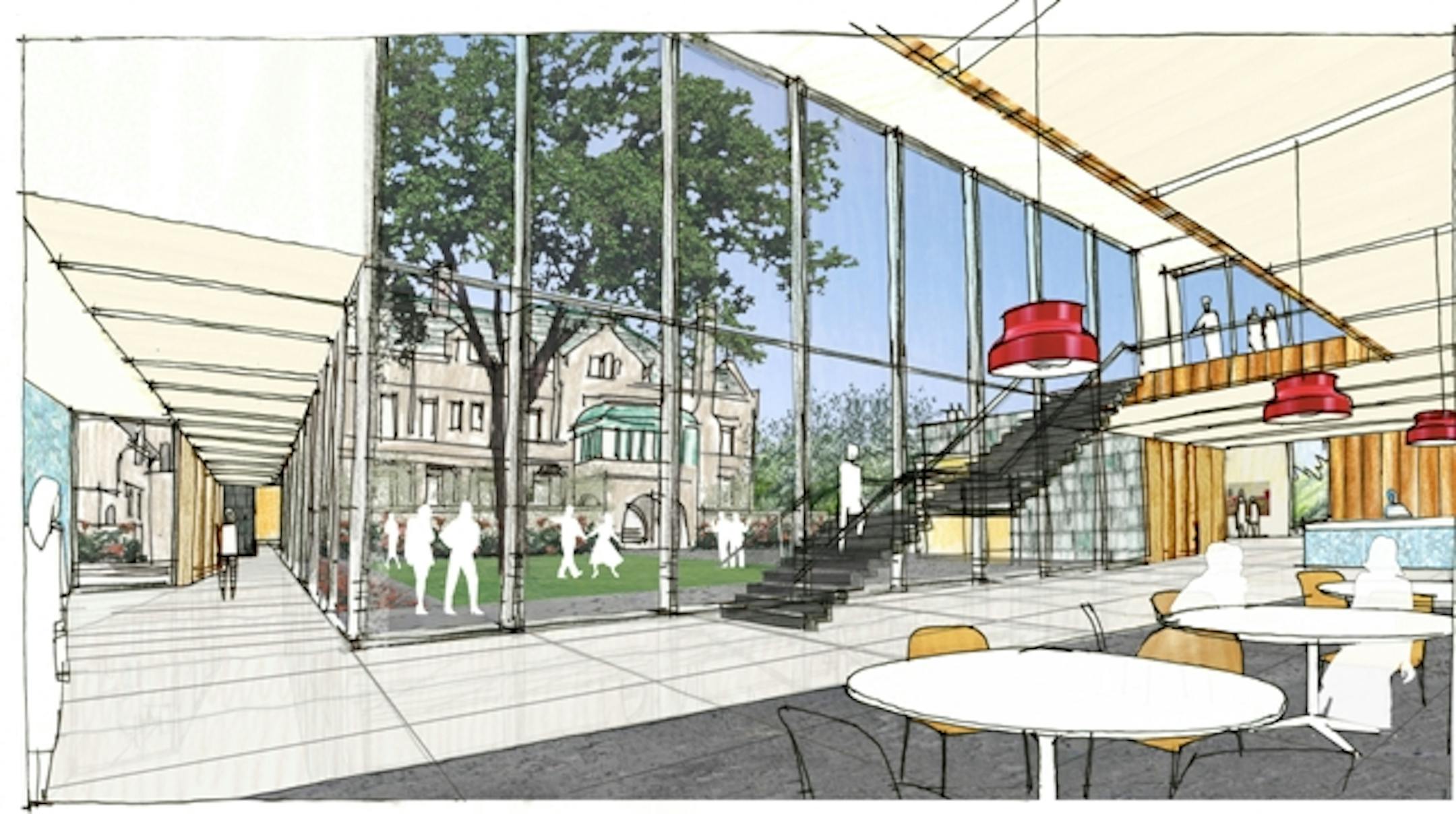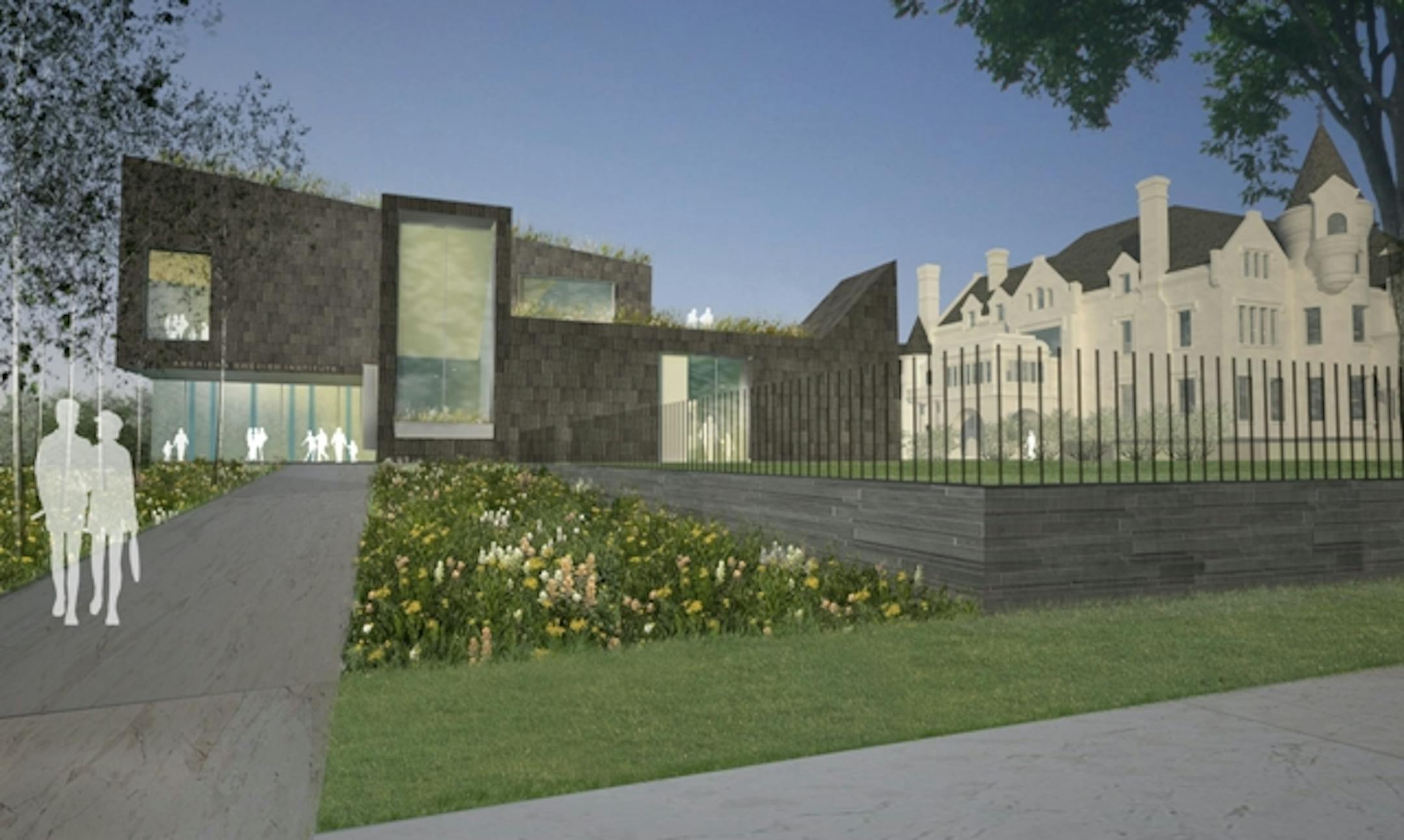
Minneapolis' favorite castle will sprout a Scandinavian modern wing as part of a $21.5 million expansion and renovation of the American Swedish Institute. The project, announced Tuesday, is scheduled to open in May 2012.
Designed by HGA Architects and Engineers of Minneapolis, the addition will essentially double the size of the gray limestone Turnblad mansion, which has fascinated legions of visitors since it opened in 1929 as a museum of Nordic culture.
The addition -- to be called the Nelson Cultural Center, for benefactors Leslie and Carl Nelson -- will extend into what is now a parking lot on the south side of the building at 2600 Park Av. S. Developed in consultation with two firms in Stockholm, it will incorporate updated interpretations of traditional Swedish designs, including clerestory windows framed in zinc or another metal; leather-wrapped handrails in the two-story entrance lobby, and custom-designed art glass at the doorway.
Its "green" roof, with native plants rooted in 6 inches of dirt, will be a contemporary echo of the sod roofs often used on rural Swedish buildings. Exterior walls will be clad in silvery-gray Vermont slate shingles whose blue-green highlights will complement the mansion's slate roof.
While the addition's boxy shape is strikingly modern, the materials and siting defer to the mansion and its old-country heritage. Built in 1908 for the family of Swedish-born newspaper magnate Swan Turnblad, the 33-room mansion -- which is on the National Register of Historic Places -- features a beaux-arts facade, a lavishly carved two-story entrance hall, exotic wood paneling, a grand staircase and 11 Swedish porcelain stoves.
"We wanted a little bit of gingerbread-house flavor in the texture of the new building," said design architect E. Tim Carl. He is working in concert with Michael Bjornberg, HGA's expert in historic preservation.
But the building will also employ leading-edge energy ideas. Roof plants will absorb rainwater to reduce runoff, and an underground storage system will collect rainwater for irrigation. Plans call for drilling 90 wells on the site, each 250 feet deep, to "draw energy from water in the ground to heat and cool the building," Carl said.
Minneapolis Mayor R.T. Rybak, who biked to the announcement ceremonies from his downtown office, praised the addition as a "breakthrough geothermal project that fits the city's sustainability goal."