

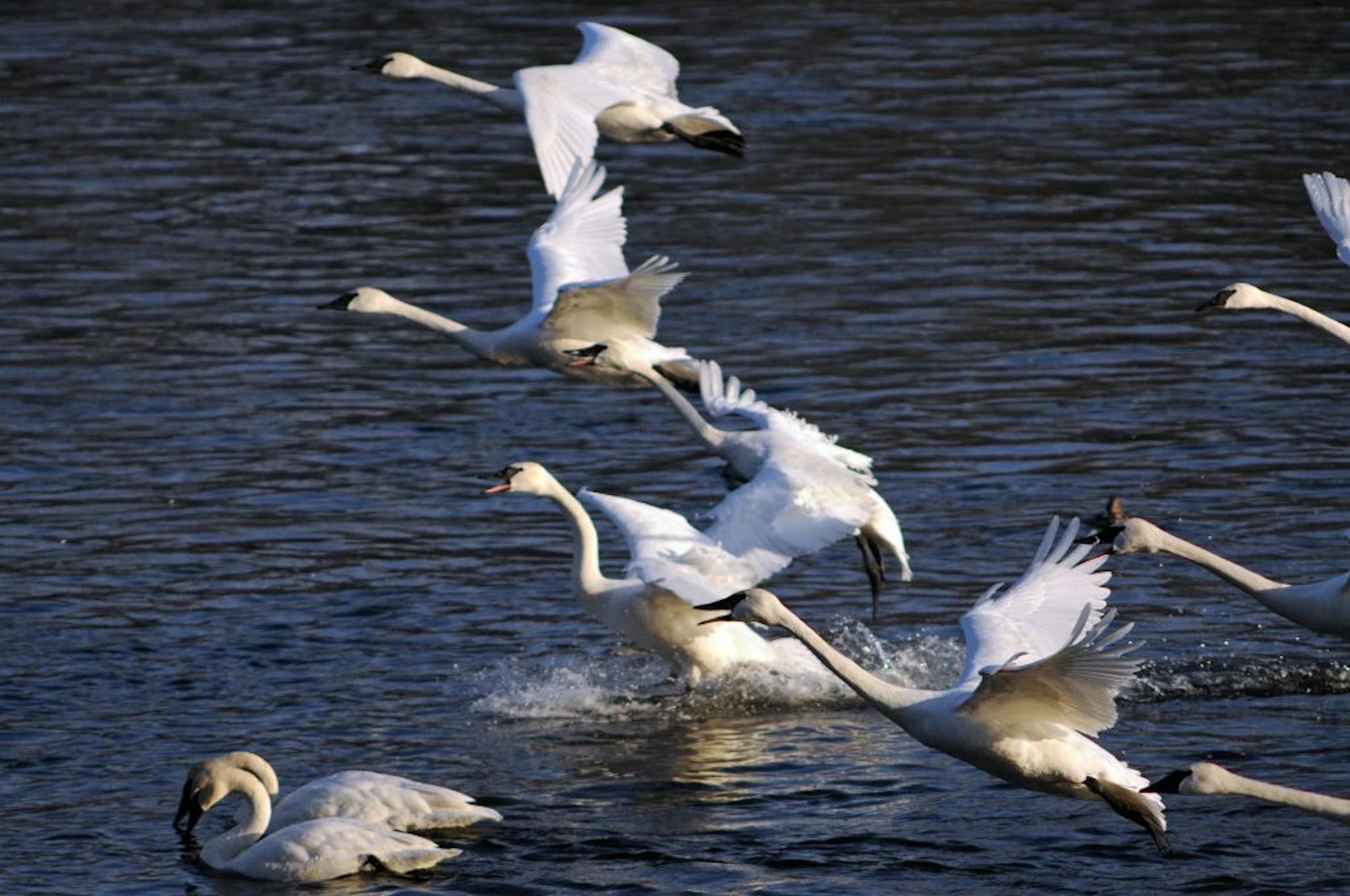
It's possible to see trumpeter swans in Minnesota these days, a remarkable thing when you consider that just 50 years ago there were no wild ones left in the state. They'd finally disappeared after being relentlessly hunted for their feathers and skins and meat for the table.
The restoration of their population in Minnesota is a true wildlife success story. I've been fascinated by trumpeters not only because their statewide numbers have gone from zero to thousands in little more than 40 years. Also intriguing is the fact that the restoration effort is like a puzzle missing one key piece: Trumpeter swans are growing up and nesting in Minnesota, but nearly all of them remain here all year. They're not migrating as they did in the past.
Some 150 years ago, trumpeter swan families -- mom, dad and that year's cygnets -- lifted off in late autumn and traveled to Missouri, Arkansas or Texas. They'd return at ice-out in February or March to start the breeding cycle all over again.
Swan relocation
We owe the return of Minnesota's swans to efforts by dedicated wildlife managers at Three Rivers Park District and the DNR's Nongame Wildlife Program, plus a host of other agencies and individuals.
Restoration began in the 1960s, when the park district brought young swans in from a tiny remnant population living in a remote, high-altitude area in Montana, to release in Hennepin County.
The nongame program embarked on a statewide effort in the 1980s. As part of that, Carrol Henderson, the program's supervisor, made three trips to Alaska, which had a growing population, picking up 50 trumpeter swan eggs each year. (I've always wished I could have seen Henderson getting off a plane lugging those suitcases with specially constructed compartments for that valuable cargo.)
The swan restoration program is obviously now a major success, with 5,500 big birds counted in the most recent survey taken a year ago. (And these are big birds: at 4 feet tall, the top of a swan's head will line up with your ribcage.)


