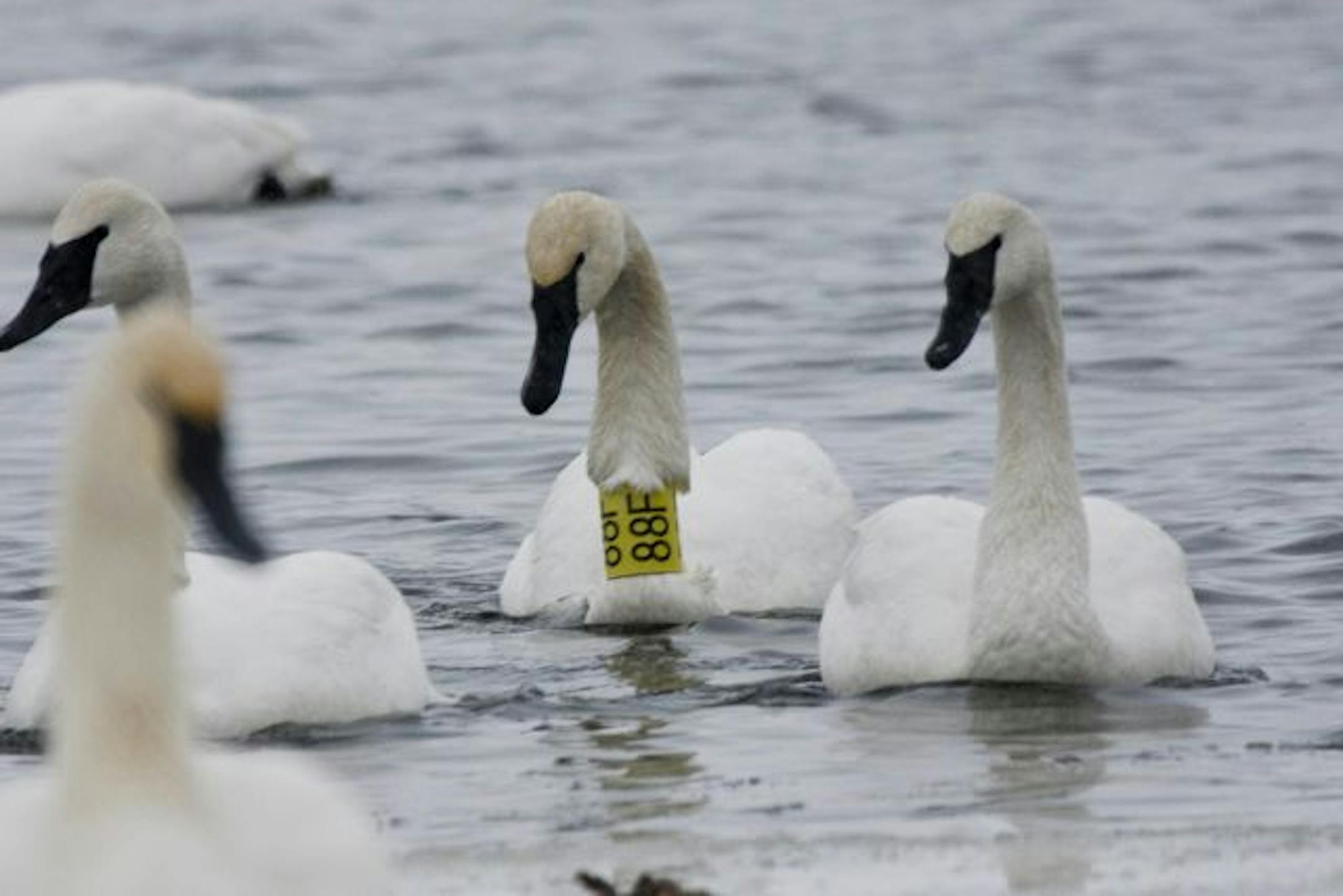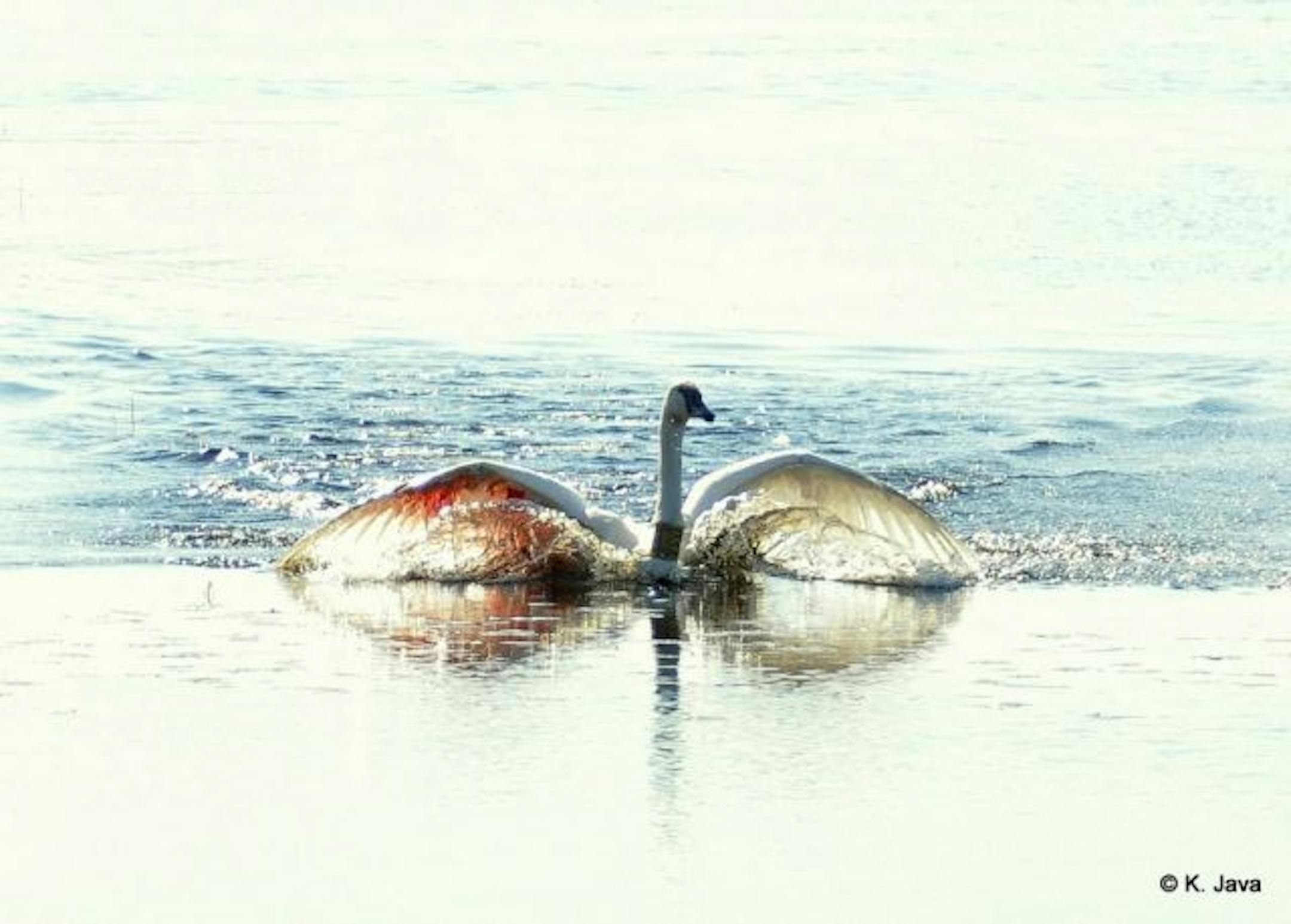
Shotgun pellets grounded a big, beautiful trumpeter swan late last fall. This could have been the end of his story. But the tale took a dramatic upturn, thanks to a dedicated group of volunteer rescuers and a first-class wildlife hospital. There's even a heartwarming last chapter, but more about that later.
It's illegal to shoot swans and we'll probably never know whether this was accidental or intentional, but without the efforts of many people, the swan's life would have ended in a Wisconsin marsh.
Solitary swan
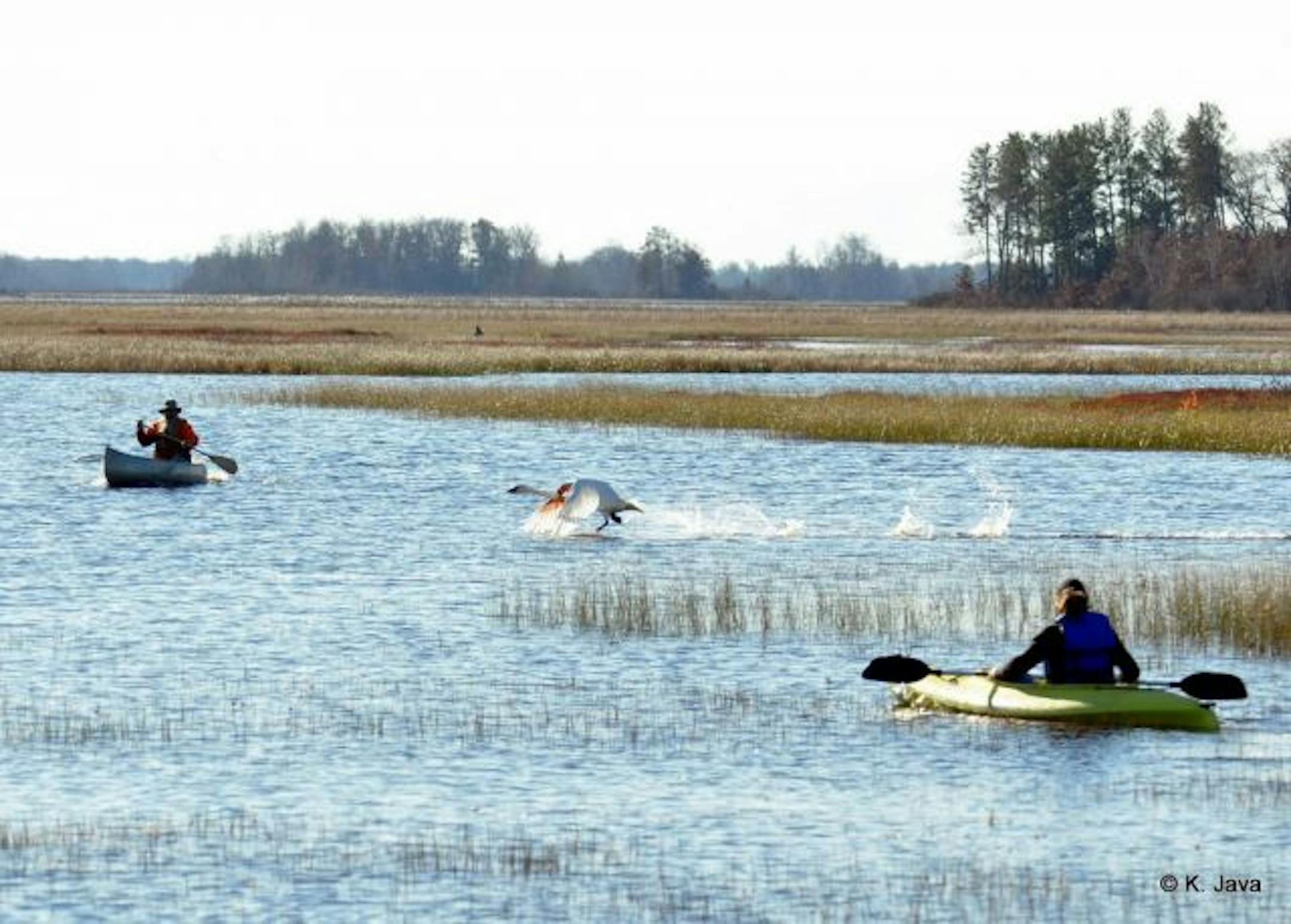
The good part of the story started with a call to Mary Wicklund, an experienced swan rescuer in Wisconsin: A swan left behind after its family and flock had migrated was a sign of trouble. A team of volunteer rescuers in four kayaks and a canoe put into the water and slowly paddled toward the big, wary bird. They carefully surrounded him and then tightened their circle bit by bit before capturing him. It takes a great deal of skill and finesse -- and time -- to get close enough to bring in one of these big birds.
Next stop: the Wildlife Rehabilitation Center in Roseville, a large, modern clinic that treats thousands of wild animals each year (more than 8,600 in 2010). Veterinarian Dr. Leslie Reed immediately saw the problem on the swan's X-rays: a shotgun pellet in his abdomen and another in his right wing.
"There was a great deal of swelling and bruising, but no broken bones, which was very lucky," Reed said. The swan was weak and dehydrated, but his prognosis looked good. "We had high hopes for his recovery," Reed said.
The swan was treated with antibiotics, painkillers and a drug to prevent lung disease, treatments that make swans the Wildlife Center's most expensive patients. Everyone at the center crossed their fingers that he would recuperate.
Ready to go