

Washington Post:
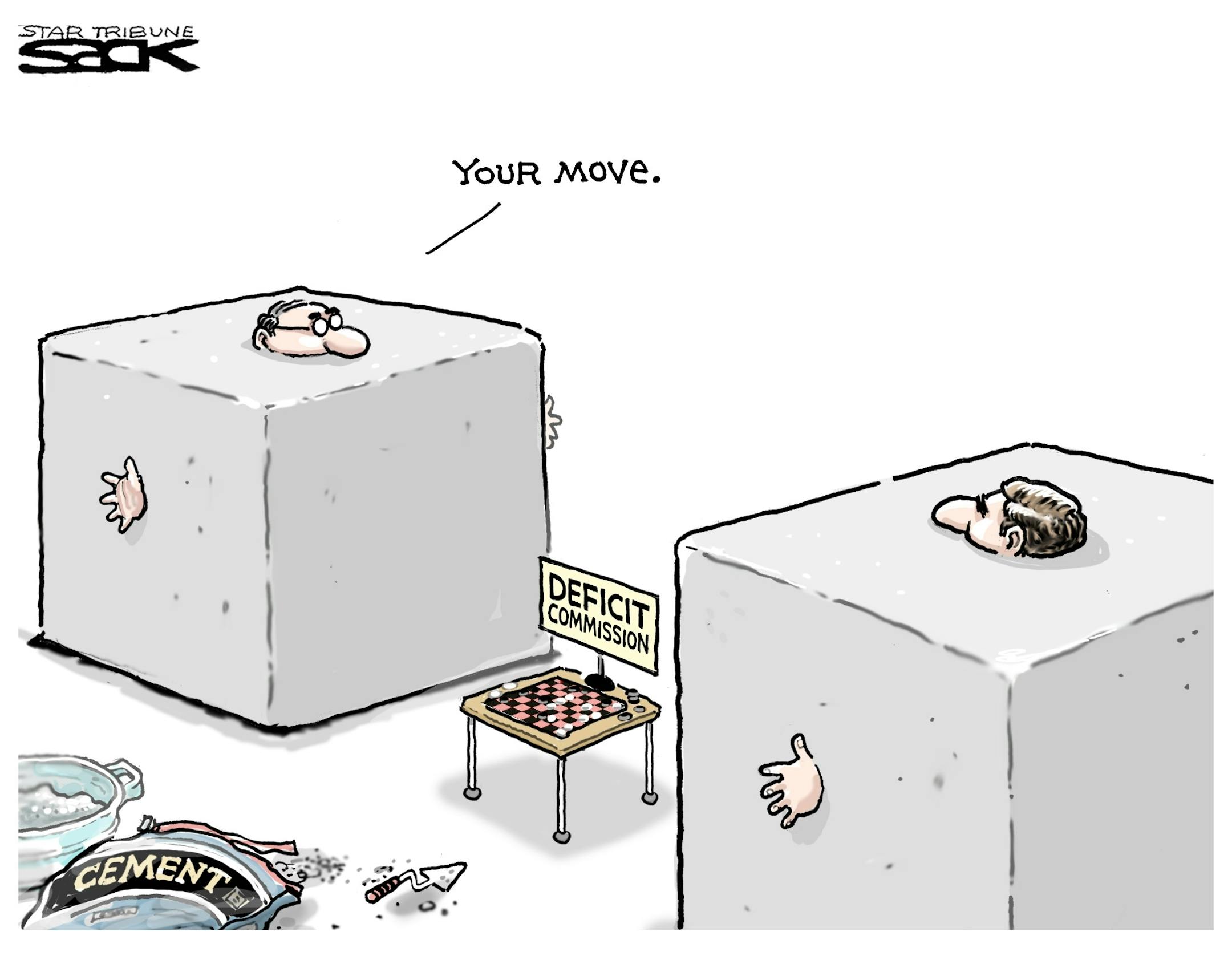
Absent some intervening, cataclysmic event, the debt-reduction can has been kicked once again -- this time, until after the election. At that point, the Bush tax cuts will be on the verge, once again, of expiring -- at the end of December 2012.
Unless it is defused, the mandated "trigger" of $1.2 trillion in automatic cuts, spread evenly between domestic and military spending, will take effect in January 2013.
Can the political system rouse itself, in the face of those threats, to avert the harm? The lesson of the supercommittee is not a happy one.
Individual actors in the latest drama tried to rewrite the inevitable ending. Some Republicans began the process of accepting the need for new tax revenue. Some Democrats were willing to accept entitlement cuts.
That the lawmakers were nonetheless unable to reach agreement does not bode well for future negotiations. The 2012 election may produce a change in the occupant of the White House and control of one or both houses of Congress, but it is not likely to produce a clear mandate for either party's vision of debt reduction.
The compromise that proved elusive for the supercommittee will remain necessary. Perhaps it can be achieved in the action-forcing context of the trigger and expiring tax cuts.
* * *


