

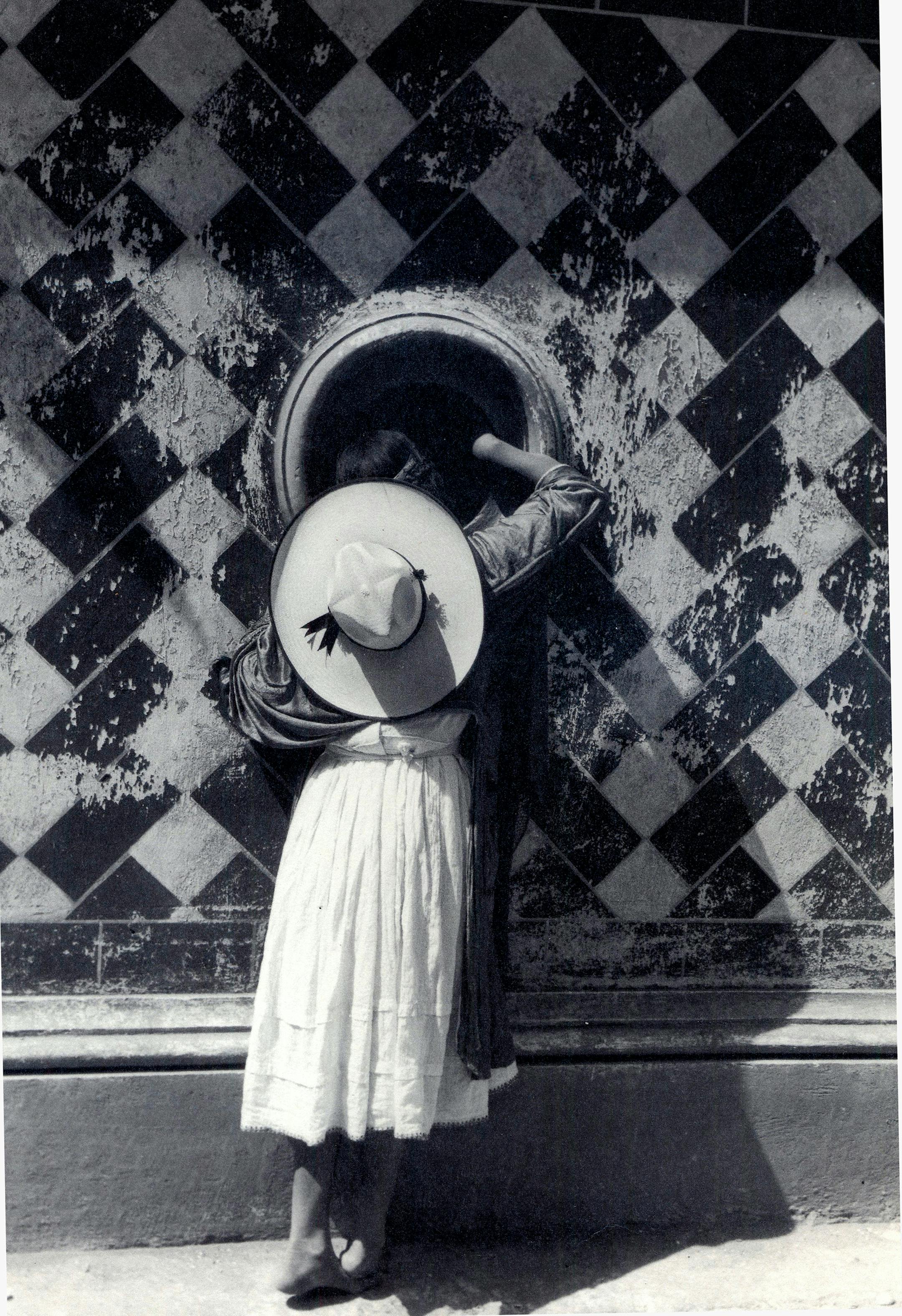
In retrospect it seems that Mexican photographer Manuel Álvarez Bravo lived his whole long life in black-and-white under a blazing sun.
Credited with virtually inventing photography in his homeland, Álvarez Bravo (1902-2002) came of age in the 1920s, when photographers were still struggling to prove that their medium was art, and to stamp out its reputation as a dreamy diversion for hobbyists. An avant gardist by temperament, the self-taught artist gave visual form to political, intellectual and artistic currents of the day, from revolution and social class struggle to candid sexuality and surrealism.
All of Álvarez Bravo's signature motifs are crisply represented in an impressive, tautly edited show of just 36 prints at Weinstein Gallery in south Minneapolis through April 30.
Many of his most iconic images are represented, including "Daughter of the Dancers," a 1933 print of a girl with a round hat peering into the round window of a geometrically patterned colonial mansion, the marvelous "Pair of Legs," from 1928-29, in which a billboard featuring the lower half of a stylish couple is incongruously fused to signage for electrical service, and the controversial "Optical Parable," in which an optician's sign printed in reverse offers seemingly endless reflections of eyeballs and letters.
International acclaim
Born in Mexico City into a family of artist-intellectuals of modest means, Álvarez Bravo grew up during the 1910-17 revolution that challenged Mexico's colonial heritage and sparked appreciation of its indigenous culture. Taking up photography in the 1920s, he pictured his country and its people with unsentimental curiosity -- "Fireworkers" in their bulky uniforms, a blocky house in a barren landscape, the "Laughing Mannequins" dangling above an outdoor market. Aware of international currents, he tried his hand at industrial photography, turning a pair of wrenches into an elegant 1931 still life, and looked back at Mexican history in "Bonampak (Head of a Mayan Ruler)," a dramatically lit image of an ancient bas relief.
Soon his work caught the eye of visiting aesthetes, including photographers Edward Weston and Paul Strand, and earned encouragement from Diego Rivera and Frida Kahlo, then Mexico's most famous artistic personalities. He showed in Paris with the surrealists in 1939, was included in Edward Steichen's famous "Family of Man" show in the 1950s, and was celebrated by New York's Museum of Modern Art with a 1997 retrospective.
Play of light


