
Study finds pertussis vaccine OK for pregnant women

HealthPartners study could influence the battle against rising whooping cough cases.

November 12, 2014 at 2:47AM
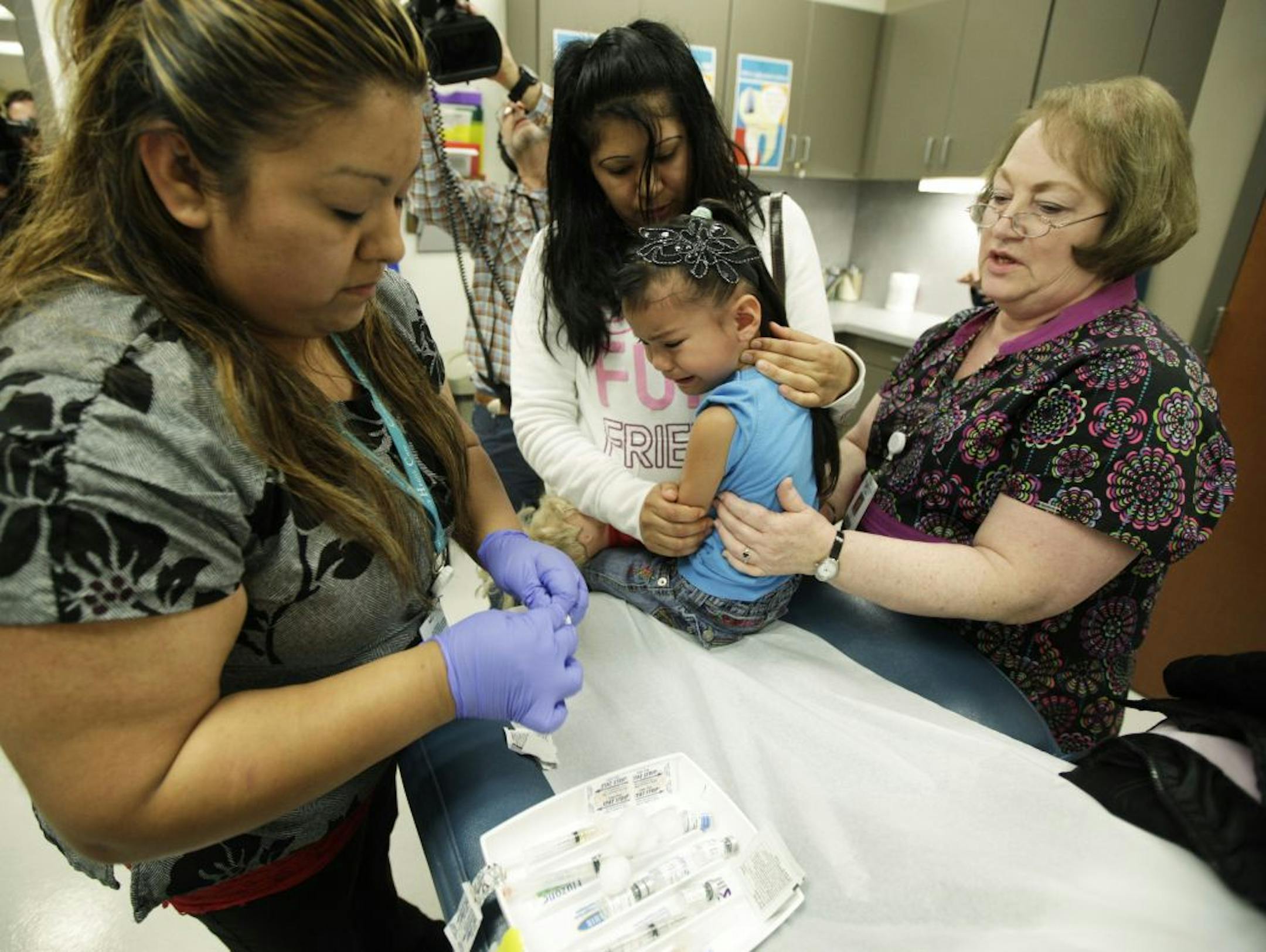
Kimberly Magdeleno, 4, got a whooping cough booster shot on Thursday as she was held by her mother, Claudia Solorio, at a health clinic in Tacoma, Wash. That state's governor, Chris Gregoire, has opened an emergency fund to help contain a whooping cough epidemic. In Minnesota, health officials have recommended that everyone get a booster shot as pertussis cases here also have soared.
Kimberly Magdeleno, 4, got a whooping cough booster shot on Thursday as she was held by her mother, Claudia Solorio, at a health clinic in Tacoma, Wash. That state’s governor, Chris Gregoire, has opened an emergency fund to help contain a whooping cough epidemic. In Minnesota, health officials have recommended that everyone get a booster shot as pertussis cases here also have soared. (Associated Press/The Minnesota Star Tribune)

Vaccinating pregnant women to protect their newborns against whooping cough, a resurgent infection in the United States, does not produce more birth complications, according to new findings by Minnesota researchers.

In the first large national study on the question, Dr. Elyse Kharbanda and colleagues at HealthPartners compared birth outcomes for more than 100,000 women by whether they received pertussis shots, and found no difference in rates of babies born too early or underweight.

The results, released Tuesday in the influential Journal of the American Medical Association, suggest that shots during pregnancy are safe ways for mothers to protect their newborns against pertussis until they are old enough to be vaccinated themselves.

"We can't start vaccinating newborns for pertussis right away," Kharbanda said. "The earliest we can do that is about 6 weeks of age, and even then they don't really get protection until they receive two doses of the vaccine."

Trouble is, unvaccinated infants are particularly susceptible to breathing problems from pertussis infections — a concern because the bacterial infection has been on the rise in recent years despite broad availability of vaccine.

Between 10,000 and 50,000 cases of pertussis, or whooping cough, have occurred in each of the past five years in the U.S., with 2012 showing the highest number in 60 years. Minnesota reported more than 1,000 cases last year, and 876 cases as of Nov. 6 this year. Researchers cite various reasons for the increase, from fewer parents seeking the vaccine for themselves and their children, to a switch years ago to a version of the vaccine that is safer but not as aggressive or long-lasting.

Vaccination for pertussis is included in the widely administered DTaP vaccine, which also protects against tetanus and diphtheria and is given in four doses to children before they reach 18 months.

Last year, 90 percent of Minnesota children received all four doses, higher than the national rate of 83 percent, according to the annual National Immunization Survey.

A booster, called a Tdap, is then recommended for children around seventh grade, and for adults every 10 or so years after that.

Federal and state health authorities already recommend Tdap shots for pregnant women — regardless of whether they received prior booster doses — because the antibodies they produce are passed along to their newborns at birth and protect against pertussis.

Among pregnant women covered by HealthPartners benefits, about half received the recommended Tdap vaccine last year, Kharbanda said.

Her study was designed to assess the impact of the federal and state recommendations for vaccination. It compared birth outcomes from 2010 through 2012 for 26,000 women from California who received the booster for the first time, and 123,000 women who had not received the booster.

Results showed no elevated rate of preterm births or of newborns who were underweight for their gestational ages. Women who received the booster during pregnancy showed slightly higher rates of chorioamnionitis, a swelling of the membranes surrounding the fetus, but Kharbanda said this didn't appear to be a significant problem because it didn't result in an increase in birth complications.

Jeremy Olson • 612-673-7744

about the writer

about the writer

Jeremy Olson

Reporter

Jeremy Olson is a Pulitzer Prize-winning reporter covering health care for the Star Tribune. Trained in investigative and computer-assisted reporting, Olson has covered politics, social services, and family issues.

See Moreicon

More from Minnesota Star Tribune

See More
card image
Provided/Sahan Journal

Family members and a lawyer say they have been blocked from access to the bedside of Bonfilia Sanchez Dominguez, while her husband was detained and shipped to Texas within 24 hours.

card image