

SAN JOSE, Calif.
Most students read about genetics in a textbook. Stanford University students are reading something far more intimate: their own DNA code.
In this firsthand view of their blueprint of life, one student discovered he had a different father than he thought. Others found they faced increased odds of developing brain diseases such as Alzheimer's, but reduced risk of fearsome cancers. Still others learned about their appearances and ancestry, providing new answers to that age-old question: Who am I?
Genetics 210, a class in the School of Medicine, is a pioneer in the growing movement to advance a new era in modern medicine, where genetic information allows us to not only look into our medical futures but also sometimes take action — such as actress Angelina Jolie, who underwent a double mastectomy to prevent hereditary breast cancer.
Achilles to Neanderthals
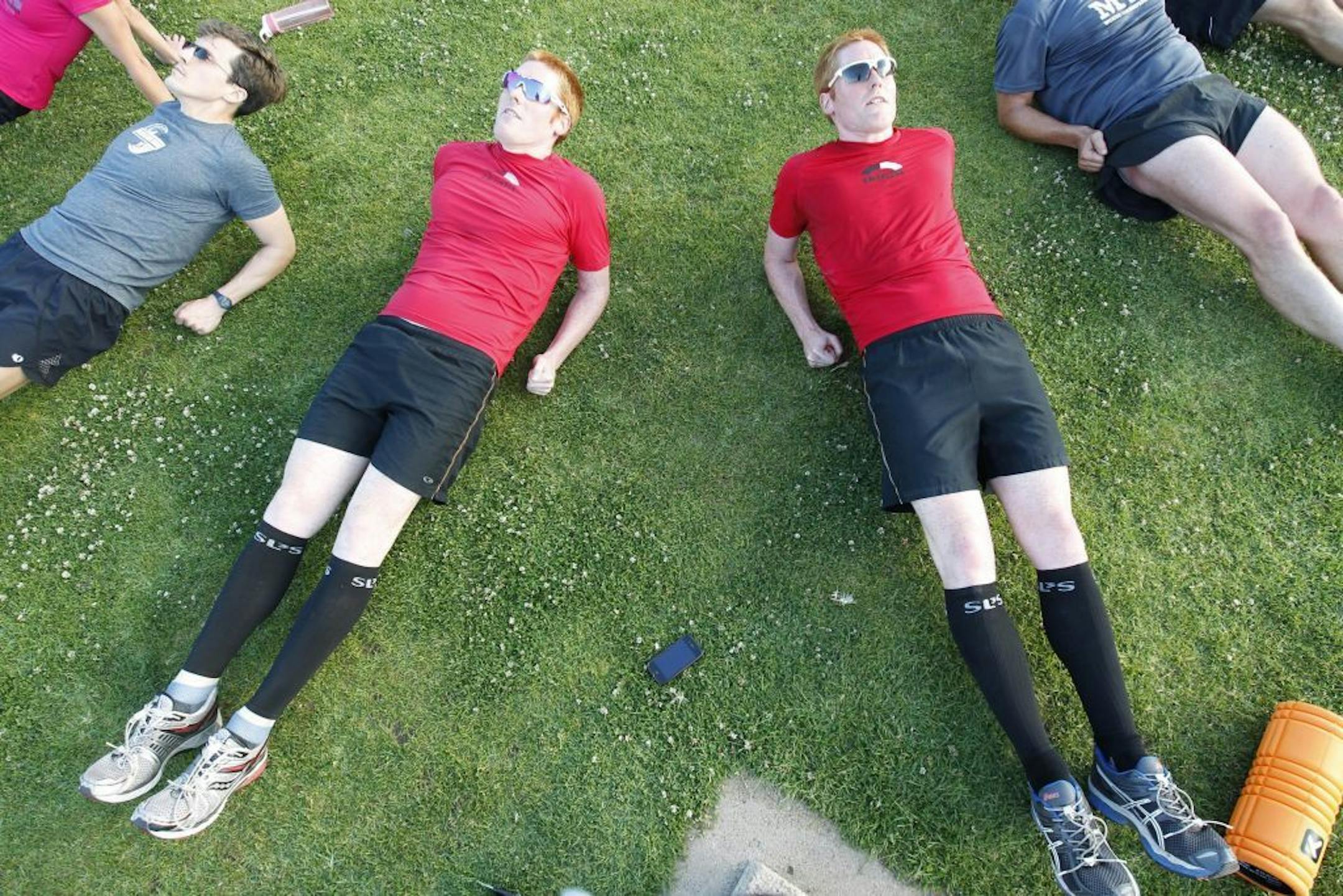
"Trying to use my own genetic information as a learning tool — that sounded like something I wanted," said bioscience graduate student Thomas Roos, 28, who learned he and his twin brother, Andrew, have slightly elevated risks of an Achilles tendon injury and dementia but a reduced risk of heart disease and arthritis.
Some students found they had an overabundance of Neanderthals in their ancient past. Still others detected predispositions to diabetes, chronic kidney disease, cancer or drug sensitivity.
Curriculums: 'This makes it very real'
Medical schools increasingly are including genetic education in their curriculums, alarmed by surveys showing few physicians know how to incorporate such data into their patients' medical care. Stanford is one of a handful of universities that offers the School of Medicine course to nonphysicians, so graduate students and even undergraduates get the chance to read their very own A, C, T and G sequence of nucleotides.
"I am teaching something they need to know," said Stuart Kim, a professor of developmental biology and genetics who co-founded the course. "These are future scientists who need to understand the underlying concepts behind this exploding field. We are preparing them to do cutting-edge biomedicine. This makes it very real."


