

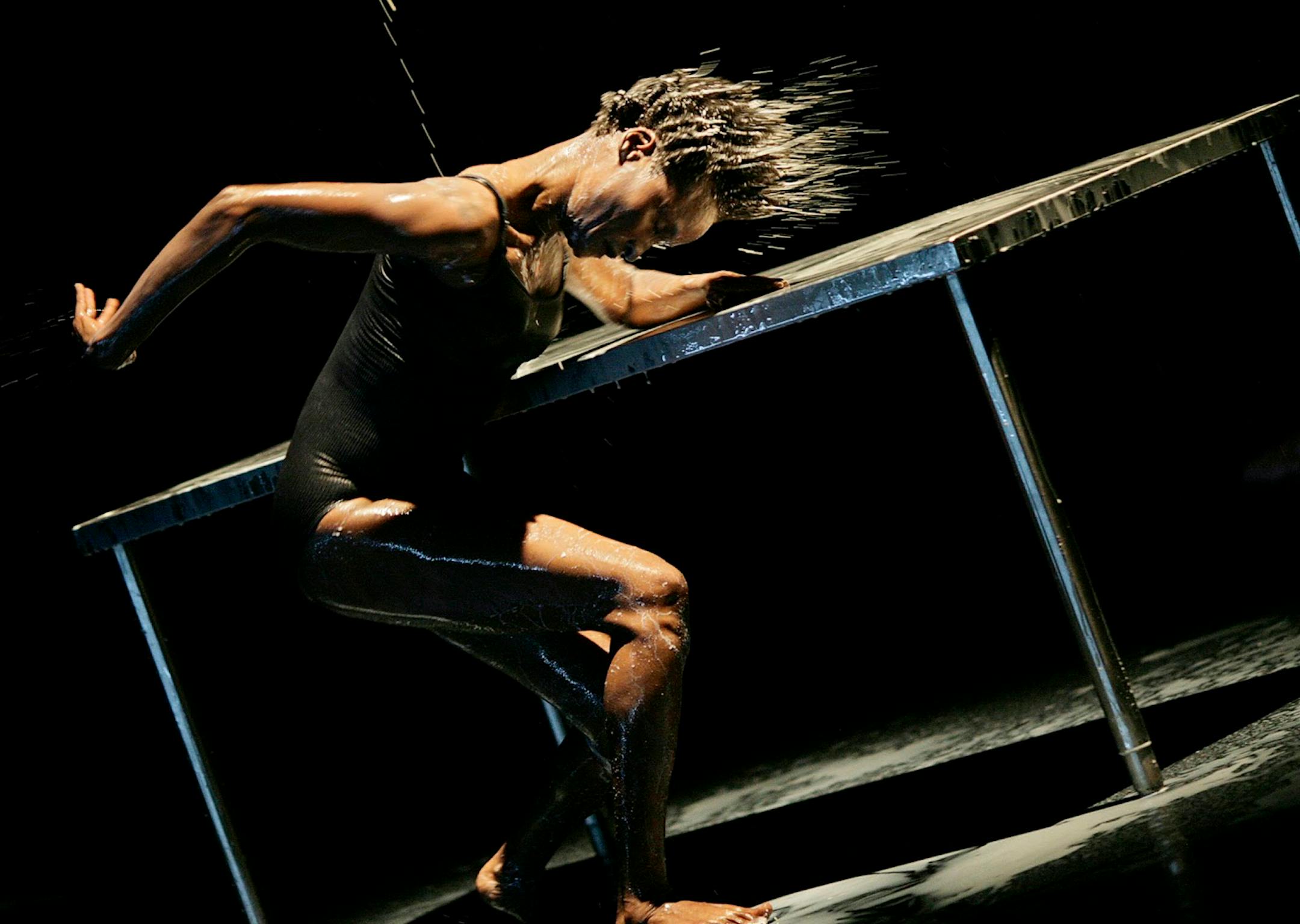
In a solo called "Sombra," Maria Helena Pinto dances with a bucket covering her head. No one sees the look in Pinto's eyes. Her aim is to raise awareness about women who live in isolation.
"It's a struggle to get out of the shadows to get a name, a face, a voice," said the Maputo, Mozambique-based choreographer via translator by phone from Seattle. "There are so many [women] who are working and reflecting and organizing important projects, but we never know who they are -- they are not put in front. It's men that place themselves in front."
Not so with the "Voices of Strength" series, which features works by five women from Africa who are leading the artistic vanguard in their countries. They are also introducing international audiences to new forms of contemporary dance and theater. Their stop this week at Walker Art Center is one of six in the United States for this mini-festival presented with New York's MAPP International Productions.
"There are people from different parts of the world making adventurous work, but it may not conform to our expectations," said Philip Bither, the Walker's senior curator of performing arts. Indeed, western audiences have only begun to grasp the depth, diversity and innovation of contemporary African artists.
"It's always a challenge in how we present ourselves and how others view us," said South Africa's Nelisiwe Xaba, also by phone from Seattle. "Especially in Europe and America, it's easier to put Africans in one bucket and not consider the fact that Africa is part of the changing world, part of the global world. ... Hopefully, 'Voices of Strength' will open the eyes of the audience."
Wit and image
There are two "Voices of Strength" programs. The first, set for the first and third nights, includes "Correspondances" by the Johannesburg-based choreographer/dancer Xaba in collaboration with Kettly Noël, who founded a dance organization, Donko Seko, in Bamako, the capital of Mali.
"Correspondances" grew out of lengthy conversations about "African politics, gender politics, and politics between women also," said Xaba, "the love and hate that we have amongst each other, even though we want to fight for the rights of women."


