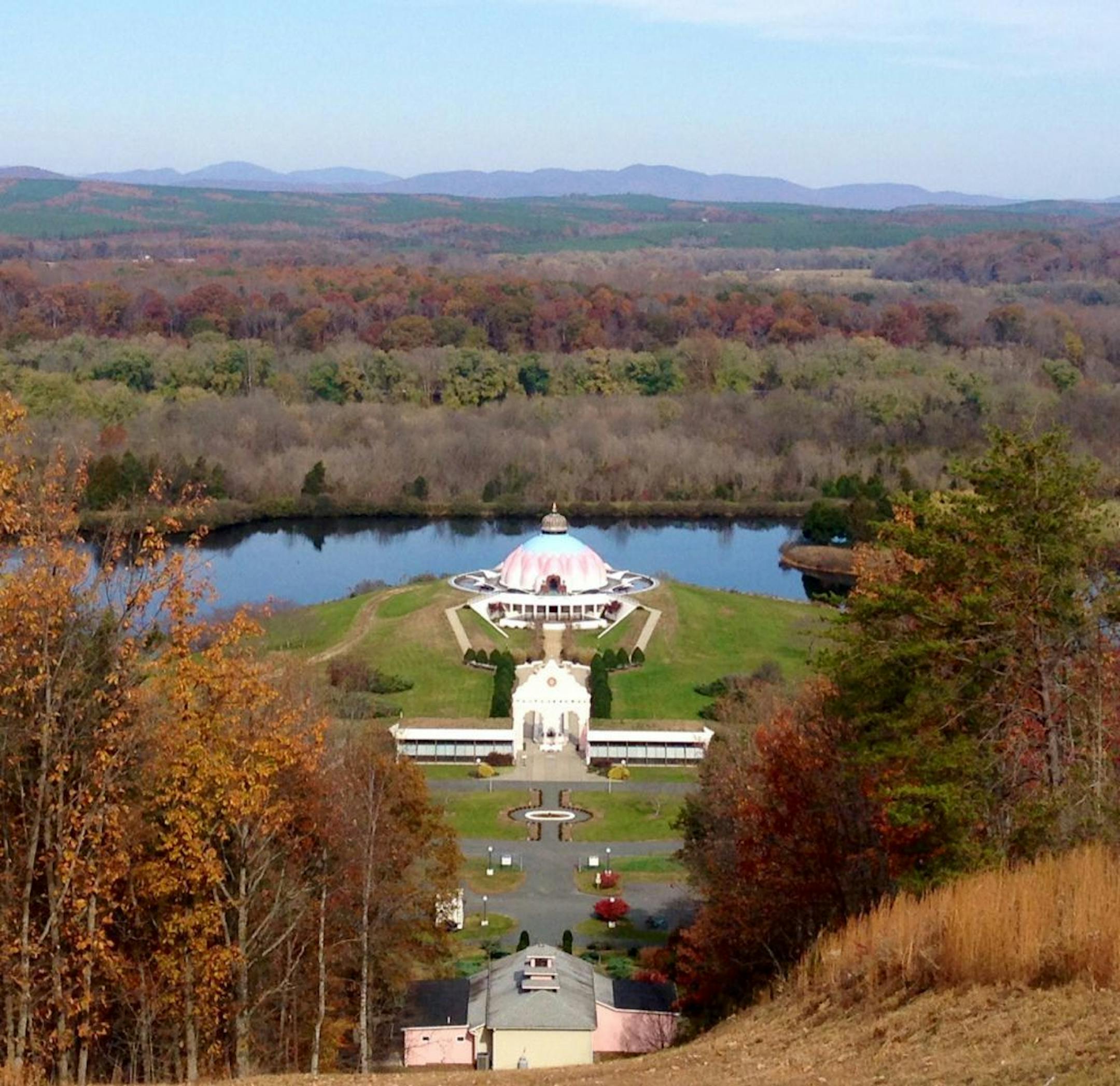
A rural valley in Virginia, threaded with woods and set against the Blue Ridge Mountains some 40 miles south of Charlottesville, might have seemed an odd place to establish an ashram and retreat center nearly 35 years ago. But when artist Peter Max brought Integral Yoga teacher and spiritual guide Sri Swami Satchidananda here in 1979, hoping to lure him to America, the monk fell in love with the views of the mountains and decided to stay.
Within a year he had founded a community dedicated to the teachings of Integral Yoga, based on unity and harmony among all living creatures. He called it simply Yogaville.
Today, Yogaville provides workshops in yoga, meditation, interfaith spiritual teachings or just a day of retreat. Curious about the ashram life and warming to the idea of a weekend of yoga in a cellphone-free area (guests are asked to turn off phones while at the ashram, and reception in the mountains is poor anyway), a girlfriend and I signed up.
My fellow nirvana-seeking friend and I opted for the communal dormitory-style housing, sharing a room with four other women (rooms sleep up to eight; floors are separated by gender). Private and semiprivate rooms are available; other options include tents on the wooded Yogaville grounds, and a more luxurious retreat center for groups farther afield.
The eerie quiet of a night spent in the middle of the woods was broken at 6 a.m. by the mellifluous sound of a violin playing "Oh, What a Beautiful Morning." The violinist strolling the halls was tiny, white-haired, 85-year-old Swami Gurucharanananda, better known as Mataji, a term of affection and respect accorded a senior female monk.
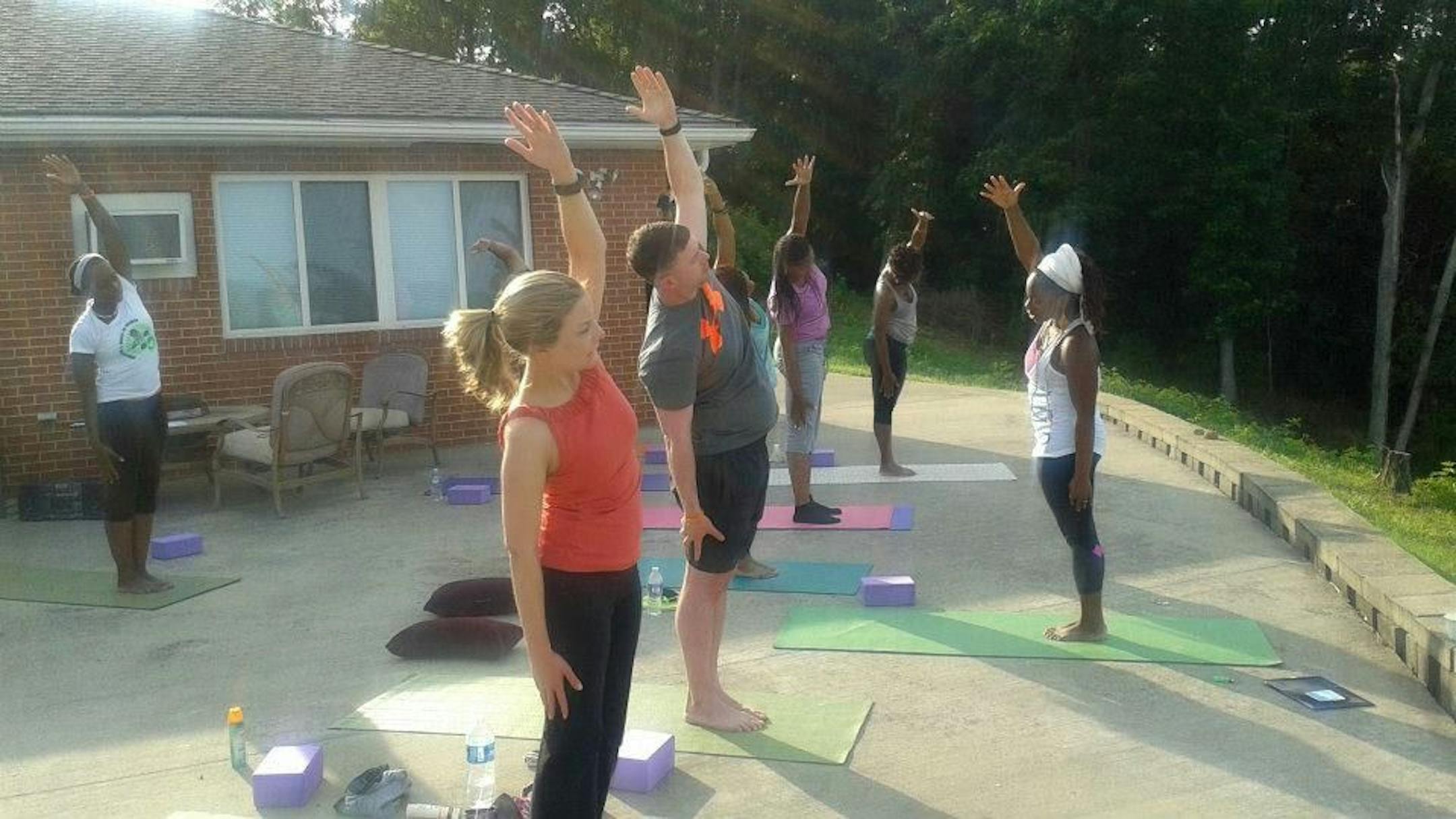
Mataji, who seemed to glow with an enviably joyous sense of calm, then led our hourlong meditation session, followed by a 90-minute Hatha yoga class.
Unsure of our stamina at that pre-breakfast hour, my friend and I opted for beginner-level yoga. We found it a bit unchallenging, but it was nothing if not thorough — I've never before attended a class in which I was directed to exercise my eyeballs. (Rotating them clockwise and counterclockwise, looking to the left and right and finally, pressing them firmly with the heels of my hands so they could "rest in their sockets.")
Spiritual teachings at the ashram are relatively pan-faith and soft-pedaled but omnipresent, as in a reading from Satchidananda's work given during lunch. (Sample teaching: Love and service to others are the only two precepts that need be followed in life.)