

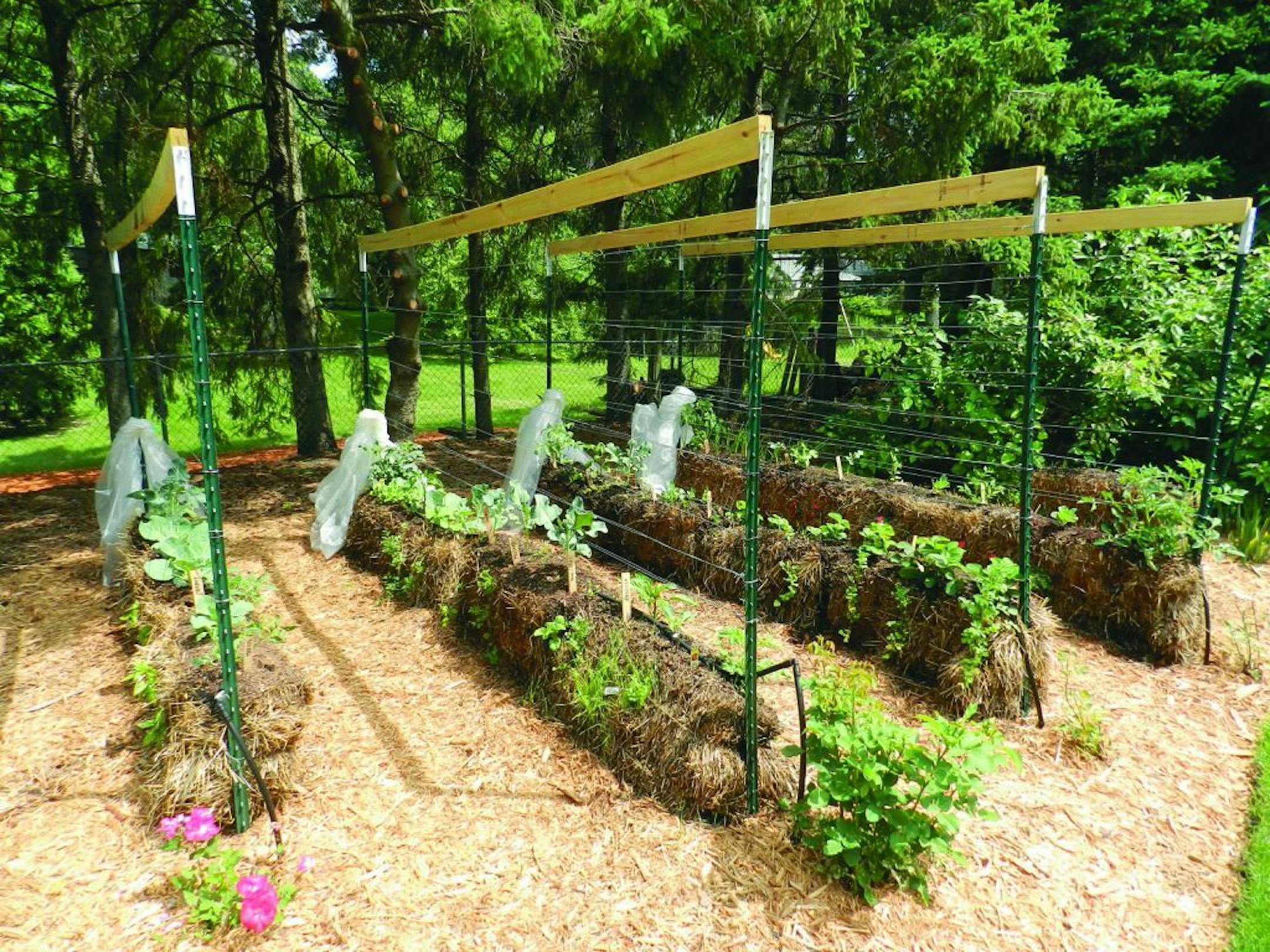
This year's growing season is not exactly off to an early start.
But a local gardener has a suggestion: Plant your vegetables in a bale of straw instead of in the ground.
It's a humble method with old, rural roots, one that Joel Karsten of Roseville has been advocating for more than a decade. He started experimenting with growing vegetables in decomposing straw, inspired by his childhood memories of tall, healthy thistles sprouting out of wet bales on the farm. Encouraged by his results, he started teaching community education classes throughout Minnesota and Wisconsin, picking up almost 25,000 Facebook "likes" along the way. Now he's published a book, "Straw Bale Gardens" (Cool Springs Press, $19.99), which was featured last month in the New York Times.
What's so great about growing produce in old, rotting straw bales? Earlier vegetables, for one thing, according to Karsten. That's enticing to cold-climate veggie gardeners, especially this year, when gardens remained buried under snow more than a month after the official start of spring.
So how exactly does straw-bale gardening deliver early vegetables?
"When you put tomatoes in cold soil, they just sit there until the soil gets to the right temperature," Karsten said. But with a bale, "you create a really nice growing environment, similar to an expensive greenhouse." Once you "condition" your straw (which means starting the process of decomposition), the interior of the bale heats up. By late May, its temperature could be 85 to 90 degrees, vs. 55 degrees for soil in the ground, he said, leading to rapid root production.
Tomatoes and cucumbers, in particular, prefer warm roots and cool tops, according to Karsten, but it's very difficult to get that combination in the ground. In fact, planting veggies in a warm bale, rather than the chilly ground, reduces days to maturity by 10 percent, he said.
Karsten has tested it many times, he said. "It's really fun to do a comparison, put a pepper plant in a straw bale and one in the soil," he said. "A month later, the one in the bale is 20 inches taller than the one in the ground."


