

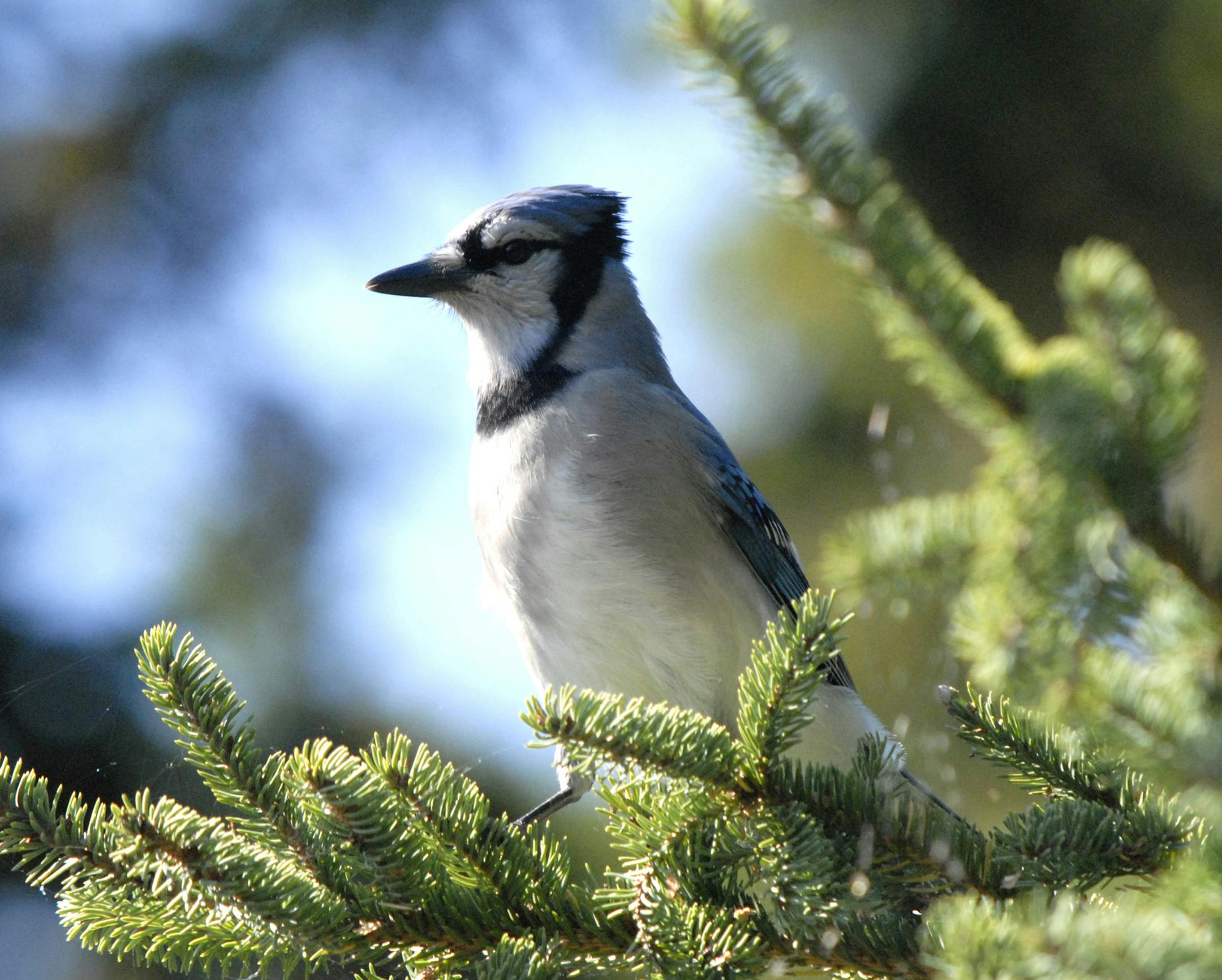
Q Is it normal for blue jays to bury food? We have quite a few jays around and we've seen them push peanuts from the feeders into the lawn and under leaves. Does this mean we're in for a tough winter?
A Yes, blue jays do hide food in the fall to augment winter's meager food supplies. This practice is called "caching," and a number of birds do it, including chickadees and crows. Amazingly enough, these birds remember where they stuffed each morsel.
I don't think their caching tells us anything about the coming winter, though, because these birds cache food every fall.
Shooing woodpeckers Q I'm becoming extremely frustrated with pesky woodpeckers making holes in our wood siding. Someone suggested hanging shiny objects on all sides of the house, but I don't want my house to become a sideshow. Any suggestions?
A No doubt about it, dealing with woodpeckers is a challenge. Woodpeckers can cause a great deal of damage to a home -- and it can take an entire arsenal of tactics to discourage them.
This time of year, the woodpeckers drilling into your siding are either looking for food or trying to excavate a hole for nighttime roosting. If you don't like the idea of creating a visual barrier (hanging aluminum foil, wind socks or plastic owls), you could use sound deterrents (such as an electronic motion detector that makes noise) or create a physical barrier (such as covering any holes they've pecked with metal flashing).
For a list of ways to control woodpecker damage, visit the Cornell Lab of Ornithology's site at www.birds.cornell.edu/wp_about.
The last birds Q Is migration over for the year?


