

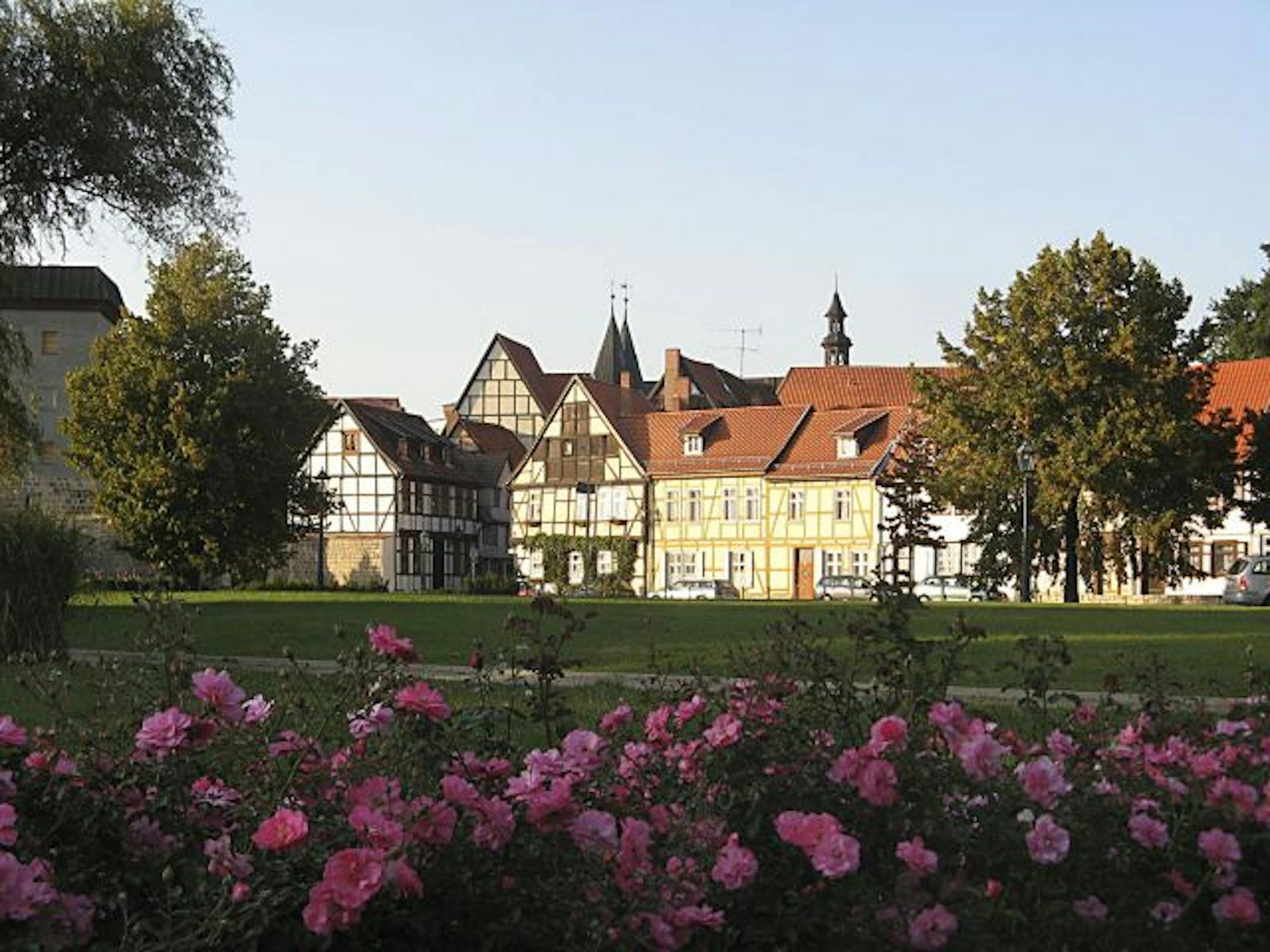
A medieval castle housing ancient treasure; crumbling city towers; crooked-beamed, half-timbered houses that seem to jostle for space on winding cobbled streets: It's hard to compete with Quedlinburg for quaintness. At the foot of the Harz Mountains, this forgotten home of early German kings is a few hours' car journey southwest of Berlin and looks central on a map of the country.
Yet the whole mountain region, steeped in history and mythology, has a lost-in-time, mystical feel. The highest peak of the Harz, the Brocken, is shrouded in mist for an average of 300 days a year. Folklore maintains that the witches and their gods (or in Goethe's version, the devil) hold wild revels there on Walpurgis Night, April 30, to mark the arrival of spring.
The remoteness is partly because the region straddled the Iron Curtain until German reunification 20 years ago, and, like many border areas, was thinly populated on both sides. Quedlinburg, once an important trading post, is now part of the eastern state of Saxony Anhalt, an economically weak region lumbered by a dwindling population and high unemployment. Yet the town's intact houses, spanning 800 years of architecture history, earned it UNESCO World Heritage status in 1994.
Tourism is now the lifeblood of the local economy, and Quedlinburg attracts visitors year-round. In summer, you can hike, cycle and swim in nearby lakes, or simply wander through picturesque lanes with names such as Holy Spirit Street and even Hell, admiring intricate, wood-carved facades. In some places, the upper stories lean so far into the narrow alleys that neighbors facing each other on the street could shake hands without leaving their front rooms.
In winter, cozy cafes beckon, as do the twinkling lights of Christmas market stalls in cobbled courtyards, where caldrons of apple punch and gluehwein bubble over open fires. You can sled and ski in the mountains nearby.
There are also excellent restaurants, not a given in the east German provinces. Theophano im Palais Salfeldt offers seasonal, local products cooked with care and served under the vaulted stone ceilings of a 16th-century palace. For a light, inexpensive supper, try Himmel und Hoelle for crispy Flammkuchen (like a thin pizza with sour-cream topping) and fruit crumbles.
Quedlinburg was spared by Allied bombs in World War II because it had no strategic importance. It largely escaped the anonymous concrete monstrosities favored by planners in Communist East Germany. It did, though, fall into a shocking state of disrepair during decades of Communist neglect.
A major sprucing up has taken place over the past 20 years. Now, most of the old half-timbered houses are restored and inhabited. Only a few still lie gutted and abandoned.


