

A much-anticipated state study on the number of nurses required to provide safe, effective patient care in Minnesota hospitals fell short of its goals after hospitals failed to provide the data to answer key staffing questions.
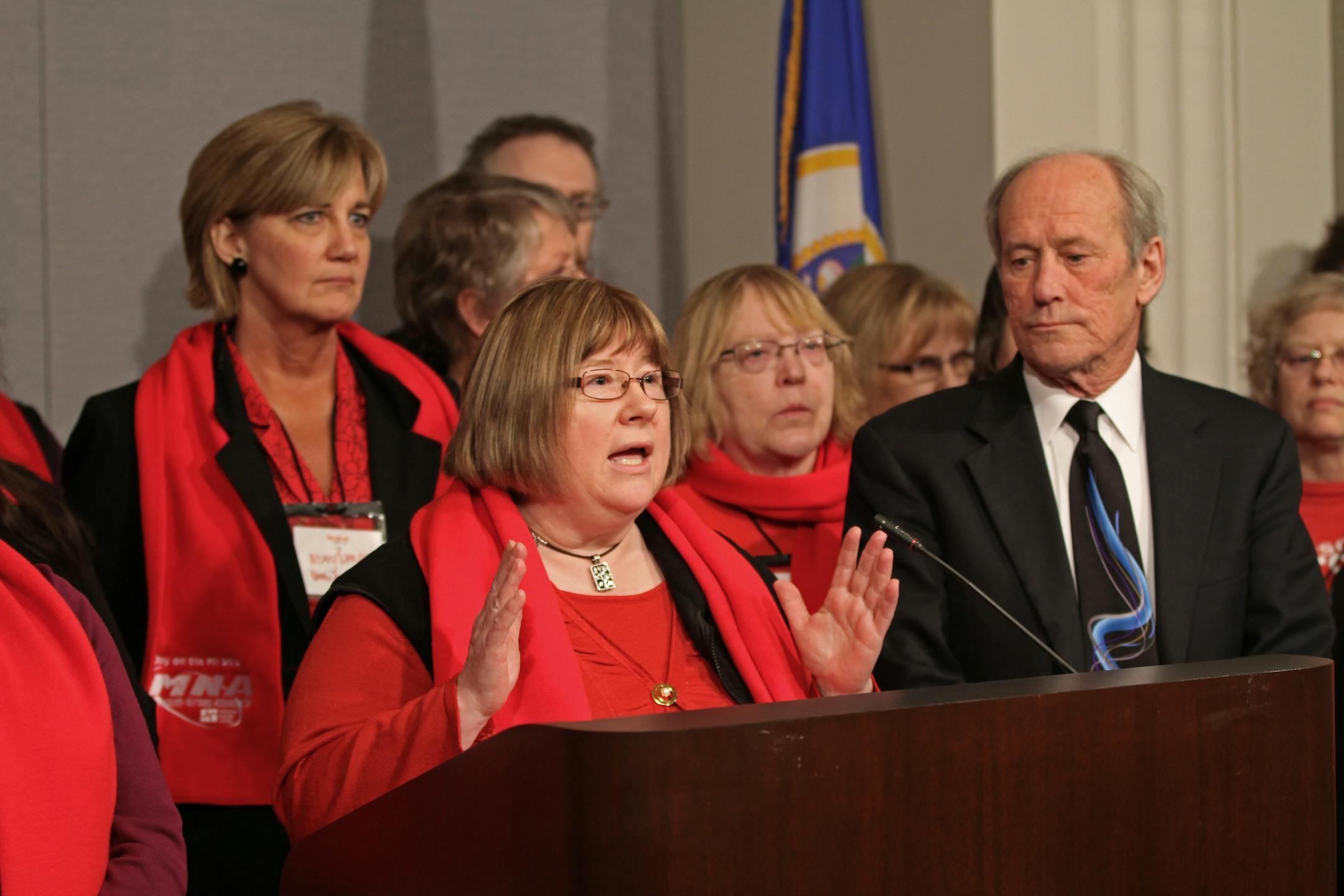
The lack of hospital participation drew fire Monday from the state's nurses union, which hoped the study would fortify its negotiating position on the need for lower patient-to-nurse staffing ratios. "Are they just unwilling to cooperate with a study they themselves agreed to with our lawmakers?" said Linda Hamilton, president of the Minnesota Nurses Association.
A spokeswoman for the Minnesota Hospital Association said its members cooperated with the study, but simply lacked the detailed data that researchers sought.
In lieu of a fresh analysis of nurse staffing in hospitals, state health economics researchers summarized existing research, and found that higher nurse staffing has been associated with lower rates of falls, deaths and surgical complications.
However, existing research doesn't prove cause and effect, nor does it suggest that an immediate infusion of nurses in Minnesota's hospitals would improve patient safety, Dr. Edward Ehlinger, state health commissioner, said in a Jan. 16 letter to lawmakers.
The results "do not identify points at which staffing levels become unsafe or begin to have negative effects on outcomes," Ehlinger wrote.
Nurse staffing was a central issue in contentious negotiations between nurses and 14 metro-area hospitals that led to a one-day strike in 2010. Nurses conducted walkouts and pickets on June 10 that year, demanding that hospitals stick to predetermined nurse ratios to ensure patient safety, forcing the hospitals to hire temporary replacements to get through the day.
However, nurses relinquished the demand for mandatory ratios a month later, after the hospitals sweetened their three-year contract offers with better pay and pension and health benefits.


