

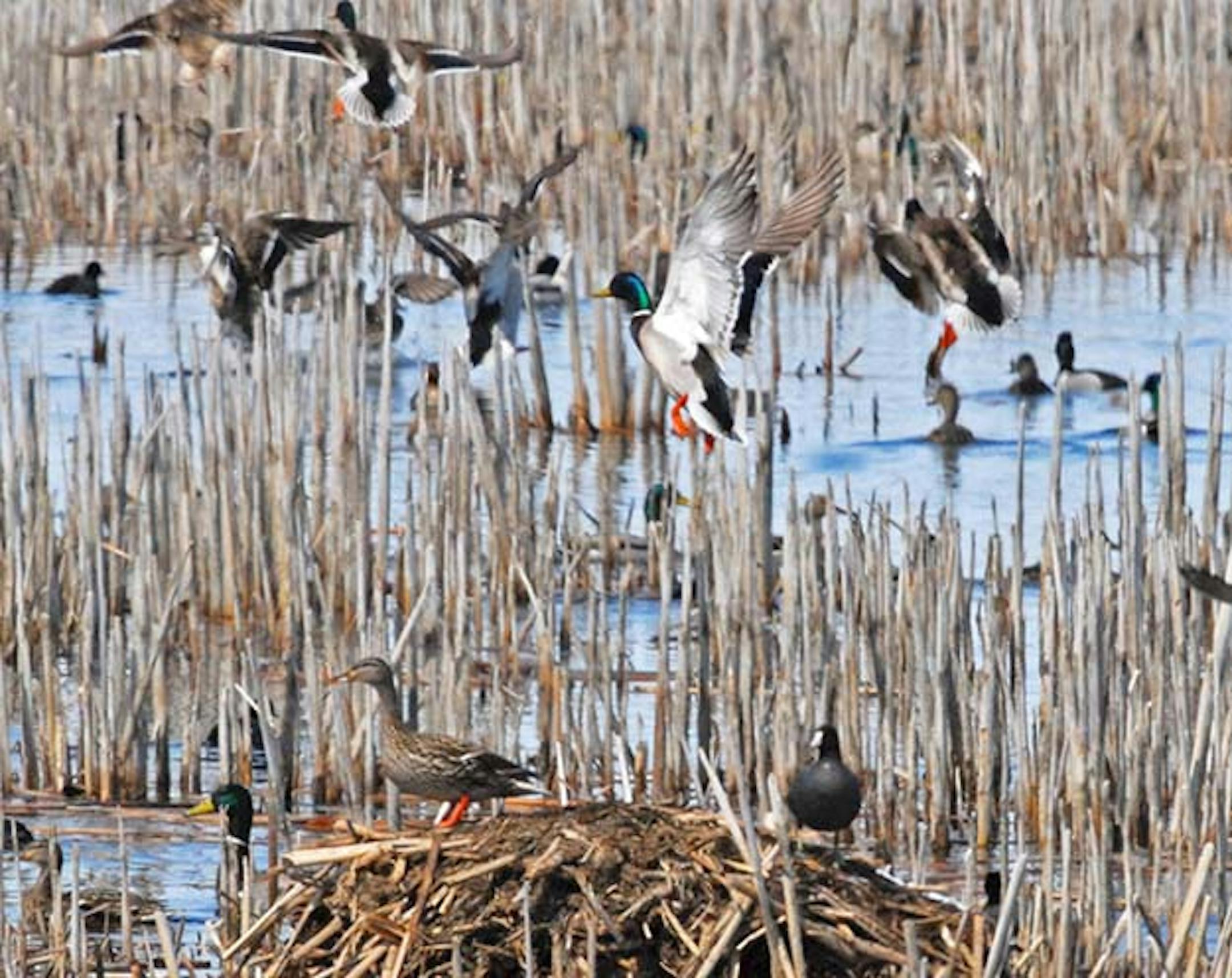
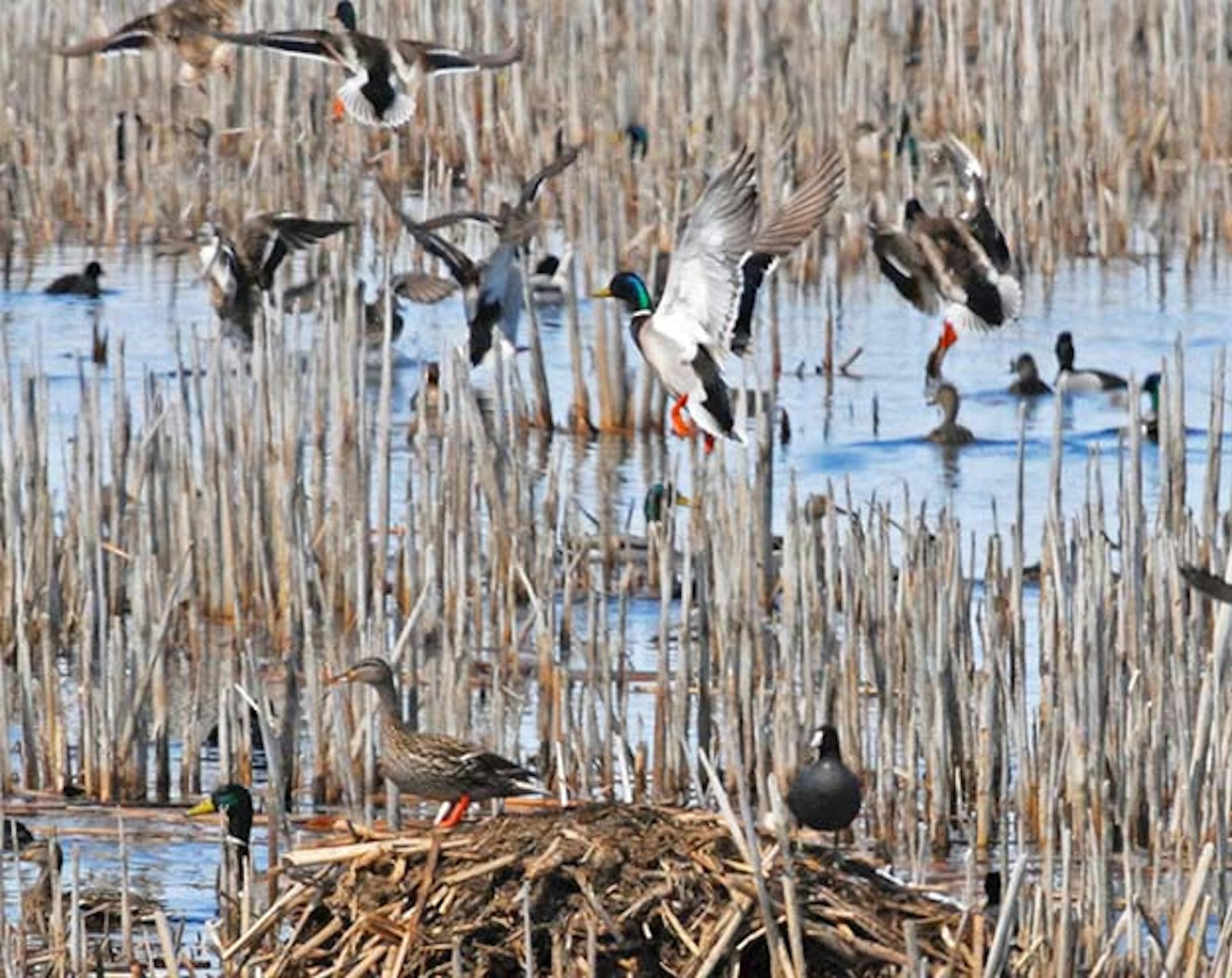
Mallard numbers declined by 15 percent this spring compared to a year ago, said Steve Cordts, DNR waterfowl specialist. Blue-wing teal numbers also plummeted — by 51 percent statewide.
In a press release, the DNR said:
This year's mallard breeding population was estimated at 214,000, which is 15 percent below last year's estimate of 250,000 breeding mallards and 6 percent below the long-term average measured each year since 1968.
The blue-winged teal population is 159,000 this year, 51 percent below last year's estimate and 25 percent below the long-term average.
The combined populations of other ducks such as ring-necked ducks, wood ducks, gadwalls, northern shovelers, canvasbacks and redheads is 263,000, which is 23 percent higher than last year and 48 percent above the long-term average.
The estimate of total duck abundance (excluding scaup) is 636,000, which is 19 percent lower than last year and 3 percent above the long-term average.
The estimated number of wetlands was 20 percent higher than last year and 5 percent above the long-term average. Wetland numbers can vary greatly based on annual precipitation.
Canada goose population increases


