One hundred years ago, the city of Minneapolis embarked on a bold new idea: designing the future instead of letting it happen.
Minneapolis, said the editorial page of the Tribune on May 10, 1921, "comes in for commendation from St. Cloud Journal Press, which says that in its city planning commission Minneapolis has what every city should have. 'Most cities,' says the Journal Press, 'adopt the Topsy plan of just growing up.' "
The preening editorial continued, pointing out St. Cloud's pitiful planning process:
"Each new set of officials pay little heed to the program of their predecessors, and there is no general plan of development followed. It is largely a hit and miss program, with more misses than hits."
Not Minneapolis: The city did more than plan for "street arrangement and land use." It thought ahead, and attempted to see the big picture. This was the new way.
The future always has its foes, though. The City Planning Commission was not popular with city leaders. The Legislature created the commission in 1919, approving a bill drafted by the Hennepin County delegation.
Minneapolis officials considered it a usurpation of local authority, with one alderman denouncing it as an attempt to leach away the City Council's "power and prestige." But eventually the City Council relented, and the commission set about improving some things, and disapproving of others.
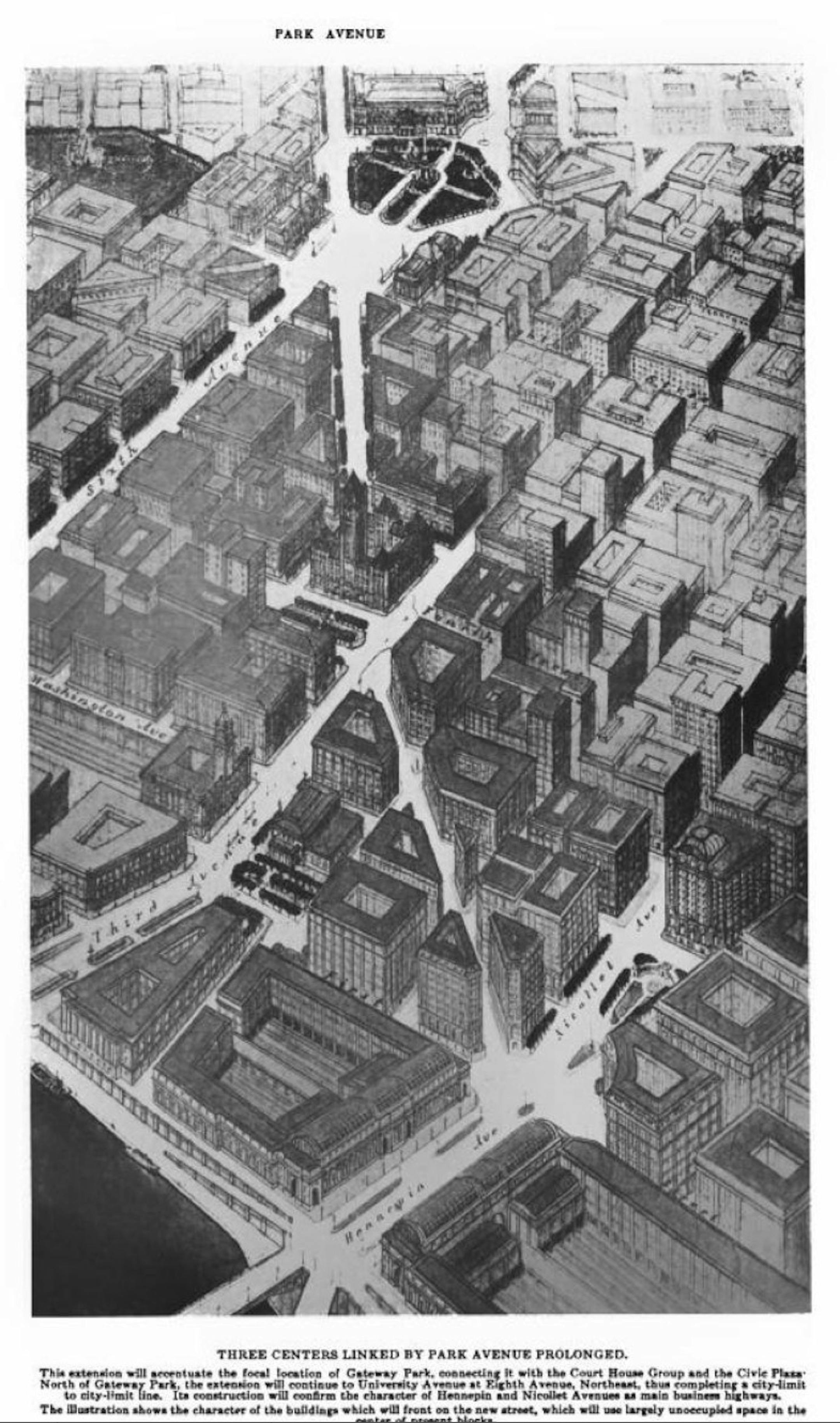
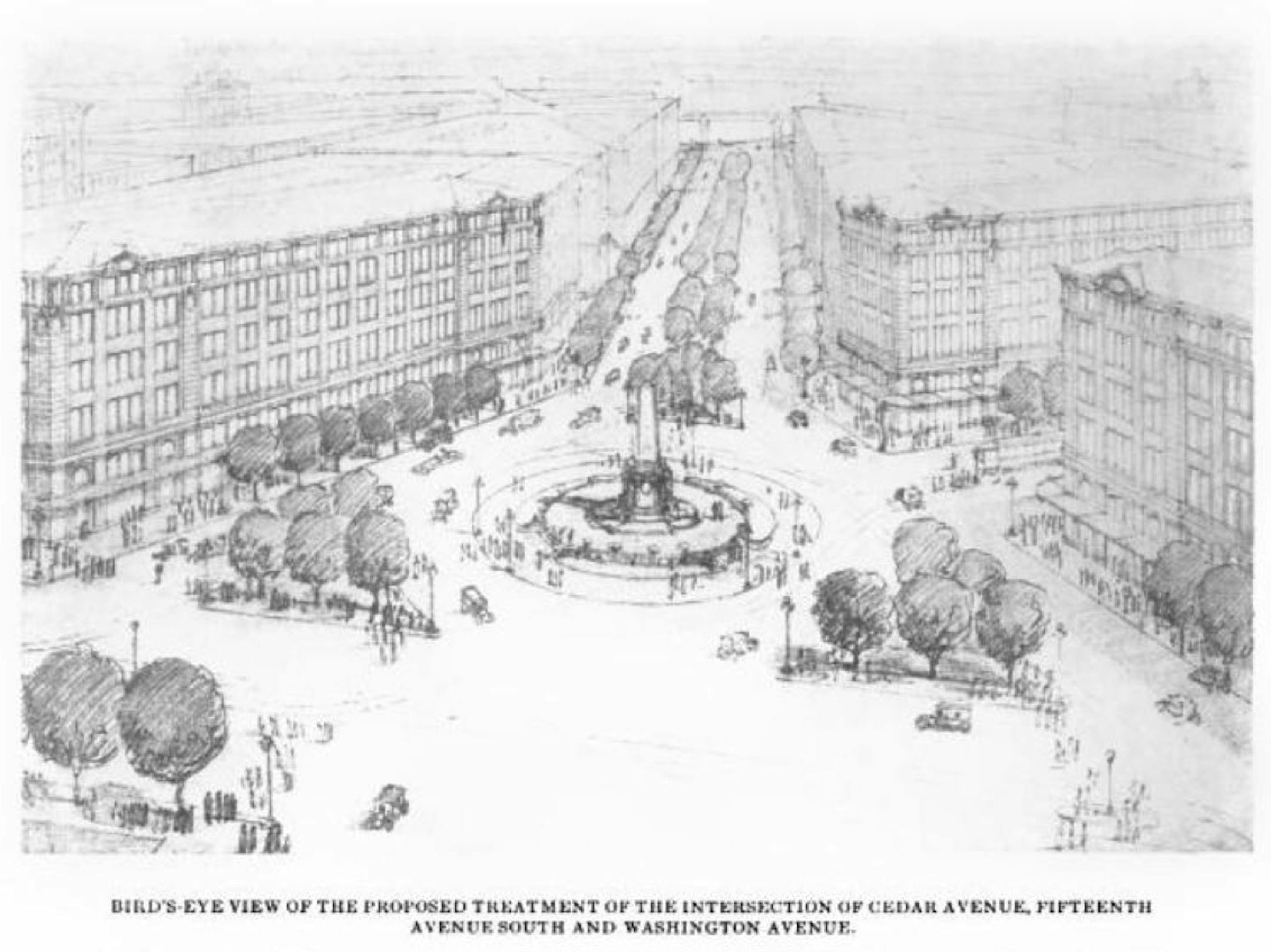
The commission already had a blueprint for the future: the extraordinary 1917 "Plan of Minneapolis" that proposed remaking downtown along the City Beautiful model. The 1893 World's Columbian Exposition in Chicago had awakened public interest in white, gleaming classical structures, and many visitors to the exposition returned home to dingy, calamitous soot-stained cities and wondered why those cities couldn't look better.