

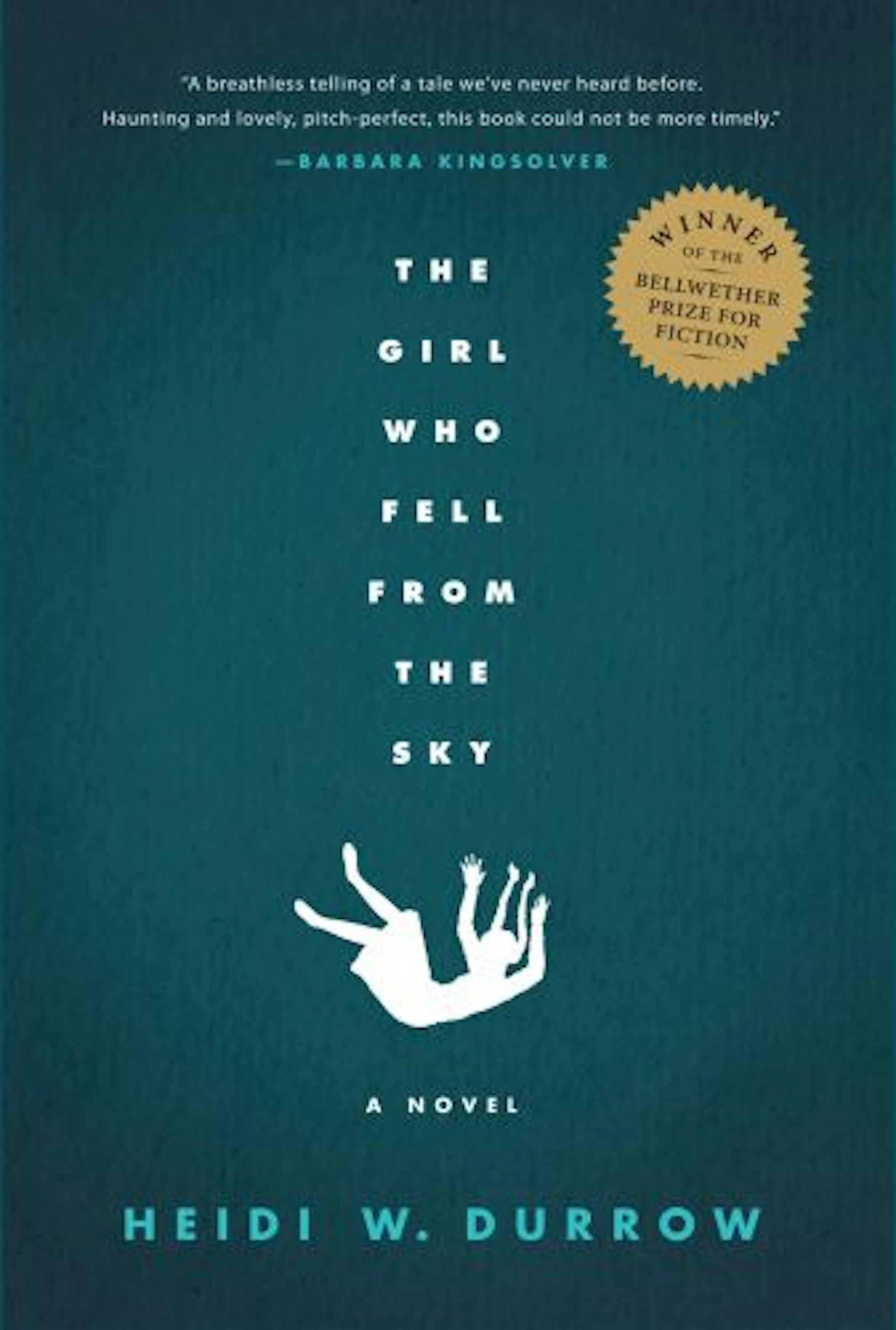
Early in Heidi W. Durrow's debut novel, a heartbreaking event occurs to a mother and three children in Chicago. The lone survivor of the tragedy, Rachel Morse, is placed in her black grandmother's care in Portland, Ore.
Born in Europe to a Danish mother -- "Mor," in that language -- and a black Air Force cartographer, Rachel gradually learns how to negotiate her way in a city and country in which people are defined by their color.
As she decodes the signs shaping her life as a biracial, bilingual child in the United States, she becomes a mapmaker like her father, though hers is an emotional, socio-political and linguistic terrain to map and to understand.
Part of what she calls "code language" concerns her grandmother's word choices: such as using "lizard" for husband or saying "'fixin' to'" when she's about to do something. Another part of the code Rachel must decipher is why black classmates dislike her for speaking to a white girl, or why Lakeisha, her mentor Drew's daughter, corrects her for listening to "white music" or asks "Why you talk all proper?"
In time, Rachel learns what "goes in the white category" and what in the black category.
Another part of her education involves whether to trust whites like Jesse, the co-worker who "recites revolutionary Jamaican poems by heart," lives in a wealthy suburb and is bound for Reed College.
The greatest mystery for Rachel, however, remains the tragedy on the Chicago rooftop. Why it occurred puzzles others, among them Brick, a boy who witnessed the event. Brick's and Rachel's search for answers impels the novel forward. So, too, do its alternating points of view.
Durrow narrates Rachel's and Mor's sections in first person, present tense, while narrating others' sections -- Brick's, Rachel's father's, Jesse's -- in third person limited and in past tense.


