

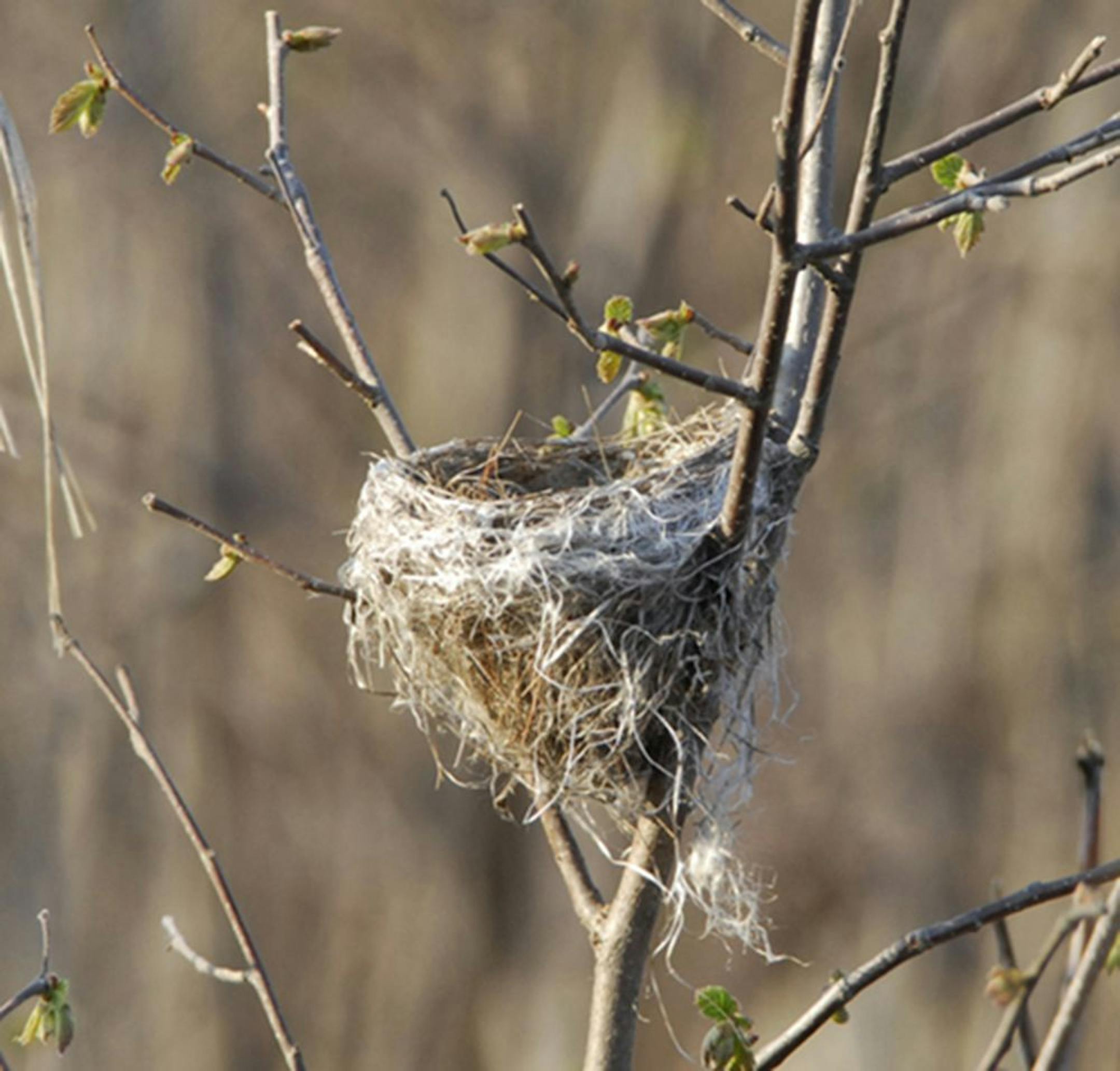
Winter lays trees bare, their secrets exposed. But where are all the bird nests?
A reader asked me that question the other day. He didn't say exactly where he was looking, but the logic that nests would be seen in large, obvious trees like those in yards, parks or on city boulevards doesn't hold.
Not many species use such trees. Robins do, and Eastern wood-pewees. Their nests fit tucked in at a joint formed by three or four limbs. Blue jays and raptors will build nests high in such trees. Look for stick constructions, but don't confuse them with the leaf balls that squirrels build.
Other bird species use cavities; watch for holes in trunks and big limbs. Many birds use smaller trees or shrubs. Cardinals will nest in the middle of a large clump of high-bush cranberry, for instance. They can be hard to find now, and impossible in spring and summer.
Check willows beside water, where some species of warblers and sparrows nest. Red-winged blackbirds, at least one sparrow species, one wren species and one warbler species nest in marshes and swamps. Blackbirds build nests in cattails very near the water, very hard to find.
And then there are the birds that nest on the ground, deep in tall grass. Killdeer, part of the plover family, nest right in the open, in a scrape of gravel along a driveway or almost any dirt road. The bird is well camouflaged, however, and the eggs even more so. You could walk right past the incubating bird and not see it unless it flushed.
Smaller trees in or adjoining marshy or swampy land probably offer the most visible nests at this time of year. Walk the trails of any of the Three Rivers Park District parks.
And remember, it's in the birds' interest to place and construct nests that are difficult to see. You're almost better off to look for nests in the spring. Watch for birds collecting nesting material, and use binoculars to follow them to the nest site.


