
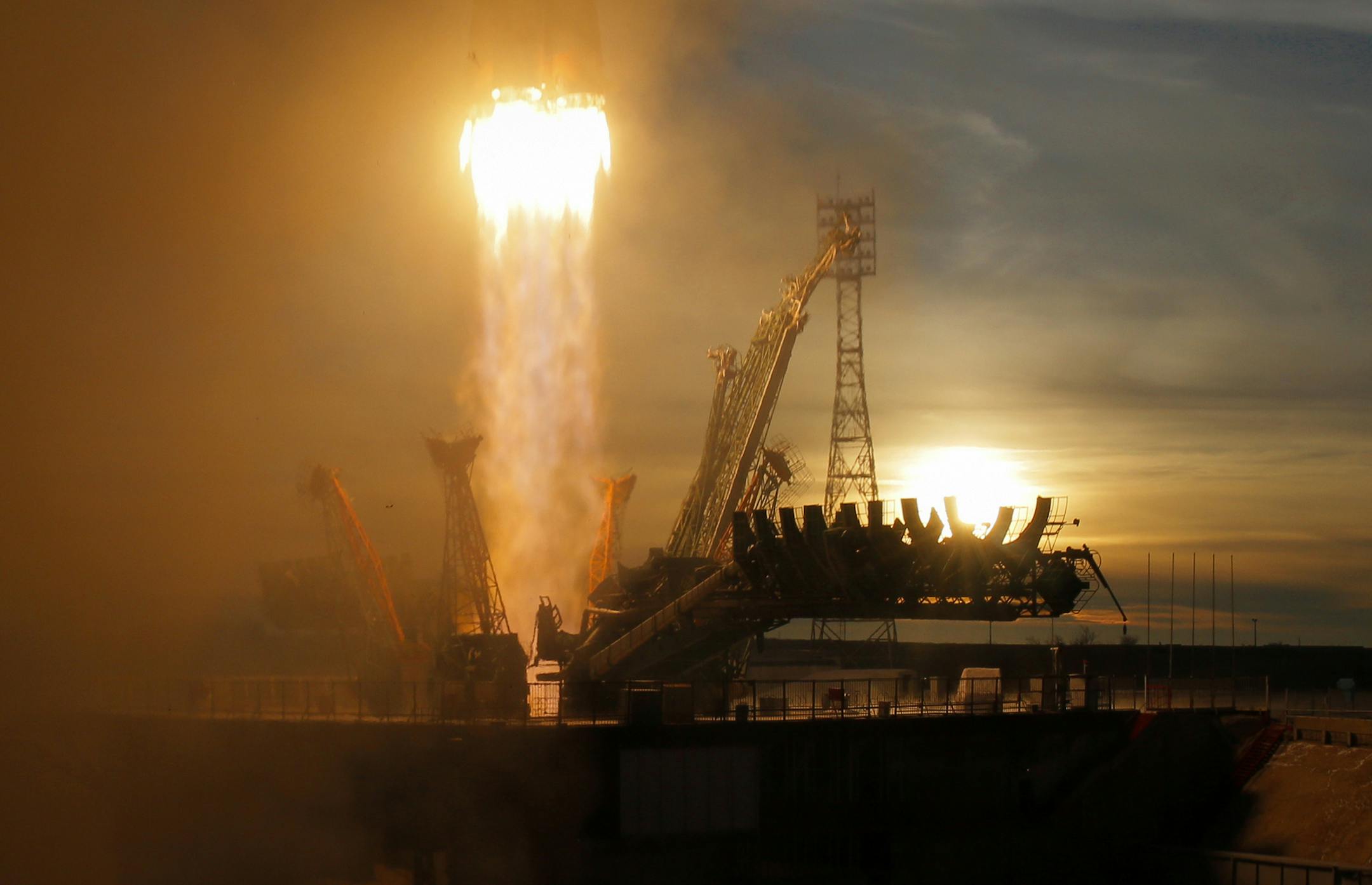
Soyuz rocket launches flawlessly weeks after malfunction

December 3, 2018 at 10:40PM
The Soyuz-FG rocket booster with Soyuz MS-11 space ship carrying a new crew to the International Space Station, ISS, blasts off at the Russian leased Baikonur cosmodrome, Kazakhstan, Monday, Dec. 3, 2018. The Russian rocket carries U.S. astronaut Anne McClain, Russian cosmonaut Оleg Kononenko‎ and CSA astronaut David Saint Jacques. (AP Photo/Dmitri Lovetsky)
An American, a Canadian and a Russian blasted into orbit Monday in the first launch of a piloted Russian Soyuz rocket since a dramatic failure in October, when a booster failed to separate smoothly and the crew plummeted to Earth in an emergency return. As Soyuz rockets are now the only means for astronauts to reach the International Space Station, the launch was closely watched. But the rocket lifted off from the Baikonur spaceport in Kazakhstan without a hitch. “Everything is fine on board,” Russian Commander Oleg Kononenko radioed. In addition to Kononenko, U.S. astronaut Anne McClain and Canada’s David Saint-Jacques, both first-time space travelers, will live in orbit for six months. (The Minnesota Star Tribune)

Headline: Soyuz Rocket Launches Flawlessly, Weeks After Malfunction

Keywords: World; Russia; Germany; United States; Space; Canada; Science And Technology; Earth; National Aeronautics And Space Administration; Kazakhstan; United States Defense And Military Forces; Defense And Military Forces; Moscow (Russia); Planets; Ussr (Former Soviet Union); International Space Station; Soyuz Project; Rocket Science And Propulsion; Space Stations; Baikonur (Kazakhstan); Space And Astronomy; Kramer, Andrew E

Copyright: c.2018 New York Times News Service

Byline: Andrew E. Kramer

WordCount: 519

MOSCOW — An American, a Canadian and a Russian blasted into orbit Monday in the first launch of a piloted Russian Soyuz rocket since a dramatic failure in October, when a booster failed to separate smoothly and the crew plummeted to earth in an emergency return.

As Soyuz rockets are now the only means for astronauts to reach the International Space Station, Monday's launch was closely watched. Had the rocket not reached orbit, the station might have been left unoccupied for a time.

But the rocket lifted off from the Baikonur spaceport in Kazakhstan on a tongue of flame and flew into space without a hitch, live video of the launch showed.
"Everything is fine on board," the Russian commander, Oleg Kononenko, radioed back at one point.

About two minutes into the fight, the boosters separated as planned, passing the point where the rocket had failed during the launch Oct. 11. Russian cosmonauts call this stage of flight the "Korolev Cross," after Soviet rocket designer Sergei Korolev and the cross-shaped trails of smoke formed if the four boosters separate cleanly and spiral away, as happened Monday.

After October's mishap, in which an American and a Russian made a harrowing emergency return, the Russian space agency concluded that a single small part — a pin — had been improperly installed and caused the failure.

In addition to Kononenko, a veteran cosmonaut making his fourth trip to space, the Soyuz carried Anne McClain from the United States and David Saint-Jacques from Canada, both first-time space travelers. The crew plans to dock with the International Space Station about six hours after the launch and to live in orbit for six months.

The three current inhabitants — Alexander Gerst of Germany, Serena Auñón-Chancellor of the United States and Sergey Prokopyev of Russia — plan to return Dec. 20 aboard a Soyuz module that has been docked to the station since June.

The two Russians plan a spacewalk to examine the exterior of that capsule, after an incident in August when a hole was discovered in its hull.

The Russian space agency has said the hole was deliberately drilled in an act of sabotage, although it is unclear whether this happened before launch or in orbit. The capsule launched in June, but the air began leaking only in August; if the hole were drilled on earth, it must have been filled with a sealant that later broke down and was sucked into the vacuum of space.

During their spacewalk, planned for Dec. 11, Kononenko and Prokopyev plan to remove an exterior panel and examine it for traces of sealant in what Russians have called a mid-orbit investigation. The shield will be brought into the station and later returned to earth, Russian space officials said.

The examination has to be conducted in space, as the portion of the Soyuz ship with the hole is designed to separate and burn during re-entry, meaning it cannot be examined on the ground.

Russian news outlets have speculated wildly about NASA astronauts sabotaging the Russian capsule. The U.S. commander of the International Space Station at the time denied the accusations.

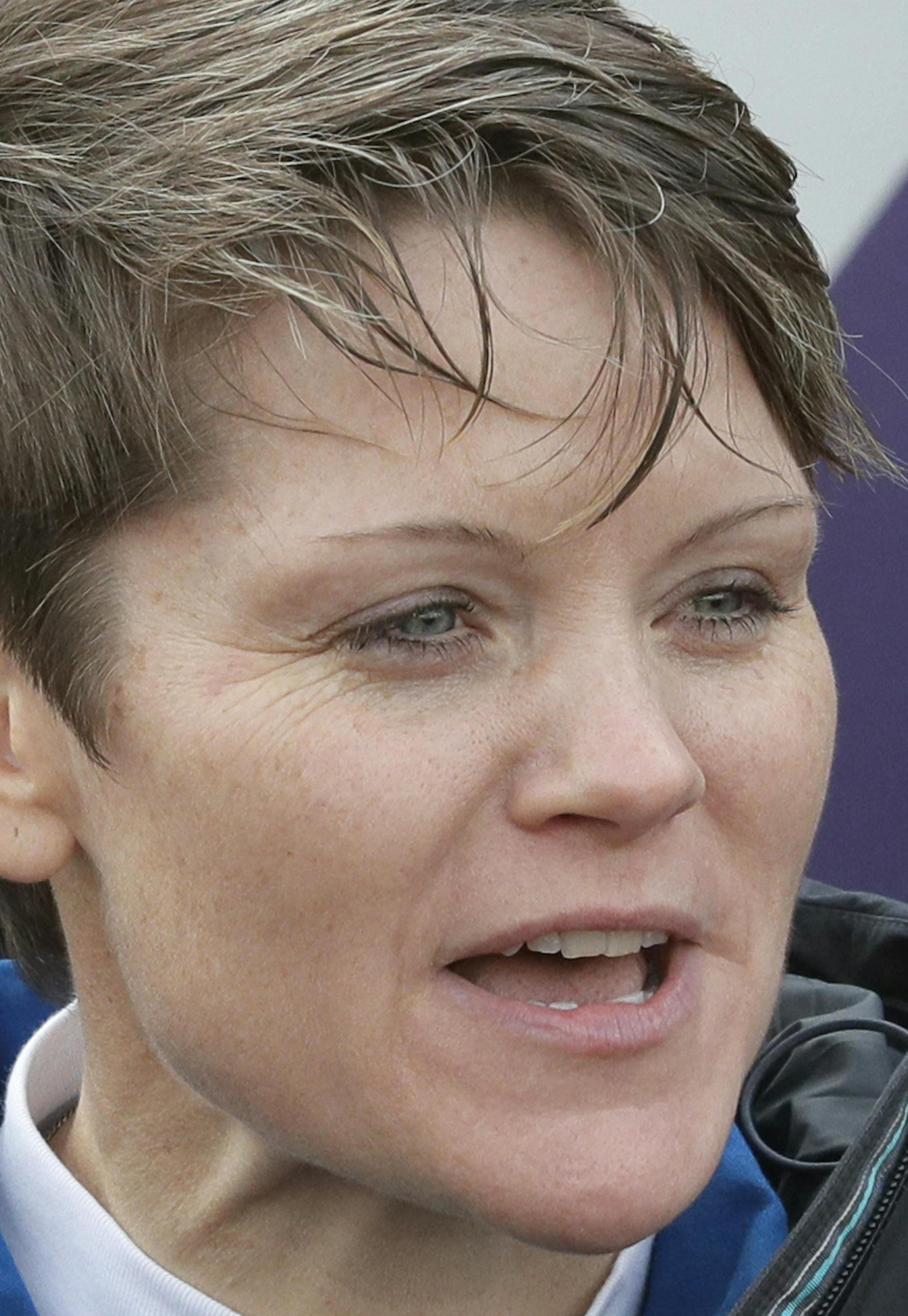
U.S. astronaut Anne McClain, a member of the main crew to the International Space Station (ISS), gestures to her relatives walking to a bus prior to the launch of Soyuz-FG rocket at the Russian leased Baikonur cosmodrome, Kazakhstan, Monday, Dec. 3, 2018. (AP Photo/Dmitri Lovetsky)
McClain will conduct research and experiments in space for six months. (The Minnesota Star Tribune)
about the writer

about the writer

More from Minnesota Star Tribune

See More
card image
J. SCOTT APPLEWHITE, ASSOCIATED PRESS/The Minnesota Star Tribune

The "winners" have all been Turkeys, no matter the honor's name.

In this photo taken Monday, March 6, 2017, in San Francisco, released confidential files by The University of California of a sexual misconduct case, like this one against UC Santa Cruz Latin Studies professor Hector Perla is shown. Perla was accused of raping a student during a wine-tasting outing in June 2015. Some of the files are so heavily redacted that on many pages no words are visible. Perla is one of 113 UC employees found to have violated the system's sexual misconduct policies in rece