

Sunday's NCAA tournament games definitely provided a jolt of electricity into this year's March Madness, which before that was missing a bit of the same buzz as last season.
Duke's nail-biting 77-76 win over UCF in the Zion Williamson vs. Tacko Fall game lived up to the hype and then some. Iowa's comeback from down 25 points to force overtime in a loss to Tennessee was an unexpected treat for even the casual college hoops fan.
Still, this is setting up to be a Final Four that will be lacking a feel-good, easy-to-root-for underdog story like last year with Sister Jean and Loyola-Chicago. Sorry, Minneapolis, Cinderella won't be coming to your ball this spring.
Fourteen teams in the Sweet 16 are from Power Five conferences, including a who's who list of prominent programs such as Duke, North Carolina, Virginia, Tennessee, Michigan, Michigan State and Kentucky.
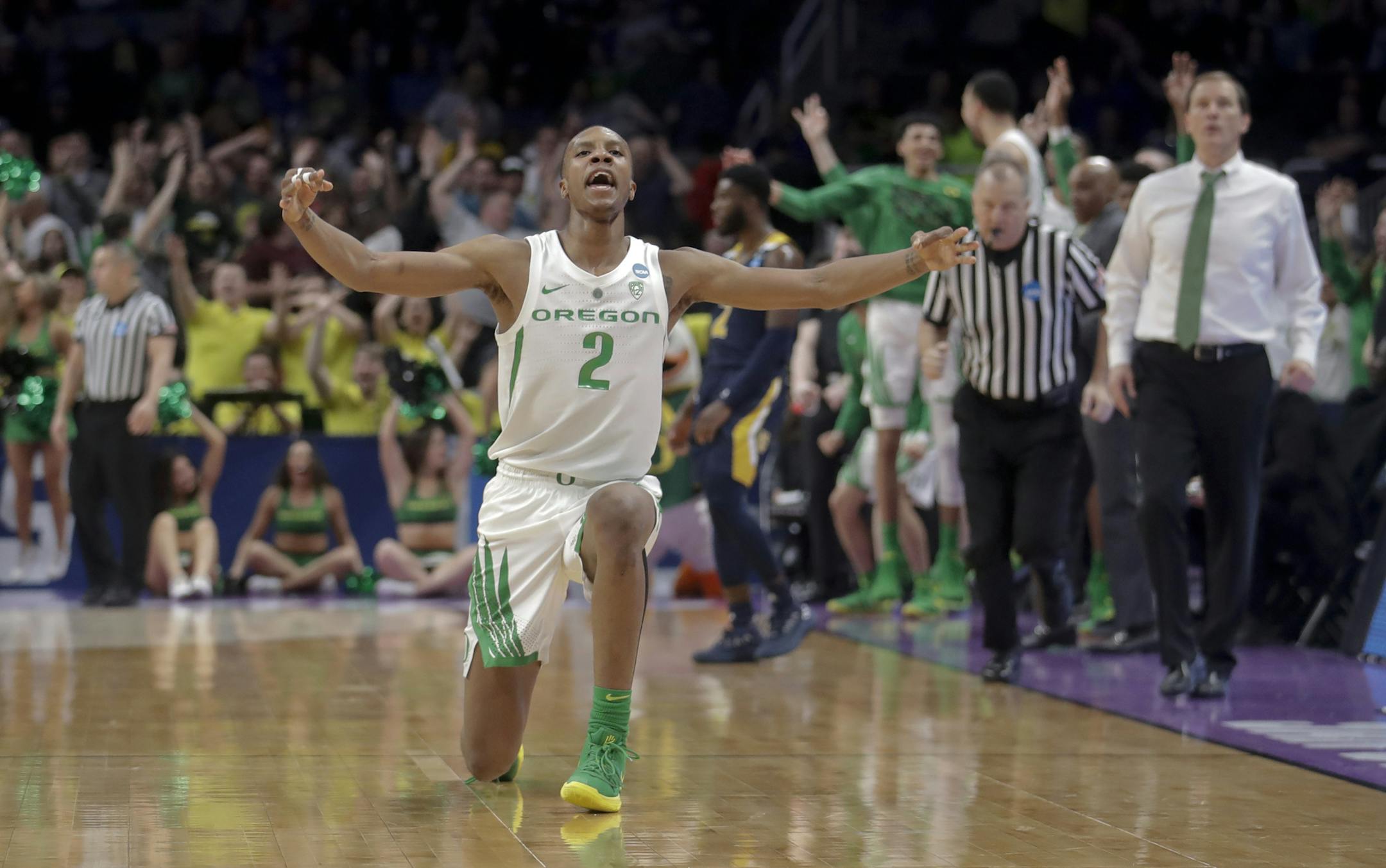
The advancing teams look like this seed-wise: 1, 2, 3, 4 in the East, 1, 2, 3, 4 in the West, 1, 2, 3, 5 in the Midwest and 1, 2, 3, 12 in the South. The lowest seed still remaining is No. 12 Oregon, which defeated the last of the true Cinderellas in No. 13 UC Irvine on Sunday night.
The Ducks aren't exactly the new kids on the block, having made the 2016 Final Four. They were the preseason Pac-12 favorite when high-profile recruit Bol Bol was healthy, but he suffered a season-ending foot injury. Still, Oregon won the conference tournament in dominant fashion over regular-season champion Washington and blew out Wisconsin in the second round.
The West Coast Conference hasn't won the national title since Bill Russell's San Francisco teams in the 1950s, but Gonzaga's obviously not an underdog as a No. 1 seed in the West.
Houston is a No. 3 seed in the Midwest, but the Cougars are from the American Athletic Conference. They technically are still carrying the torch for non-Power Five programs. But even if Kelvin Sampson's team makes it to Minneapolis, this Final Four will have a different narrative than last year.


