

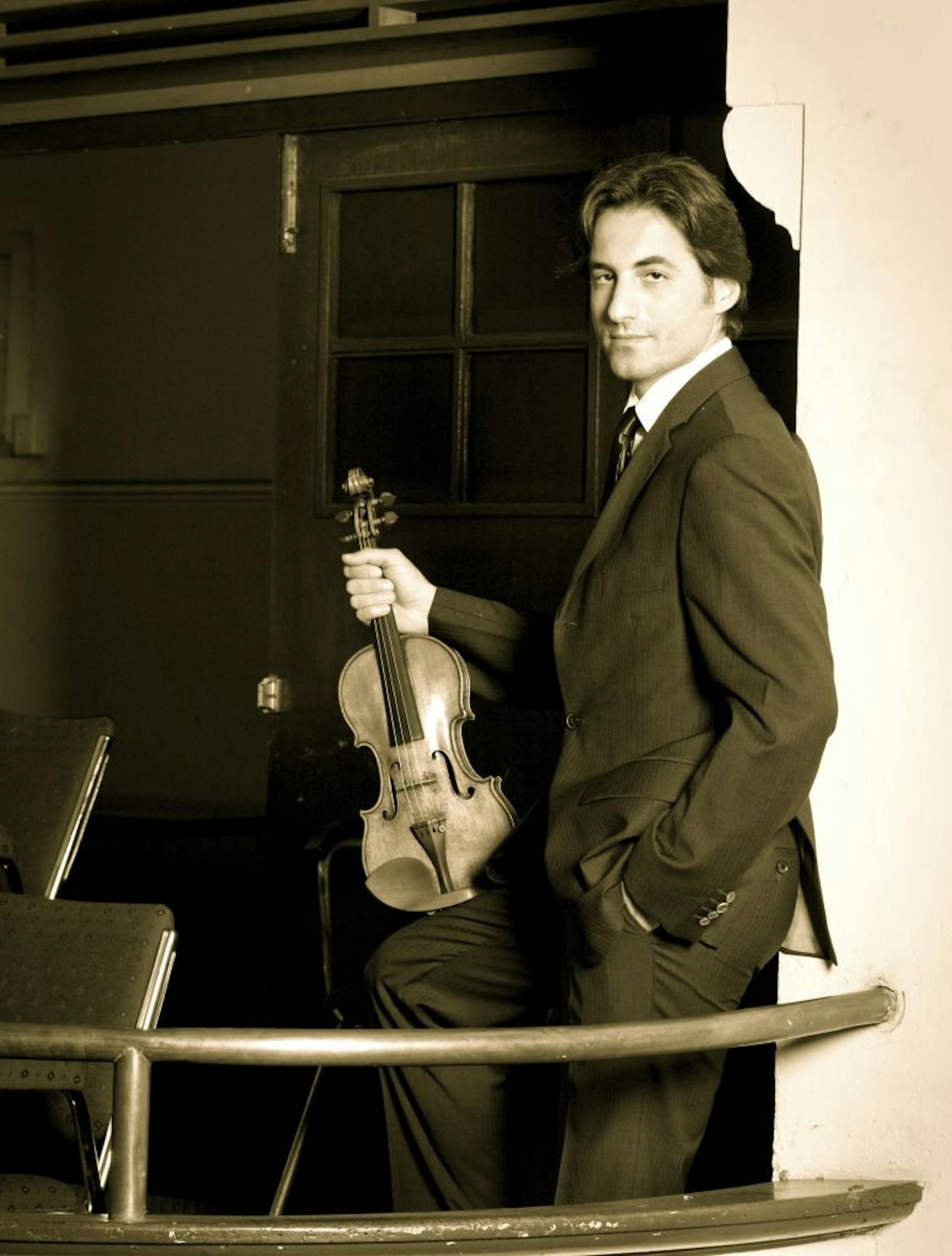
The centerpiece -- and highlight -- of Saturday's Minnesota Orchestra Sommerfest concert was a thrilling and moving performance of the Mendelssohn Violin Concerto in E Minor.
But of special programmatic interest were the performances of two Stravinsky ballets, "The Firebird" (1910) and "Petrushka" (1911). Though written only a year apart, they could hardly be more different.
Russian-born violinist Philippe Quint cut a dashing figure on the Orchestra Hall stage and had the kind of esprit to make the most of Mendelssohn's sweeping, quintessentially Romantic concerto.
Moment after moment, he dazzled with breathtaking mastery. But beyond mere virtuosity, he played the lyrical score with an intensity that gave the sentimental melodies real passion and drama.
It was a pleasure to watch how he and conductor Andrew Litton reacted and responded to one another. Under Litton's direction, the orchestra played with clarity and flair, warmly dialoguing with the soloist.
The Minnesota Orchestra played the Suite from "The Firebird" as recently as last May, but it warrants hearing again, especially under Litton's sensitive baton. He emphasized the magical fairy tale's old-fashioned Romanticism.
With "Petrushka," Stravinsky created a more modern sound. He explored bi-tonality, the simultaneous sounding of the dissonant C and F-sharp major chords becoming known as the "Petrushka chord." The ballet tells a grotesque story, the violent travails of the puppet Petrushka (a Russian version of Punch or Pulcinella), and Stravinsky responded with grotesque sounds.
In a helpful addition, Litton used surtitles to describe the action of the ballet and inspire the imagination. Especially in the episodic crowd scenes, they made clear how brilliant Stravinsky was at telling his story through music.


