
Advertisement

Something to whoop about

Managers of a developing flock of wild whooping cranes can celebrate seven chicks hatching this year.

October 5, 2010 at 8:38PM
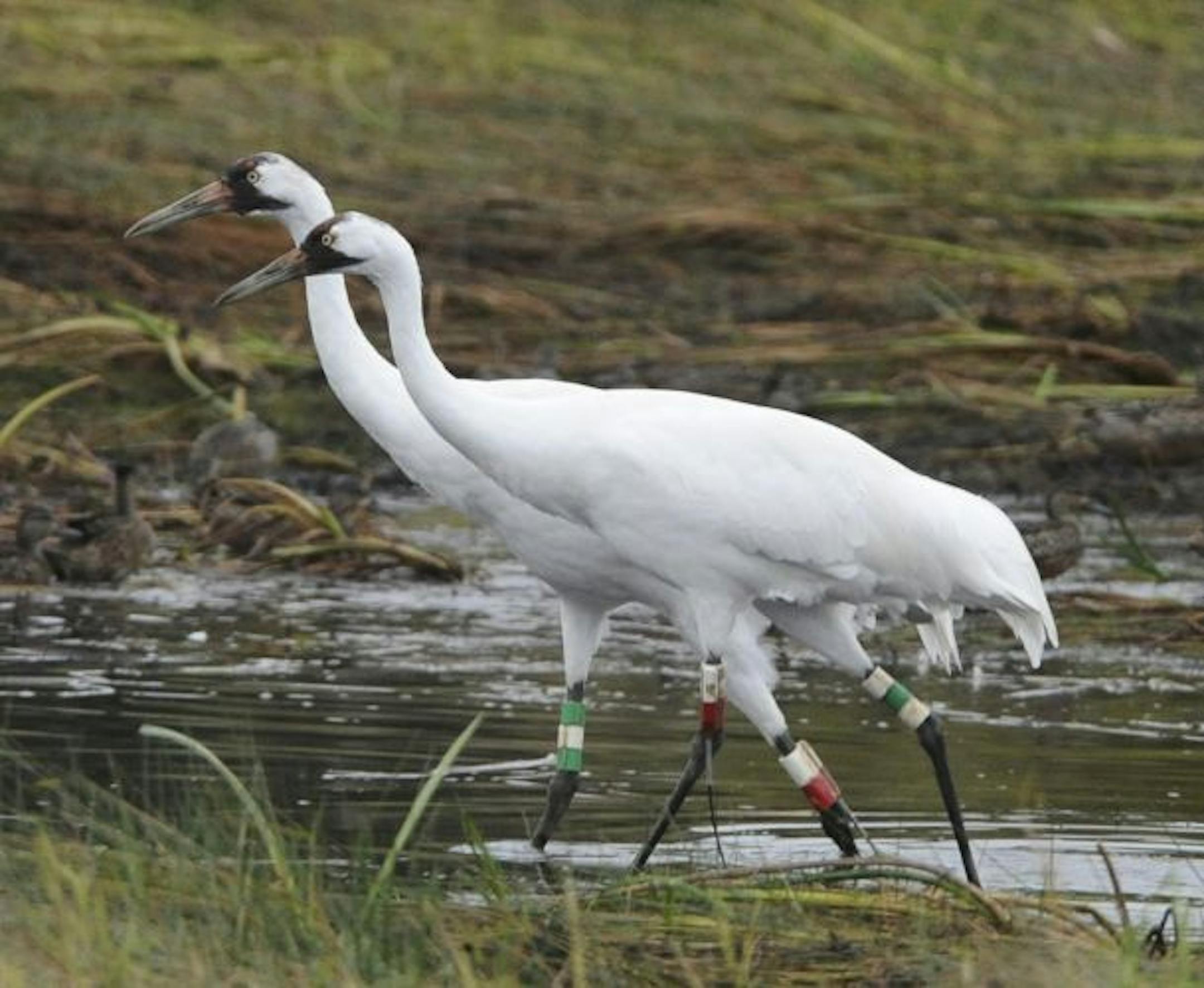
Whooping cranes near Goose Pond at Necedah National Wildlife Refuge.
Whooping cranes near Goose Pond at Necedah National Wildlife Refuge. (Special to the Star Tribune/The Minnesota Star Tribune)
Advertisement

After years of downs, the 10-year-old effort to create a self-sustaining flock of wild whooping cranes in eastern North America deserved some ups.

Two pairs of whooping cranes have produced surviving chicks this year at Necedah National Wildlife Refuge in central Wisconsin. Nine pairs of cranes nested, seven chicks were hatched and two of those chicks fledged.

Some egg manipulation was involved, but seven chicks hatching is big news for the whooping crane project centered at the refuge. The egg manipulation effort also offers a path for future success.

From the beginning in 2000, young birds have been brought to Wisconsin from a hatching site in Maryland. That fall they migrated to their Florida wintering location behind ultralight aircraft, as new imports do each year. This trip imprinted the migration route, allowing future migrations to be unaccompanied. The flock has been built with hand-raised birds following that routine.

The first wild Wisconsin egg was laid in 2005. It didn't hatch. Two chicks were hatched the next year. One survived. In 2007, several nests produced one chick.

There were no successful hatchings in 2008 or 2009. Incubating birds were abandoning their nests.

Why remains a puzzle. One thought was that black flies were attacking the cranes in such numbers that the cranes walked away from their nests, leaving the eggs behind. Another thought was that the birds simply were unpracticed nesters. Living up to 30 years, they don't have to be as immediately successful as birds with shorter life spans.

"We still have a lot to learn about these birds," said Jim Leach, federal wildlife refuge supervisor for Wisconsin and Minnesota. "Humans are impatient. We have to wait."

Advertisement

Egg management

Biologists now remove eggs from nestings initiated before April 25 because clutches laid after that date enjoy significantly more success. Removal of the eggs from nesting pairs can stimulate second clutches. The rescued eggs are candled to ensure viability, the good eggs placed with other nesting birds, post-April 25. Some of these eggs are hatched in an incubator for human-assisted raising at Necedah.

While each pair of cranes produces two eggs per nest, the second egg usually is abandoned when the adults begin to care for the first bird to hatch.

The project goal is a flock of 125 birds containing 25 nesting pairs. The Wisconsin flock now numbers 96, with nine nesting pairs. Increasing flock size takes time. The birds are not sexually mature until their third year. Initial nestings often produce infertile eggs, another factor in nesting failures in these first years of the project. Also, predators take some chicks.

Crane sightings

Some of the Wisconsin cranes stay in and nest on the Necedah refuge, 40,000 acres large. Others have located in an adjacent state wildlife area of similar size. Still others have spread into surrounding counties.

Advertisement

Whooping cranes from the Wisconsin project occasionally are seen in Minnesota; immature birds are the most likely wanderers. But project leaders consider nesting here unlikely in the foreseeable future.

Little is known about the wild behavior of whooping cranes. The biologists and project manager for the Necedah program are adding much information to the whooping crane files through this very complex biological effort. Continued funding for the project is being discussed; it has been funded with one-third federal money and two-thirds from individuals and nongovernment organizations.

In any case, a goal has been met: A migratory flock has been established. It should continue to grow as more birds reach sexual maturity and more nesting success is realized. Growth to the target population of 125 is foreseeable.

The birds, with or without additions, aren't going away. "There will be cranes in the Necedah area for the next 25 years. This is their nesting-season home," Leach said. "We've established a migration route. And we're having hatching success.

"We're not willing to give up."

Lifelong birder Jim Williams can be reached at woodduck38@gmail.com. Join his conversation about birds at www.startribune.com/wingnut.

Advertisement
about the writer

about the writer

Jim Williams, Contributing Writer

Advertisement