Filling a 50-year gap in an art museum's collection is more than a checkbook issue, as the Minneapolis Institute of Arts recently discovered when it decided to expand its post-1960s holdings. The museum has been buying contemporary art fitfully for decades, but it had no firm direction for its purchases until it opened a $50 million wing in 2006 and hired its first contemporary art curator two years ago.
Much of the new space is intended for modern and contemporary art, a field that's crowded with competing styles and abuzz with high-octane collectors. Navigating all that is the job of Elizabeth Armstrong, now the museum's assistant director for exhibitions, programs and contemporary art.
"It's hard to find art of the highest caliber," said Armstrong, who was just back from a 10-day tour of artists' studios and galleries in South Africa. "For example, we'd like to have a Lucian Freud painting from the 1960s, but we can't find one."
What Armstrong has found is more than 80 paintings, sculptures, photos, installations and video works from the past 50 years that could be added to the museum's collection if the cards fell right. Borrowed from artists, collectors and galleries nationwide, the art is on view through Aug. 1 in "Until Now: Collecting the New (1960-2010)."
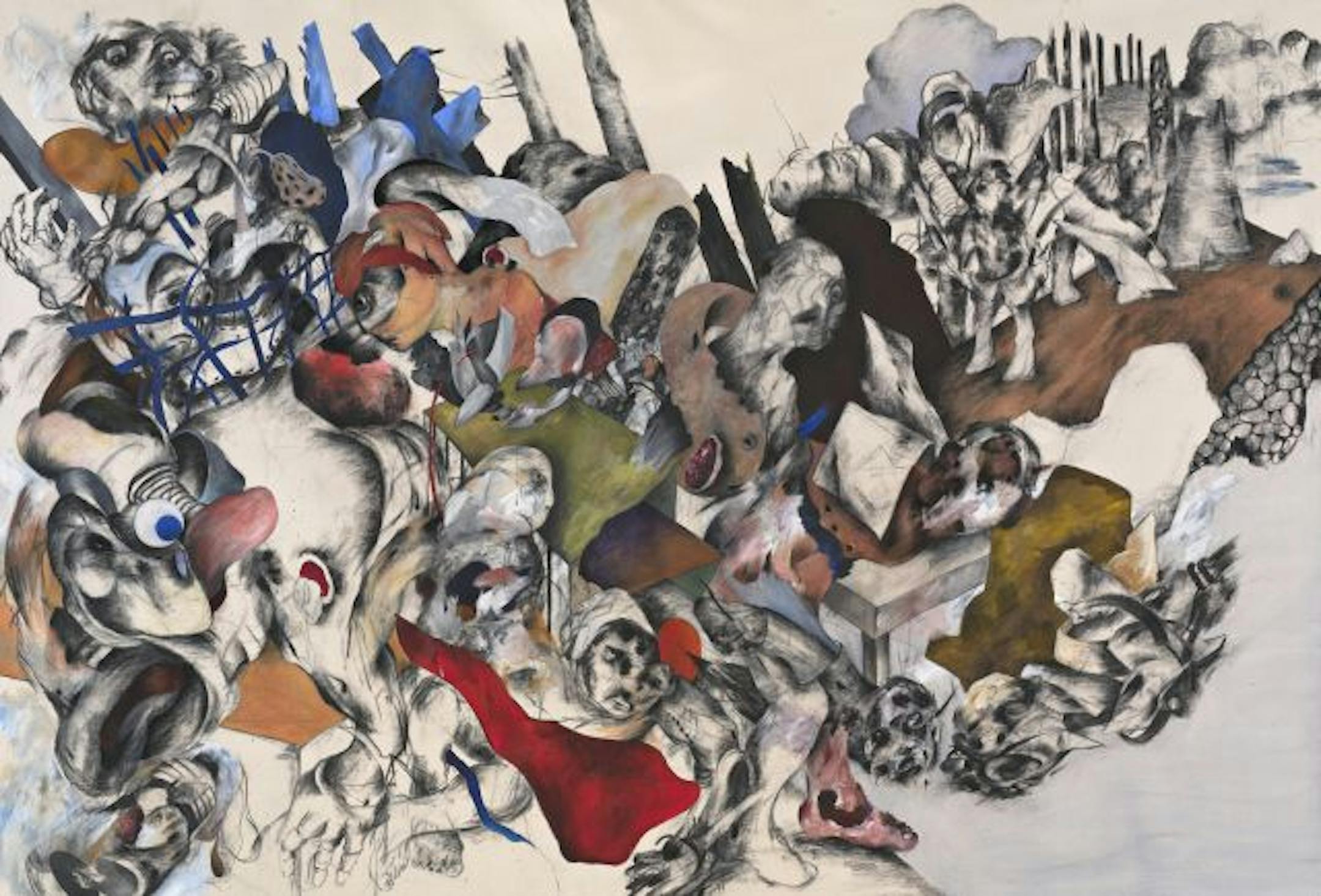
Besides pieces by such iconic names as Andy Warhol, Jasper Johns and Gerhard Richter, the loans include key works by respected figures such as Sylvia Plimack Mangold, Neil Jenney, Eric Fischl and Alfred Leslie, whose prices are less sizzling. Armstrong also sought important international talents sometimes neglected in the United States, including Venezuelan op-and-kinetic artist Jesús Rafael Soto, Japanese popster Yayoi Kusama, Russian expatriate Ilya Kabakov, Iraqi painter Ahmed Alsoudani and Canadian First Nations photographer Rebecca Belmore.
The show is intended in part as a kind of shopping guide for institute benefactors, especially board members who might buy pieces on loan from galleries and donate them to the museum. To that end, it includes significant work by undervalued and therefore more affordable talents. The market in contemporary art is "convoluted," Armstrong said. Prices don't necessarily reflect the inherent quality of the art, but sometimes just measure trends, rumors and the caprice of collectors and dealers.
"I'm not one who believes the price of contemporary art is equivalent to its aesthetic value," said Armstrong. "The market goes up and down with changing taste."
She also hopes for gifts from collectors who own the sort of marquee names that make headlines at auction. "For icons of the '60s and '70s, you have to go to collectors because no museum can afford those pieces," Armstrong said, noting that "a small, good Roy Lichtenstein" pop-art painting would cost "exponentially more" than all the work by less famous artists that she's borrowed.