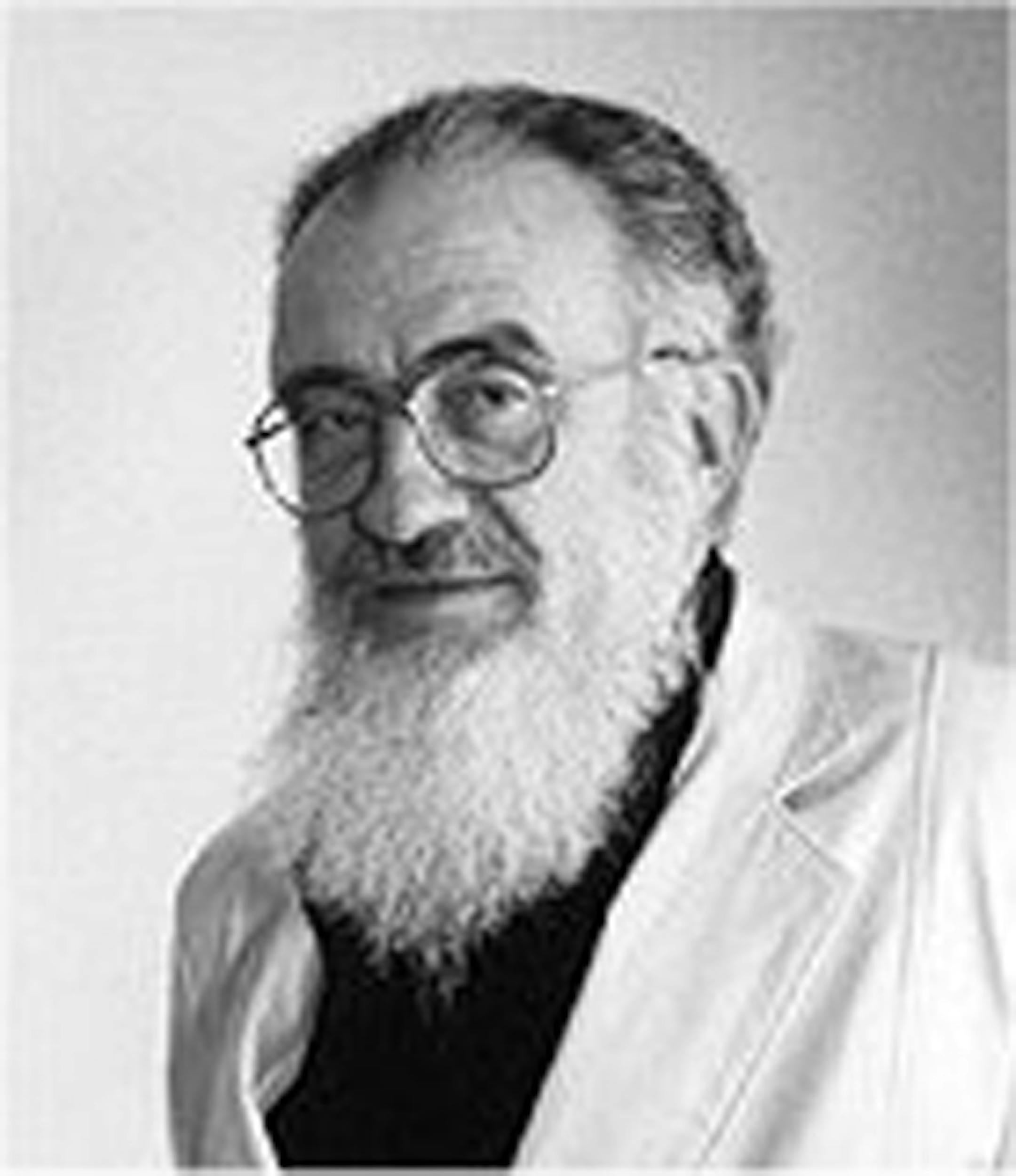
We lost two giants of American literature this month; Hortense Calisher and W.D. Snodgrass died just a day apart, on Jan. 14 and 15. Calisher was a prolific novelist and memoirist; she was 97. Snodgrass, known to his friends as De, was 83. He had learned just four months earlier that he had lung cancer.
I don't pretend that I knew Snodgrass, but I met him when I was a child, during the difficult and unhappy summer of 1966, when I was 9. My brother had died earlier that summer, and I remember De's visit as being a happy interlude in all that sadness.
My father, a university professor, had brought him in as a visiting writer; Snodgrass had won the Pulitzer Prize just six years before. He came to Duluth with Camille, the woman who became his third wife, and their Russian wolfhound, Vanya. I remember him sitting in our living room, tall and bearded and smelling of pipe smoke (Did he smoke a pipe? Or am I imagining that memory?), talking and talking and talking with my father in a loud booming voice, and laughing a loud great laugh, while Camille sat quietly, petting Vanya's head.
It's a cliché, perhaps, but De really was one of those men whose presence filled a room, a poet who sort of wrested poetry from the ethereal to the personal. His poetry was called "confessional," although he never liked that label.
"It's hard to believe that at one time it was quite improper to write about your personal relationships," he said in a 2004 interview. "Poets were supposed to be above human life. I finally decided to write about what I really cared about, and what I really cared about was having my daughter ripped away from me." (His first collection of poetry -- the Pulitzer winner -- sprang from the loss of his daughter in a divorce.)
Go here to read three of his poems, including the remarkable "Farm Kids," a poem that seems quite relaxed but is actually written in a very structured way: www.melicreview.com/archive/iss24/wd%20snodgrass.htm.
"De worked hard at integrating the conversational with the formal, so much so that on a first reading of a nearly final draft I wasn't aware of the formal structure," his widow, Kathy, told me regarding that poem. "He was never content with one way of writing; he kept trying to do something that hadn't been done."
Better yet, pick up one of his books. It's "Heart's Needle" that won the Pulitzer -- it is there that you will find that wonderful line, "Snodgrass is walking through the universe" -- but that was just the first. There were many more.