

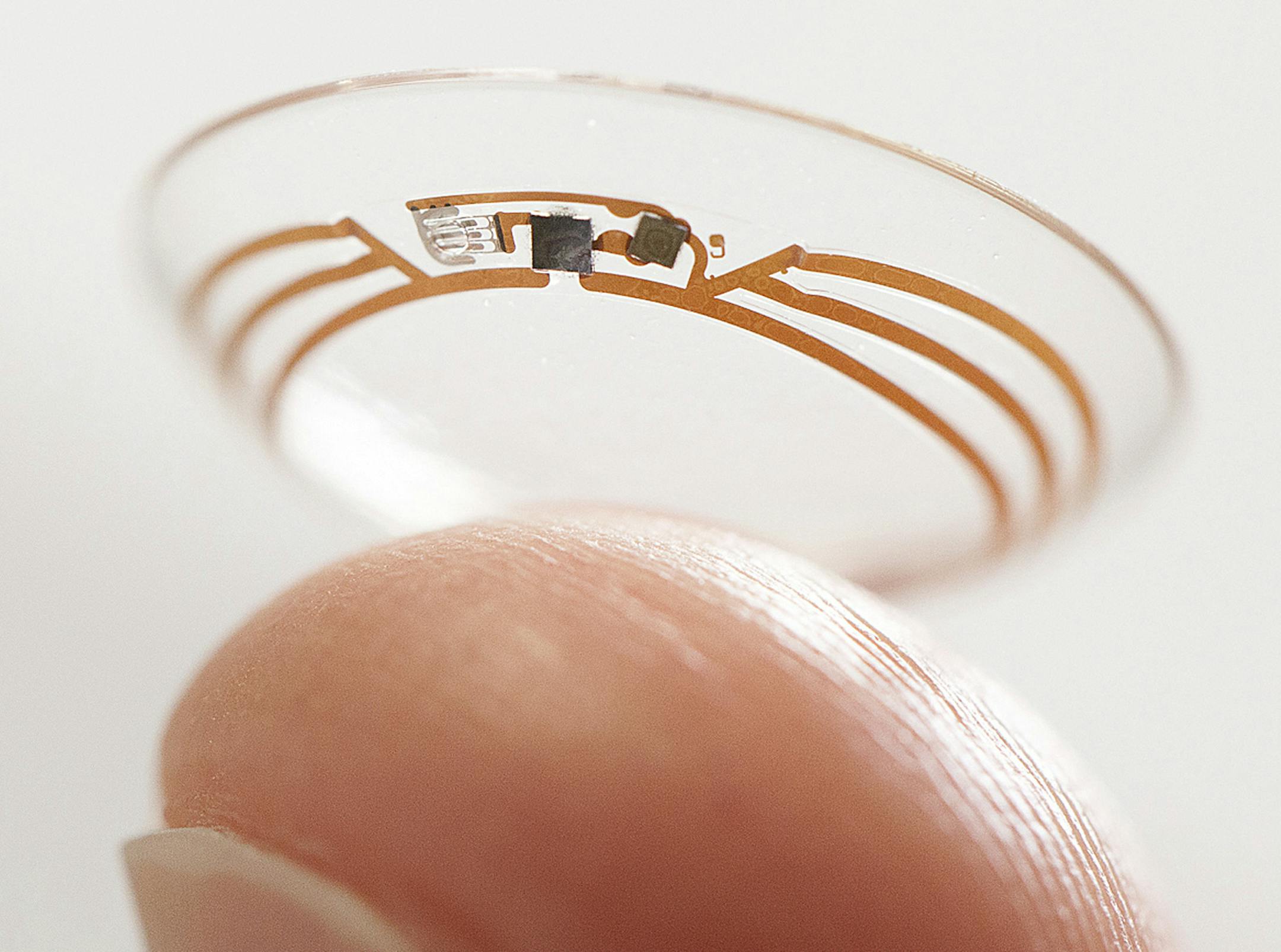
Google is searching for a better way for millions of diabetics to manage their disease by developing a contact lens that monitors glucose levels in tears.
The contact lenses are the latest project from Google's secretive X lab, which also came up with the driverless car, the Internet-connected eyewear Glass and Project Loon, which is using balloons to bring the Internet to far-flung places. The "smart" contact lens uses a tiny wireless chip and miniature glucose sensor that is folded into two layers of soft contact lens material.
Google is in discussions with the Food and Drug Administration, the company said. But the contact lenses could be years from reaching the public. The prototype can generate a reading once per second, which could be very helpful for diabetics who must keep close tabs on their blood sugar and adjust their dose of insulin. Google is also exploring whether the lenses could be an early warning for diabetics by decking them out with tiny LED lights that light up when insulin levels get too high or low.
"You've probably heard that diabetes is a huge and growing problem — affecting 1 in every 19 people on the planet. But you may not be familiar with the daily struggle that many people with diabetes face as they try to keep their blood sugar levels under control. Uncontrolled blood sugar puts people at risk for a range of dangerous complications, some short term and others longer term, including damage to the eyes, kidneys and heart," Google said. "It's still early days for this technology, but we've completed multiple clinical research studies, which are helping to refine our prototype. We hope this could someday lead to a new way for people with diabetes to manage their disease."
Associated Press


