

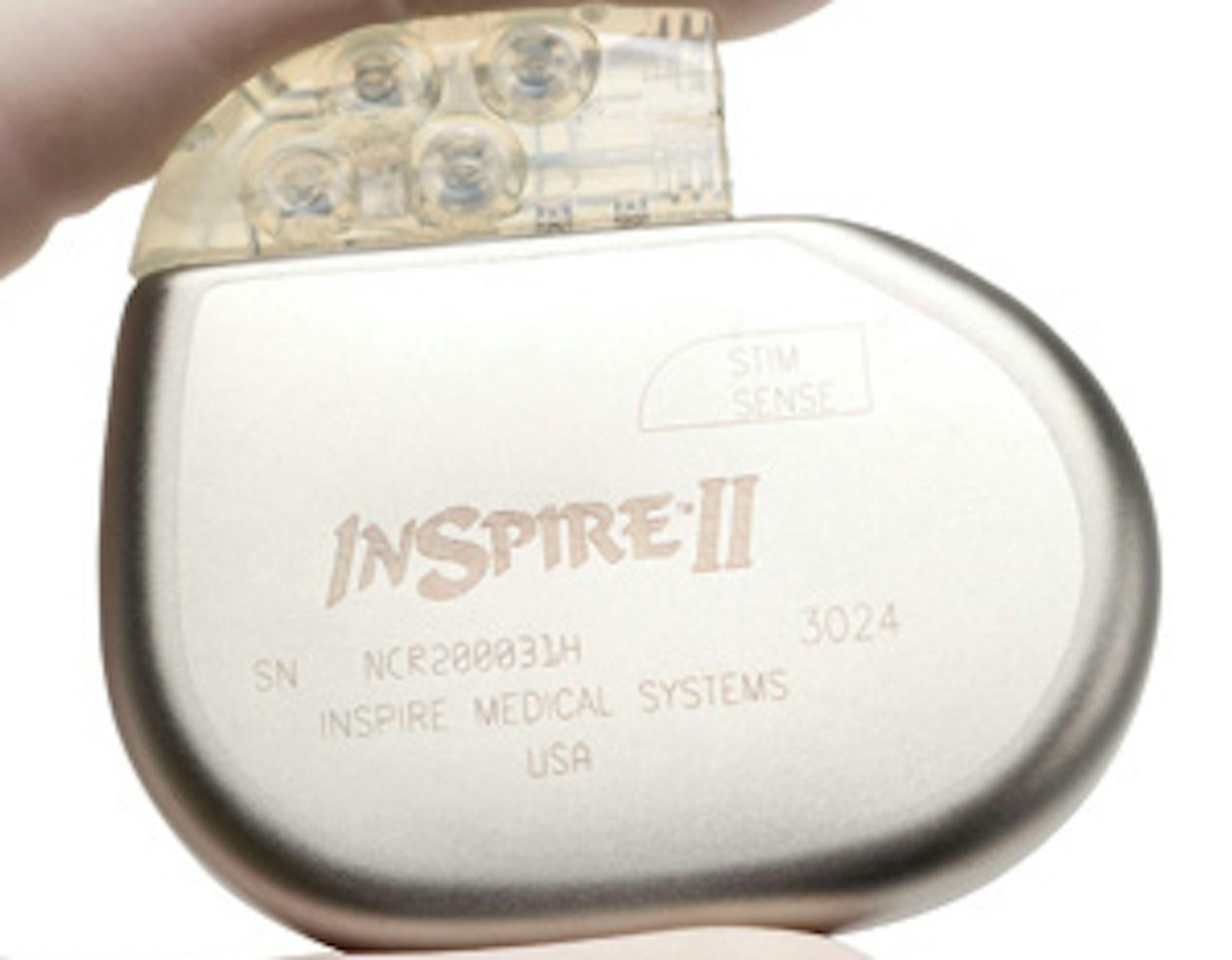
A pacemaker-like device that sends electric pulses to nerves in Jackie Kopplin's tongue controls her sleep apnea, and may soon lift the fortunes of the small Maple Grove company that makes it.
Inspire Medical Systems has been developing the technology for years, but an article published Wednesday in the New England Journal of Medicine calls attention to the device that stimulates the tongue to get out of the way of breathing. Results of clinical trials were so positive that experts predict the technology may become a viable alternative for patients who can't tolerate continuous airway pressure (CPAP) machines.
"I was trying the CPAP and that wasn't working. I just kept pulling it off of my face because I just didn't like it — the air blowing in my nose all the time," said Kopplin, 45, of Coon Rapids. "Before, I quit breathing anywhere from 35 to 40 times an hour. Now, I can actually sleep through the night. "
The article highlights Inspire's Stimulation Therapy for Apnea Reduction (STAR) trial, which followed participants for a year after the device was implanted, and showed that upper-airway stimulation was safe and effectively treated moderate to severe obstructive sleep apnea. In addition, the study's investigators said, the technology significantly decreased sleep apnea events and showed a reduction in the effects of sleep apnea and improved quality of life.
Obstructive sleep apnea is a sleep disorder that occurs when the tongue and other soft tissues relax during sleep, obstructing the airway and preventing fresh air from reaching the lungs. Without fresh air, the oxygen level in the blood decreases. The brain arouses the body from sleep just long enough to open the airway.
This fitful sleep cycle can repeat many times an hour over the course of a night, and its cumulative effects can lead to serious health problems, including high blood pressure and heart failure. According to the National Heart, Lung, and Blood Institute, more than 12 million people in the United States have sleep apnea.
Tim Herbert, president and CEO of the 24-employee private company that spun off from Medtronic in 2007, said: "We'll probably have 50 employees by this time next year."
That's because the trial results appear likely to persuade U.S. regulators to approve the device for a sleep apnea market expected to hit $7 billion by 2017.


