

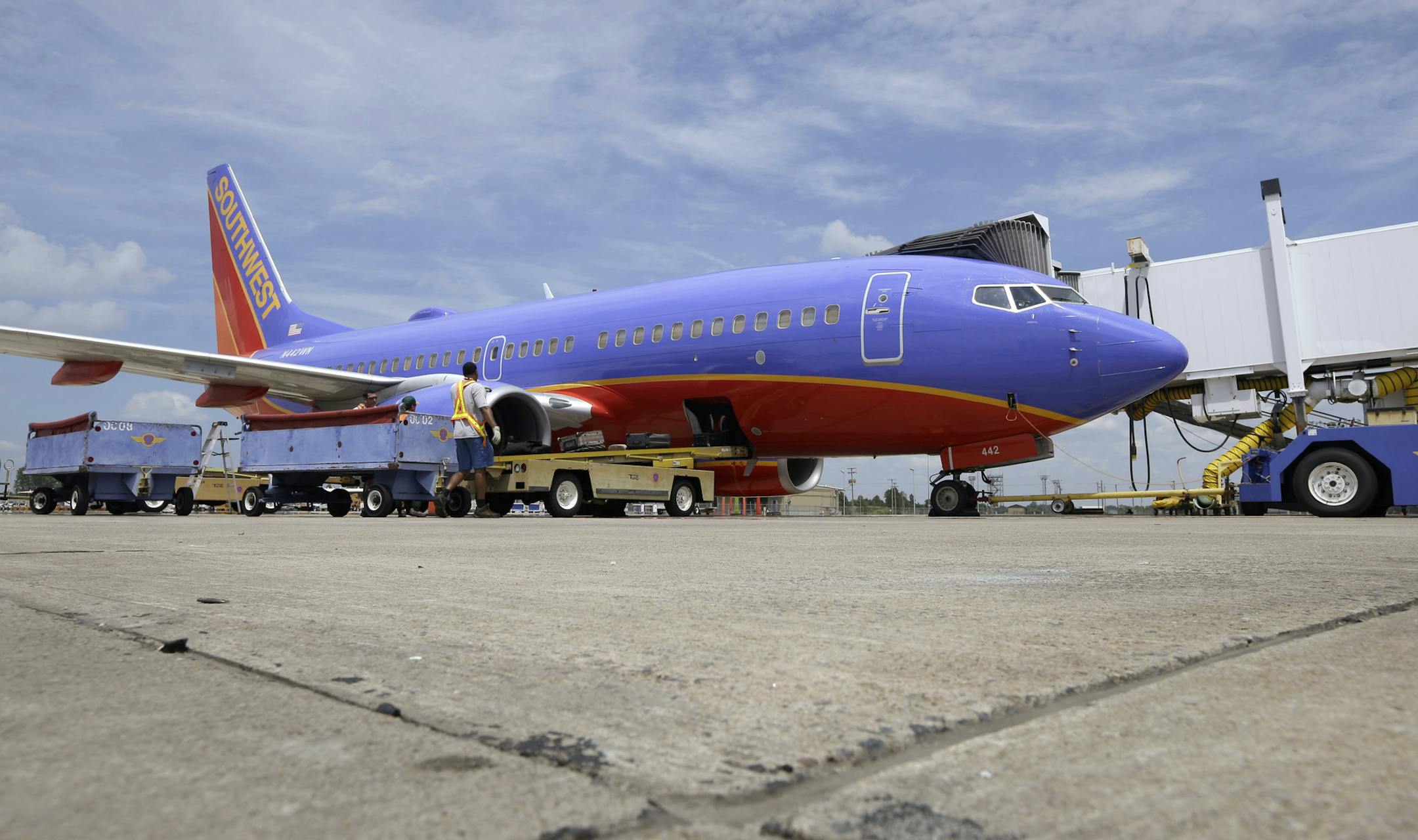
DALLAS — For years, Southwest was the most punctual of big U.S. airlines, so its tumble toward the bottom of government rankings for on-time arrivals was stunning.
Southwest officials needed to fix an ill-fated decision to squeeze more flights into the schedule. This summer, they backed off by allowing more time between flights. And they told employees that the first flight of the day on every route had to leave on time.
"If you're late out of the driveway in the morning, you're probably going to be a little bit late to work," says Steve Hozdulick, Southwest's senior director of operational performance. "You're going to hit the two traffic lights that you never hit."
In the airline world, delays build as the day wears on. This summer, for example, airlines were on-time around 85 percent or better until midmorning. By midafternoon, the rate dropped into the low 70s, then plunged into the 60s by dinner time.
Delays are costly for airlines and their passengers. A 2010 study commissioned by the Federal Aviation Administration estimated that flight delays cost the airline industry $8 billion a year, much of it due to increased spending on crews, fuel and maintenance. Delays cost passengers even more — nearly $17 billion.
In the first nine months of the year, more than 1 million U.S. airline flights arrived late — about one in five. Tardiness creates other problems including missed connections, lost bags and short tempers among frustrated travelers.
On a freezing morning recently at Dallas Love Field, Southwest supervisors showed up at 4 a.m., two hours before the first flights. They'll assign two or more bag handlers to each flight.
The last bag should be on the plane and the bin doors closed five minutes before scheduled departure, says Dave Obeso, a Southwest ramp supervisor.


