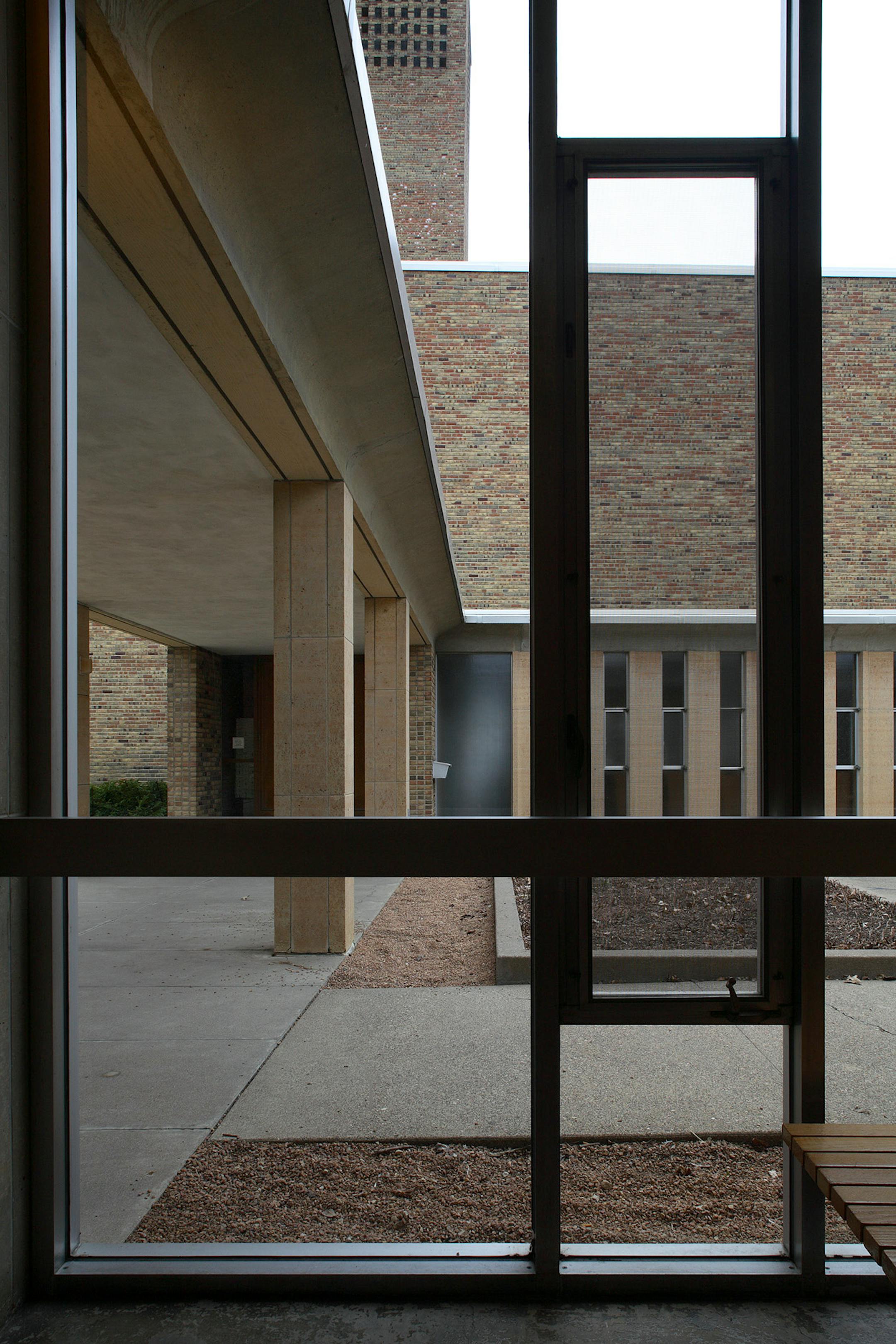
In the modest Longfellow neighborhood of Minneapolis stands a church that changed the face of American religious architecture. Eliel Saarinen's Christ Church Lutheran was the last work of the acclaimed Finnish architect before his death in 1950. When it was finished in 1949, its clean lines, compelling simplicity and honest materials earned it national acclaim, and architects flocked to visit it.
The congregation that built the church had planned a Gothic church, but couldn't afford it. The forward-looking pastor, William A. Buege, turned instead to Saarinen, who had helped bring modernism to the United States by founding the Cranbrook Academy of Art in Bloomfield Hills, Mich. The congregation numbered 1,500.
Today the congregation numbers 300, the church is not well known even by architecture lovers and its impact on America's religious landscape has been all but forgotten. A seminar and tours of the church next weekend should help right that situation.
The Friends of Christ Church Lutheran, a nonprofit group dedicated to raising awareness of the church and raising money for its upkeep, is sponsoring lectures, panel discussions and a series of photo exhibits in conjunction with the blockbuster exhibit "Eero Saarinen: Shaping the Future" at the Minneapolis Institute of Arts and Walker Art Center. Eero Saarinen, Eliel's son, designed the education wing that made the complex a beautifully integrated masterpiece. It was completed in 1962, a year after Eero's death.
The National Park Service, which is the keeper of the National Register of Historic Places, has requested National Landmark status for Christ Church. The hearing is Oct. 28 in Washington, D.C.
Why does this religious building evoke such respect?
To step into the sanctuary is to feel the answer. A space of utter simplicity, it creates a sense of serenity and other-worldliness without any of the usual ornament. A wavy wall of soft-colored Chicago common brick carries the eye to the altar area, where a steel cross adorns the curved wall. Natural light washes in from a tall screened window and filters out into the seating area, where low-ceilinged side aisles create an intimate feel.
"It achieves something few buildings do -- it has an effect on the human spirit," said Peter Jursik, a graduate of the University of Minnesota architecture school who is a founder of the Friends group and the chief tour guide for the church. "The color, the proportions, how the spaces and the light work -- it can do all these different things in a way that is seamless."