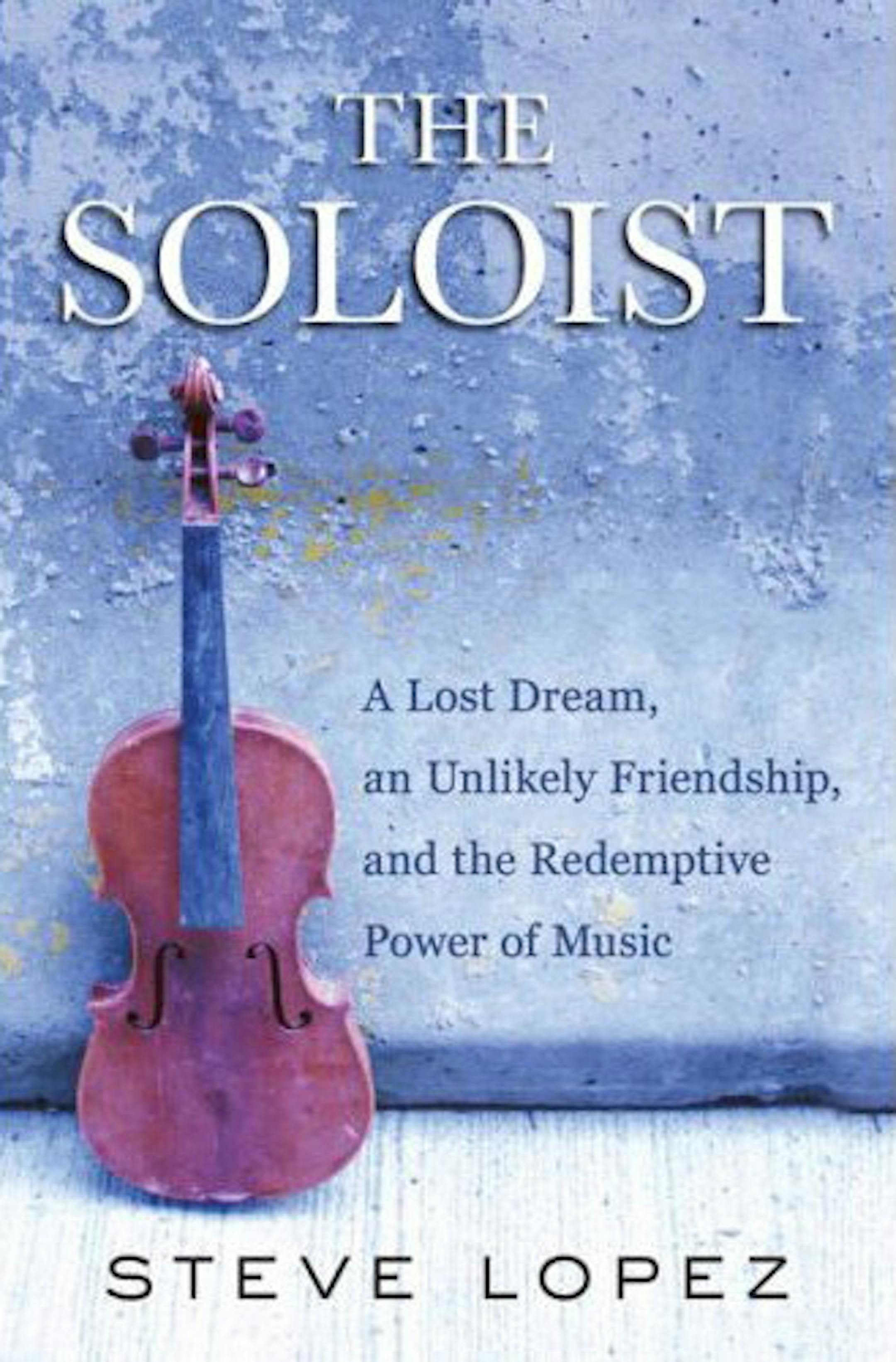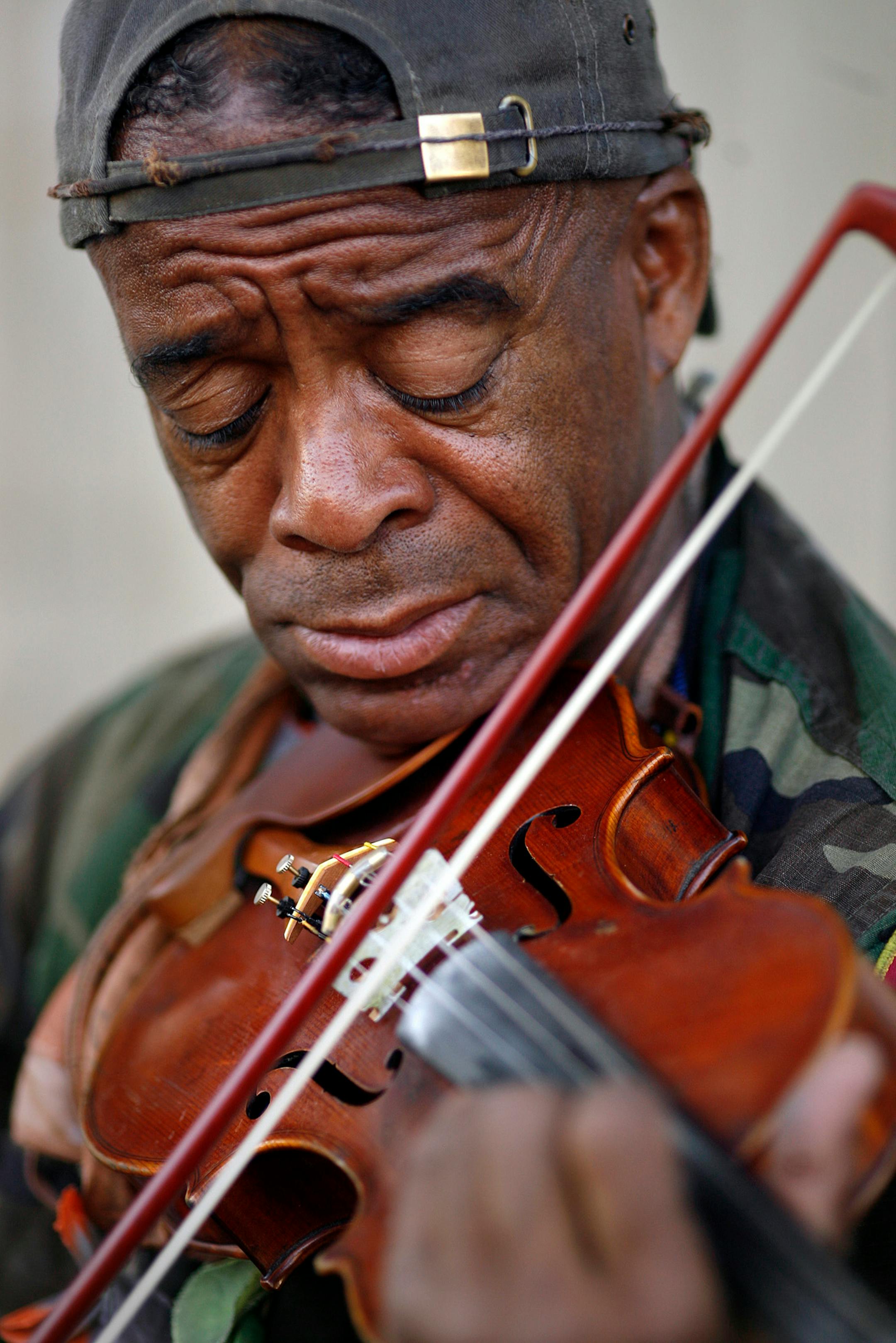
Steve Lopez, a columnist for the Los Angeles Times, was walking downtown in 2005 when he first encountered the homeless man. He was playing a battered violin on which he'd inscribed the name "Stevie Wonder." There was a dignity to the guy, and the sound he produced (on only two strings) seemed remarkable even to Lopez's untrained ears.
While others may have seen a bum and turned away, Lopez saw material for a column. On deadline, he told the man, "I'll be back," and rushed to finish an article. He made a note to himself on a yellow legal pad: "Violin Man." That man became "The Soloist" of Lopez's fascinating book.
Lopez returned a few weeks later to find the soloist. He learned that the man's name was Nathaniel Anthony Ayers and that he was from Cleveland. It became clear early on, however, that getting a column out of Ayers, who was profoundly mentally ill, would be a long and tortuous process. When Lopez tried again to connect with Ayers a few weeks later and couldn't find him, he worried, "I lost my column."
In the beginning, anyway, Lopez wasn't a do-gooder taking on Ayers as a reclamation project. He was just looking for column fodder. But the more he got to know Ayers, the more Lopez felt a responsibility for him.
Ayers, the product of a broken home, had a natural talent for music. He won a scholarship to Juilliard, where he was considered among the school's top bass players. But, under pressure from the rigorous training (and the social pressures of being one of the few black students there), he began to behave strangely, spouting racist nonsense. He eventually dropped out and moved back to Cleveland, where he was arrested, hospitalized and diagnosed as schizophrenic.
After being hospitalized and released several times, Ayers headed west to Los Angeles.
There he lived on the streets, with his shopping cart of belongings.
When Lopez began to publish Ayers' story, there was an outpouring of public support: Readers sent musical instruments. The Los Angeles Symphony invited him to observe a rehearsal. Two cellists gave him lessons and encouragement. A homeless advocate located an apartment for him. Lopez himself attended concerts and baseball games with Ayers, and brought him home to meet his wife and young daughter.