

Debt ceiling. Reconciliation. Tax expenditures. Mandatory spending. Offsetting receipts. Washington's budget jargon is often confusing. Having spent time serving in and working for Congress, we suspect the obtuse nature of federal budget terminology is deliberate, designed to make it harder to hold politicians accountable. After all, if you don't understand what they are talking about, how can you determine whether they are doing the right thing?
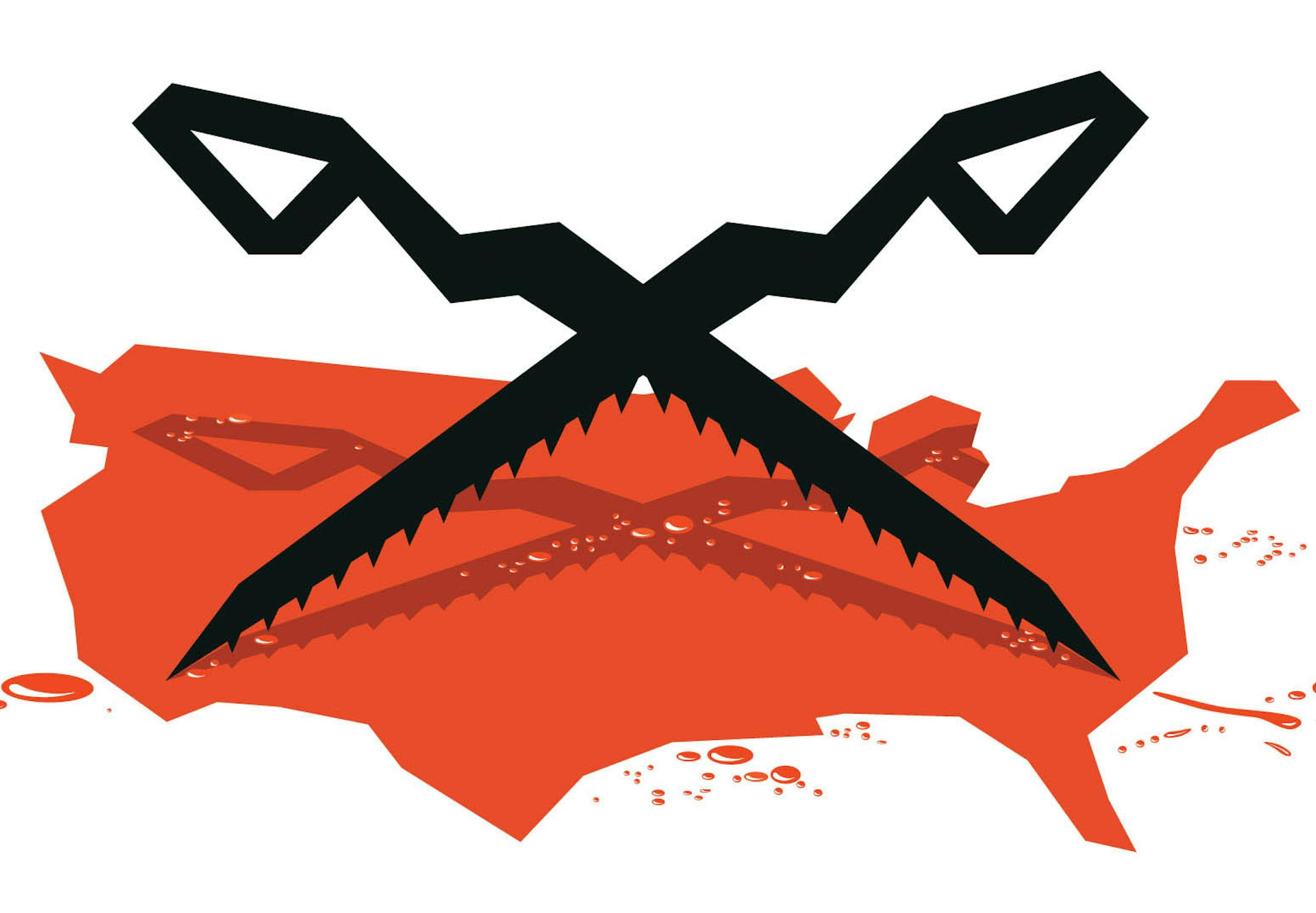
"Sequestration" is another political term that has recently moved out of obscurity. As we have come to learn, it simply means "automatic across-the-board cuts." So why don't the politicians just say that?
At least part of the reason is that Republicans and Democrats like the concept of spending cuts more than the reality. Their recent budget blueprints make it painfully clear that they remain far apart on taxes and entitlement reform — issues that any serious deficit-reduction plan will need to address. Even when there is a glimmer of compromise, both parties revert to all-or-nothing stances on these core issues. Cutting discretionary spending through sequestration allows politicians to avoid discussing taxes and entitlements while dodging responsibility for specific cuts.
Accordingly, savings resulting from sequestration (slated to total $1 trillion over the coming decade) may be the only way to achieve deficit reduction for the foreseeable future. Few would suggest that across-the-board cuts are the best or smartest way to manage budgets, as sequestration nips good and bad programs alike. Still, President Obama overreached earlier this year by declaring sequestration to be the equivalent of "fiscal Armageddon." At a time when Congress hasn't even agreed on a national budget in the past four years, it may be the only viable path to fiscal discipline.
Perhaps the silver lining in sequestration is that it shows Democrats that government spending cuts are possible and reminds Republicans that some public spending has value. The Federal Aviation Administration is a good case in point. When the FAA threatened summer air travel by proposing reductions in air traffic controllers, Congress found a way to authorize the agency to shift the cuts to less-essential areas of the FAA budget.
If Washington leaders are interested in moving beyond sequestration to reduce ineffective spending and improve program outcomes, there are numerous reports and studies that explain how it can be done.
For example, the most recent annual report of the Government Accountability Office on wasteful redundancy and duplication identified 44 overlapping federal employment and training programs. The GAO also found inefficiencies in a food-safety system, with 15 poorly coordinated regulatory agencies. In addition, fully 80 economic development programs are spread throughout too many departments. Similarly, domestic food assistance programs (18 in all) are divided among three agencies. These and other examples cited by the GAO would, if corrected, produce better results and significant savings.
Congress wisely passed the Government Performance and Results Modernization Act in 2010. The GPRA emphasizes an outcome-oriented approach to government programs and services. As an advocate of the positive role of government, Obama should instruct his Office of Management and Budget to embrace the GPRA as a way to enhance and improve government services while saving money.


