
SEED MONEY

Prices for one of the best birdseeds are climbing in part because people are gobbling up a new heart-healthy sunflower seed.

March 5, 2008 at 12:43AM
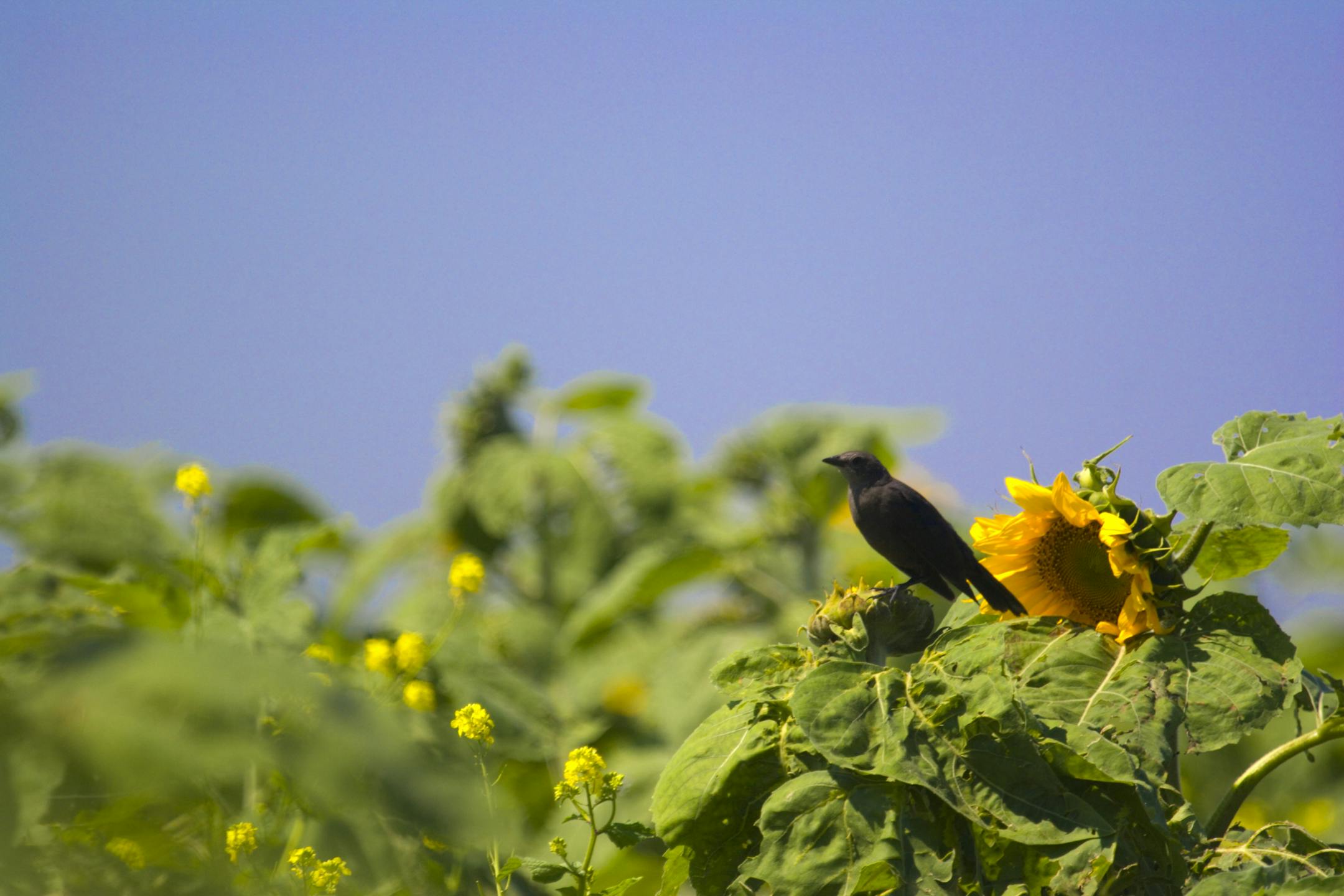
blackbird on sunflower
MIgrating flocks of hungry blackbirds can strip a sunflower field in short order, causing significant losses for growers. (Mike Rogal Shutterstock/The Minnesota Star Tribune)

Driving home recently after purchasing a bag of black oil sunflower seeds, I considered the price. I had just paid $6.65 per 10 pounds.

In 2002, that same seed cost $2.99, less than half of what I had just spent.

Black oil sunflower is the favored seed for many of us who feed birds -- because it's favored by many seed-eating bird species. But it's also a commodity traded like corn or crude oil or gold.

On the commodity market, sunflower seed is priced per hundred pounds. On Jan. 31, the market closed at $23.80 per hundred, up almost $3 from the price in mid-January, and way, way higher than a mere four years ago.

Oddly enough, the price increase may have more to do with what we eat than what the birds eat.

The new seed in town

One big factor in demand and price is a new variety of sunflower seed called NuSun. This seed has more oleic acid and less linoleic acid than traditional sunflower seed. Its oil doesn't need to be hydrogenated before being used in processed foods. NuSun has zero trans fat. Your arteries like that. So consumers like that. So demand goes up.

In fact, there's such demand from food producers and restaurants that sunflower oil, pressed from the seeds, is being imported.

That's not the only factor driving up the price.

Sunflowers also compete in certain growing areas for acreage. Ethonol has helped make corn profitable again. Soybeans are in high demand for biodiesel fuel. Safflower seeds, another bird favorite, have become more expensive as the market for safflower oil expands.

Birds partially to blame

Birds may also be part of the problem. Birds are not eating too much seed at your feeders. They are eating too much seed in the field. Red-winged blackbirds get most of the blame.

Migrating flocks of blackbirds can "strip a field," said Ron Haugen, farm management specialist with the North Dakota State University Extension Service.

And, according to Larry Kleingartner, executive director of the National Sunflower Association, birds are one reason the country can't meet its demands for sunflower oil.

"Sunflower growers have significant losses to blackbirds," he said. "They switch to other crops. They don't want the hassle."

In late January, there was a symposium to discuss problem birds -- blackbirds, starlings and crows. It was organized by George Linz, a blackbird researcher with the U.S. Department of Agriculture. I had talked to Linz several years ago when poisoning was suggested as a method of blackbird control. Because blackbirds are a protected species, permits for poisoning under an experimental program weren't issued.

Still, Linz and others agreed that something has to be done about the blackbirds.

"Protection complicates management," he said. "We need more research. We need a repellent. We need a nonlethal approach."

In the meantime, consider your sunflower seed purchase just another investment in the commodities market.

Jim Williams, a lifelong birder, is a member of the U.S. National Wildlife Refuge Birding Initiative Committee, the American Birding Association, Ducks Unlimited, Pheasants Forever and Delta Waterfowl. He can be reached by email at two-jays@att.net.

about the writer

about the writer

More from Minnesota Star Tribune

See More
card image
J. SCOTT APPLEWHITE, ASSOCIATED PRESS/The Minnesota Star Tribune

The "winners" have all been Turkeys, no matter the honor's name.

In this photo taken Monday, March 6, 2017, in San Francisco, released confidential files by The University of California of a sexual misconduct case, like this one against UC Santa Cruz Latin Studies professor Hector Perla is shown. Perla was accused of raping a student during a wine-tasting outing in June 2015. Some of the files are so heavily redacted that on many pages no words are visible. Perla is one of 113 UC employees found to have violated the system's sexual misconduct policies in rece