

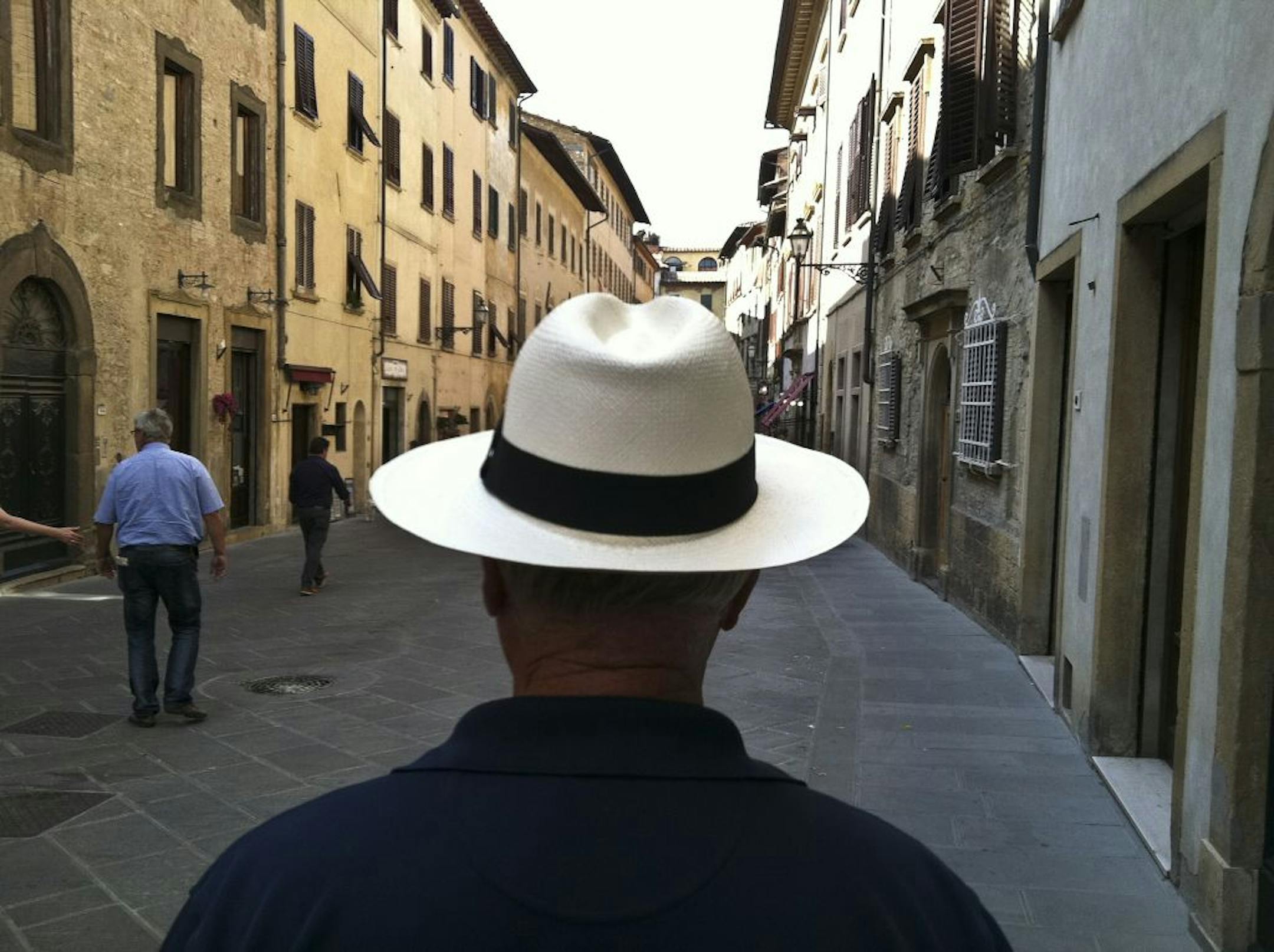
A still life of pears, glistening in a rich Italian light straight out of Caravaggio. Human shapes silhouetted in a shaft of sunlight against the darkness of an Umbrian church. A neighborhood girl in a playful moment. A line of old men sitting in a park, enjoying the warmth of the Umbrian sun.
I captured all these moments with an iPhone 4. They are products of my photographic journey to record daily life in the hill towns of Umbria and Tuscany using only the camera built into my smartphone. Though I am a Star Tribune photographer and have all the equipment required of a professional, what little I had brought with me mostly stayed in the hotel room. It seemed fitting to capture Italy using a camera developed by Steve Jobs, the Leonardo Da Vinci of our generation.
For travelers, snapping photos with a phone may be the best way to bring home vacation memories: nothing heavy strapped around your neck, no fear a camera will be stolen, no worries it will mark you as a tourist. When you happen upon a lovely scene, after all, the best camera is the one you have with you -- and we almost always have our phones.
Like other smartphones on the market, my iPhone astounds me with its capabilities. It handles the dark interiors of churches and landscapes of chalky Umbrian roads under brilliant blue skies. It manages low-light situations well, a point proven with images I took when I happened upon a religious procession on the narrow streets of Orvieto.
The images are 5 megapixels, as large as those shot with a medium- to high-end point-and-shoot. The "tap" focus and exposure feature lets me control which part of the image shows most sharply, whether the subject is centered or not. Once I've framed a shot, I just touch my finger on the section of the image I want to highlight, and the camera adjusts accordingly before I click the shutter.
The iPhone 4 also has a "geo-tagging" option that, when turned on, records the longitude and latitude coordinates of where the photo was taken, as well as the date and time.
One of my favorite options is "HDR," an acronym for High Dynamic Range. This creates three exposures and overlays the best values from each to yield a sharper and better exposed image. I used it to make most of the photographs on these pages.
Plenty of other smartphones -- such as the Motorola Droid 2x and the Droid Incredible 2 -- offer the same kinds of features and file size. The newly released iPhone 4S features a better lens than the one on my iPhone and takes 8 megapixel images. All of these phone cameras capture a scene as well, if not better than, most standard point-and-shoot cameras and are just as easy to use.


