

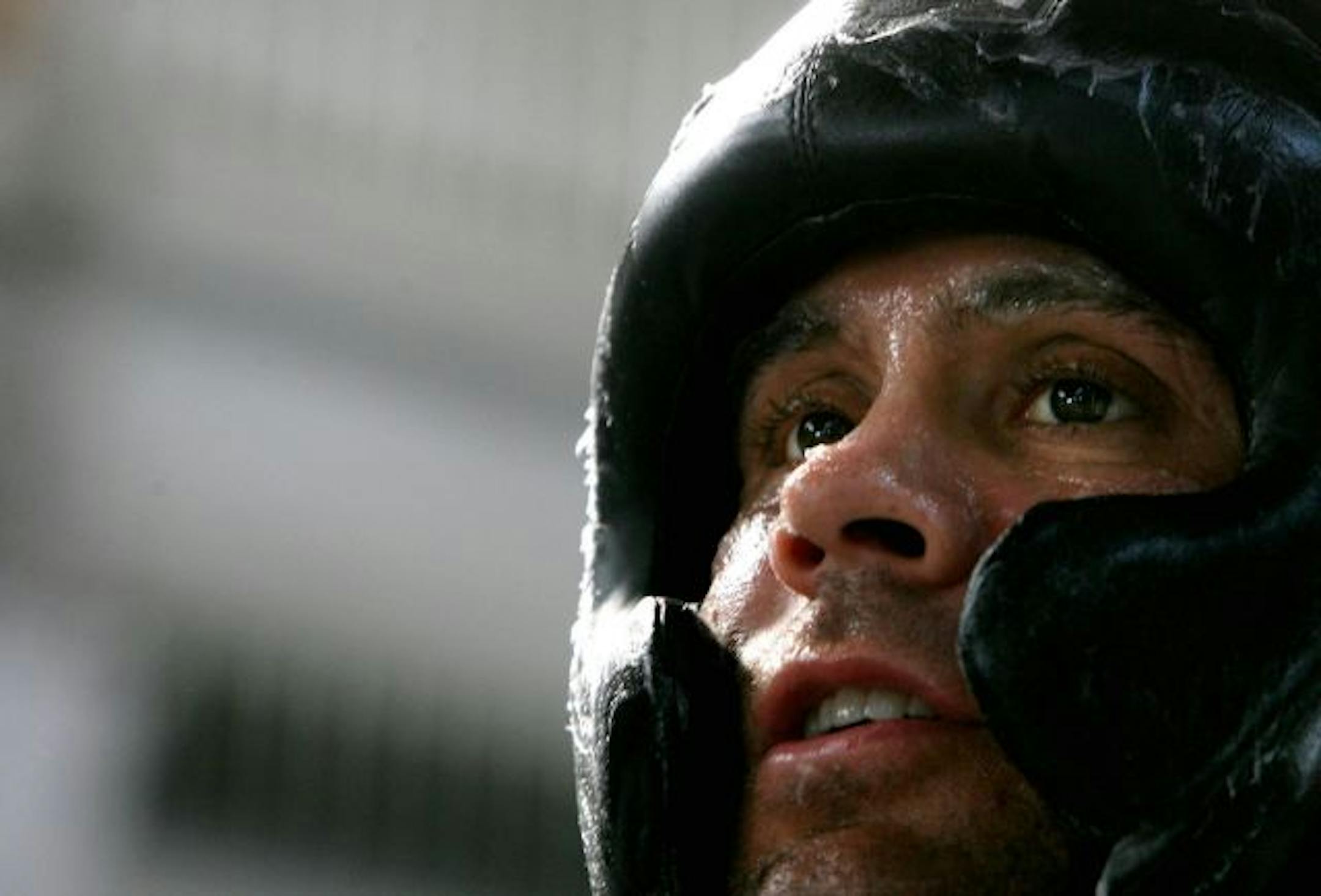
Anthony Bonsante had been contemplating retirement for some time. At age 38, the Shakopee boxer knew he was pushing the limits of his time in the ring, but he found it difficult to fully embrace the next phase of his life when he still felt so vital and strong.
As he prepared for last Saturday's fight against Andy Kolle -- 12 years his junior -- Bonsante reveled in the routine of cutting weight and refining muscle. And when he struck the canvas in the third round, victim of Kolle's pile-driver of a left hand, he knew instantly that it was over. Bonsante announced he is ending his 13-year pro career, stepping out of Minnesota's crowded middleweight division after 2 1/2 years as its champion and a longer run as one of the state's most popular boxers.
He felt certain of his decision, but that didn't make it any easier to leave. When the staff at Hinckley's Grand Casino began tearing down the ring, Bonsante asked them to stop, then summoned his family to join him for a final photo inside the ropes.
"It was tough, really tough," Bonsante said, his voice still halting with emotion the day after the fight. "I didn't want it to end, but it did, and I know it's going to take a while to sink in.
"I knew if I couldn't beat Andy, there was no way I could get back to the top. And if I can't get back to the top, there's no point in staying. I've had a great career, with a lot of great people looking out for me, and it's been a lot of fun."
Bonsante steps away with a 32-11-3 record, two title belts, memorable bouts at Madison Square Garden and Caesar's Palace and a measure of celebrity from his stint on the reality-TV show "The Contender." More importantly, he proved that every fighter does not wind up broke and broken.
Pro boxing has declined in the American consciousness largely because of its inability -- or unwillingness -- to rid itself of the crooked promoters and self-serving managers who exploit young talent. Bonsante avoided that trap by surrounding himself with people of integrity, including longtime trainer Bill Kaehn and cornerwoman Lisa Bauch. His broad and well-grounded view of life, shaped in part by college and fatherhood, led him to maintain control of his career.
Bonsante understood from the beginning that boxing is a gift with an expiration date. He kept his job as a supervisor at Shakopee's Kmart warehouse, where he has worked for 16 years, and lived a modest lifestyle with a plan that reached well beyond the ring. Because he never viewed himself solely through the athlete's narrow prism, he is able to retire from the game with his body and mind intact.


