

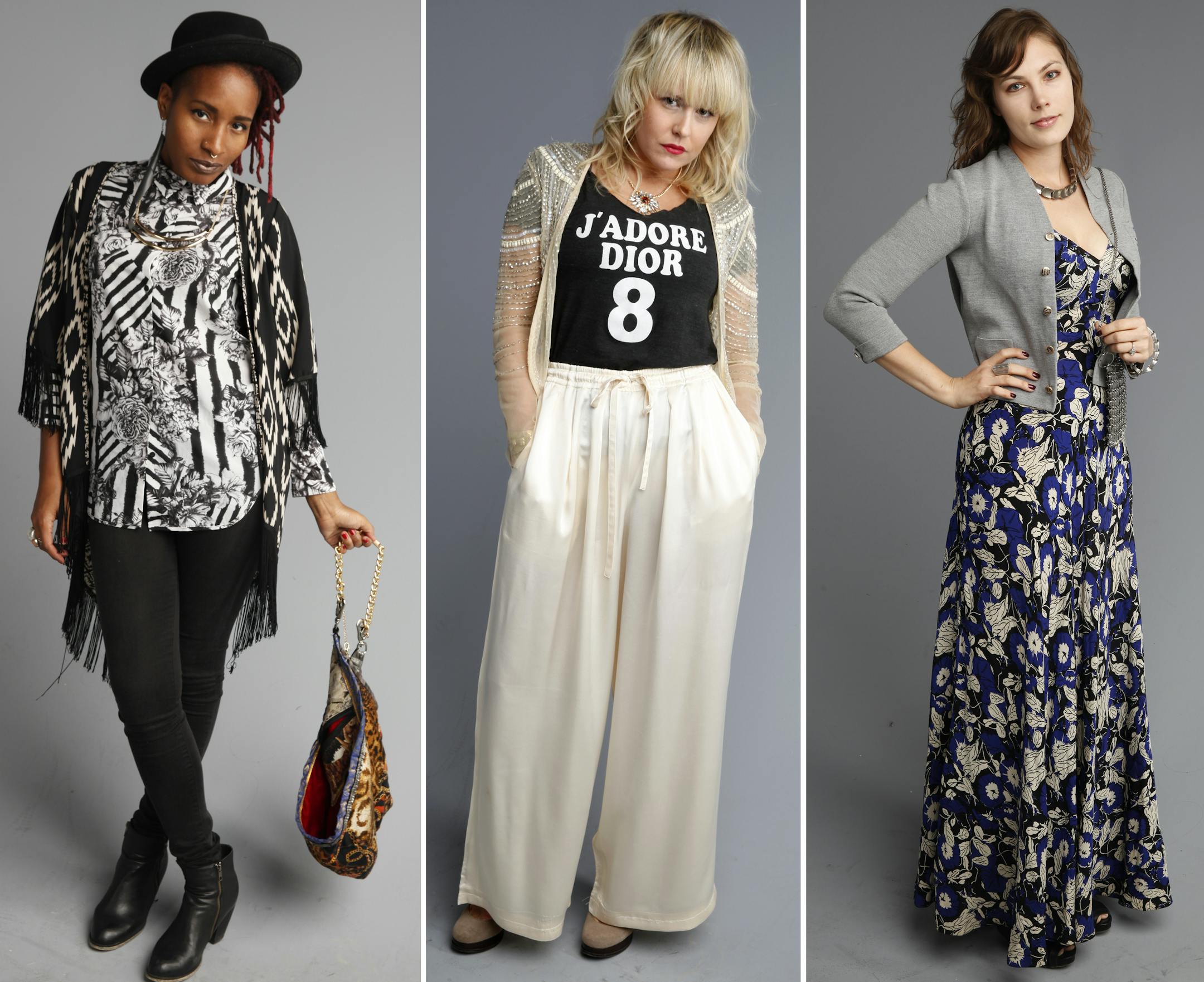
Everyone has that friend who thrifts at Savers but looks like she just stepped out of Saks — as if she's part of a secret shopping society with a mission to score a Chanel handbag for $20.
Thanks to the recession, women who didn't blink an eye at paying retail for a pair of Manolo Blahniks embraced a cheap chic fashion philosophy. The economy eventually improved, but it turns out high fashion at discount prices is a hard habit to break.
"Once you realize you can get designer clothes at thrift stores, it's hard to go back," said Emily Kanz, 34, of Minneapolis.
It helps that the secondhand experience now comprises a wider range of shops — from Goodwill to higher-end resale boutiques like June. Purchases at that Uptown shop are wrapped in tissue paper and tied with a bow. Owner Daune Stinson said secondhand stores also give women more liberties to take risks.
"Women are more likely to buy out of their fashion comfort zone when they don't have to pay full price," she said.
The number of secondhand stores have increased nationally by 7 percent in each of the past two years, according to industry reports.
The recession made secondhand "acceptable and even cool," said Allison Bross-White, the owner of B. Resale, a midpriced Minneapolis shop that's doubled its sales and space in four years. "There's a wider mix of customers — from hipsters to career women."
To prove that personal style doesn't have to be influenced by a price tag, we challenged three women to style themselves on a dime. Their tastes run the gamut, from thrift stores to boutiques to estate sales.
![Sarah White models an outfit from a mid-tier resale store like B. Resale.The worlds of finance and fashion have bonded in a new way. The market for secondhand clothing and accessories is booming, even among the most stylish people. ].Richard Tsong-Taatarii/rtsong- taatarii@startribune.com](https://arc.stimg.co/startribunemedia/WC2RSCSGOUHDPDJJIF5QG5JQIY.jpg?&w=1080)
![Caitlin Karolczak models an outfit of high-end finds from estate sales and top-tier consignment storesThe worlds of finance and fashion have bonded in a new way. The market for secondhand clothing and accessories is booming, even among the most stylish people. ].Richard Tsong-Taatarii/rtsong- taatarii@startribune.com](https://arc.stimg.co/startribunemedia/23N23HKO57IE2VAONBOF4H2GOA.jpg?&w=1080)
![Emily Kanz models a look she put together using mostly items for low-end thrift stores like GoodwillThe worlds of finance and fashion have bonded in a new way. The market for secondhand clothing and accessories is booming, even among the most stylish people. ].Richard Tsong-Taatarii/rtsong- taatarii@startribune.com](https://arc.stimg.co/startribunemedia/DBHML2HANNXXDIH5YVETTKW7RI.jpg?&w=1080)


