

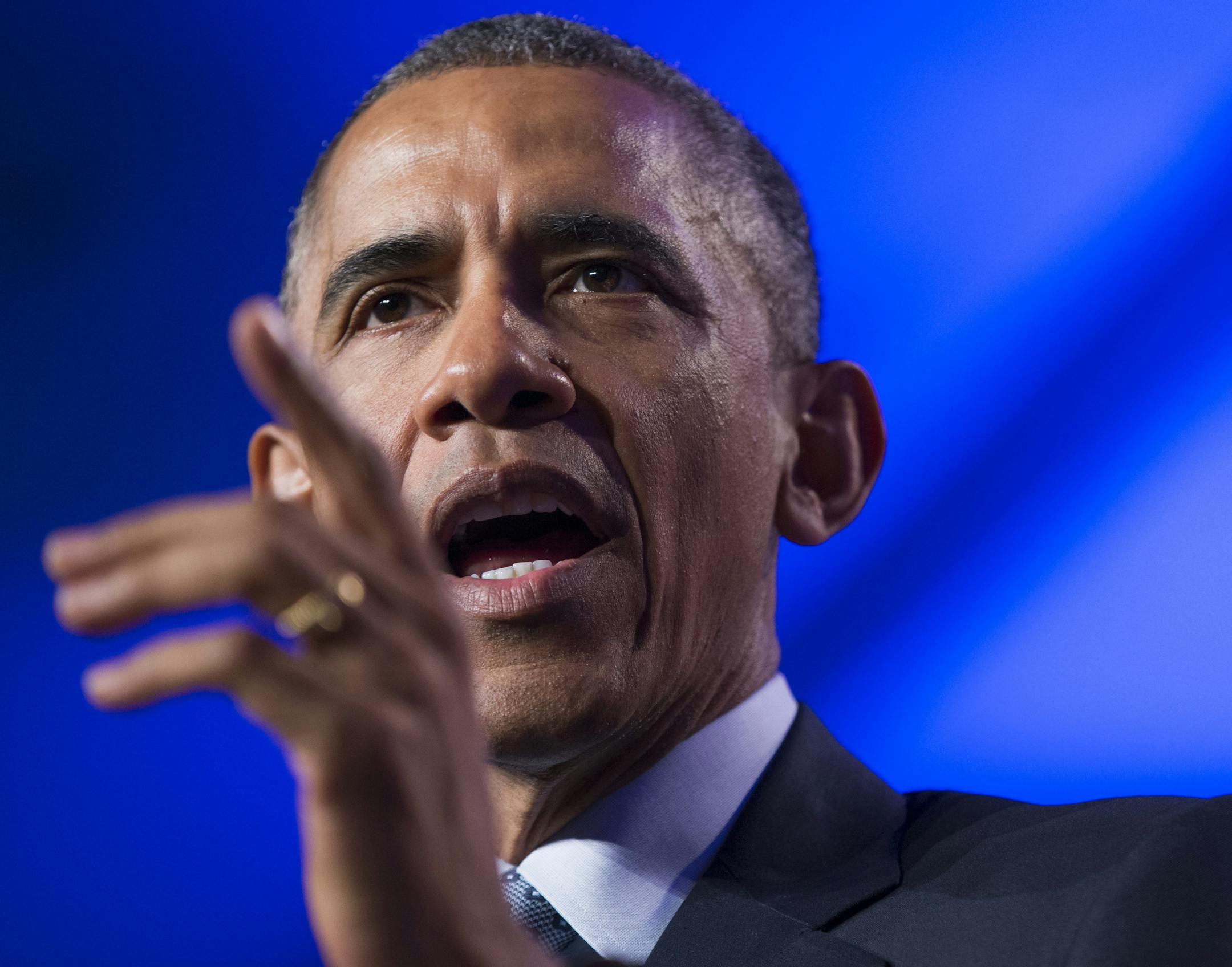
WASHINGTON — Tapping the anxieties of aging baby boomers, President Barack Obama on Monday called for tougher standards on brokers who manage retirement savings accounts, a change that could affect the investment advice received by many Americans and aggravate tensions between the White House and Wall Street.
The Labor Department submitted a proposal to the White House Monday that would require the brokers who sell stocks, bonds, annuities and other investments to disclose to their clients any fees or other payments they receive for recommending certain investments.
"If you are working hard, if you are putting away money, if you are sacrificing that new car or that vacation so you can build a nest egg for later, you should have the peace of mind of knowing that the advice you are getting for investing those dollars is sound," Obama said in a speech to the AARP, the retiree advocacy group. "These payments, these inducements incentivize the brokers to make recommendations that generate the best returns for them but not necessarily the best return for you."
The proposed rule, which could be months away from actual implementation, has been the subject of intense behind-the-scenes lobbying, pitting major Wall Street firms and financial industry groups against a coalition of labor, consumer groups and retiree advocates such as the AARP.
Americans increasingly are seeking financial advice to help them navigate an array of options for retirement, college savings and more. Many people provide investment advice, but not all of them are required to disclose potential conflicts of interest.
Under current rules, brokers are required to recommend only "suitable" investments based on the client's finances, age and how much risk is appropriate for him or her. The rules would make brokers handling retirement accounts obligated to put their clients' interests first.
"The challenge we have is right now there are no uniform rules of the road that require retirement advisers to act in the best interests of their clients," Obama said.
The Labor Department's proposal must now undergo an internal review by the White House budget office. After that, it likely will be put out for public comment for several months.


