

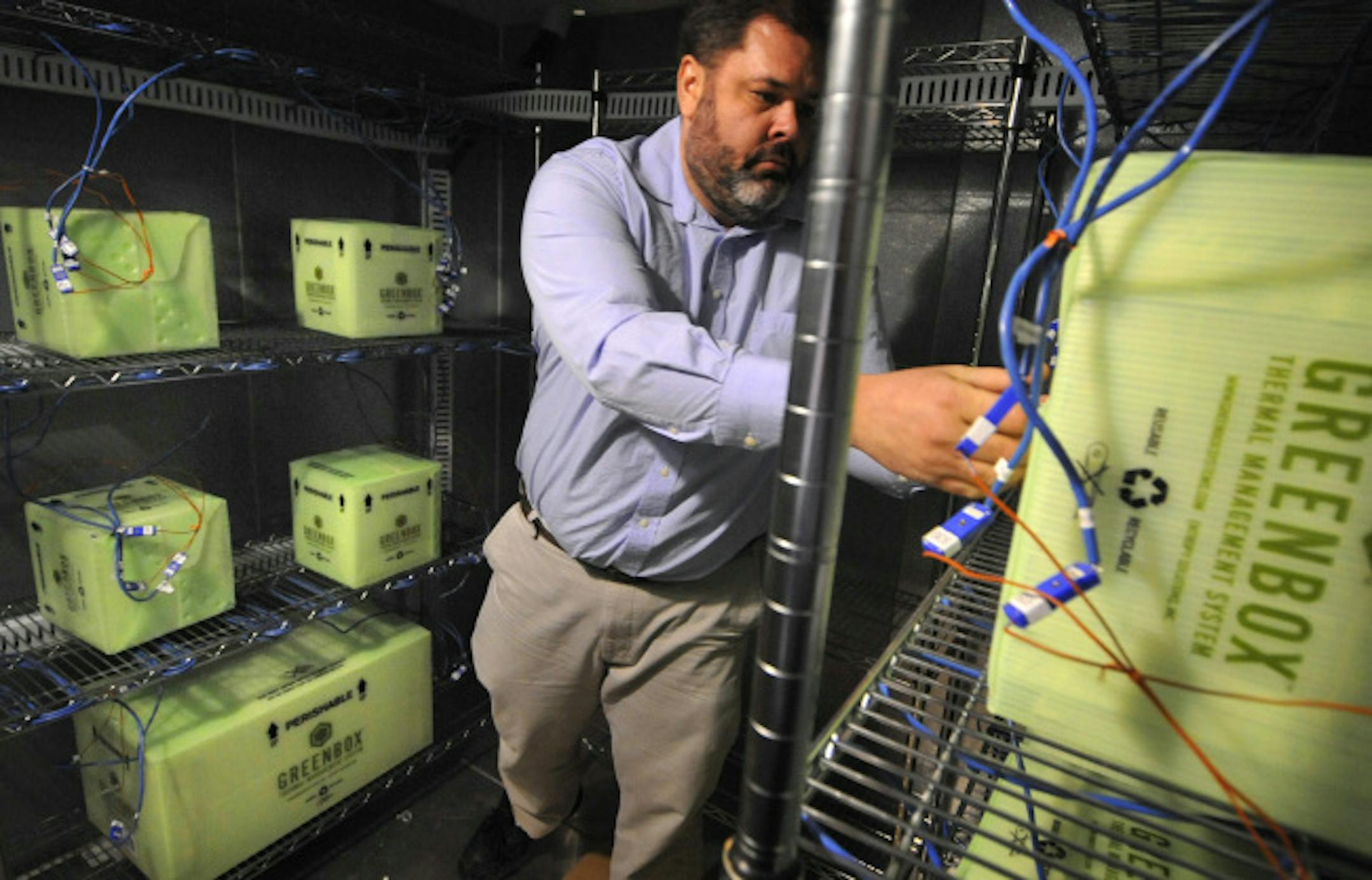
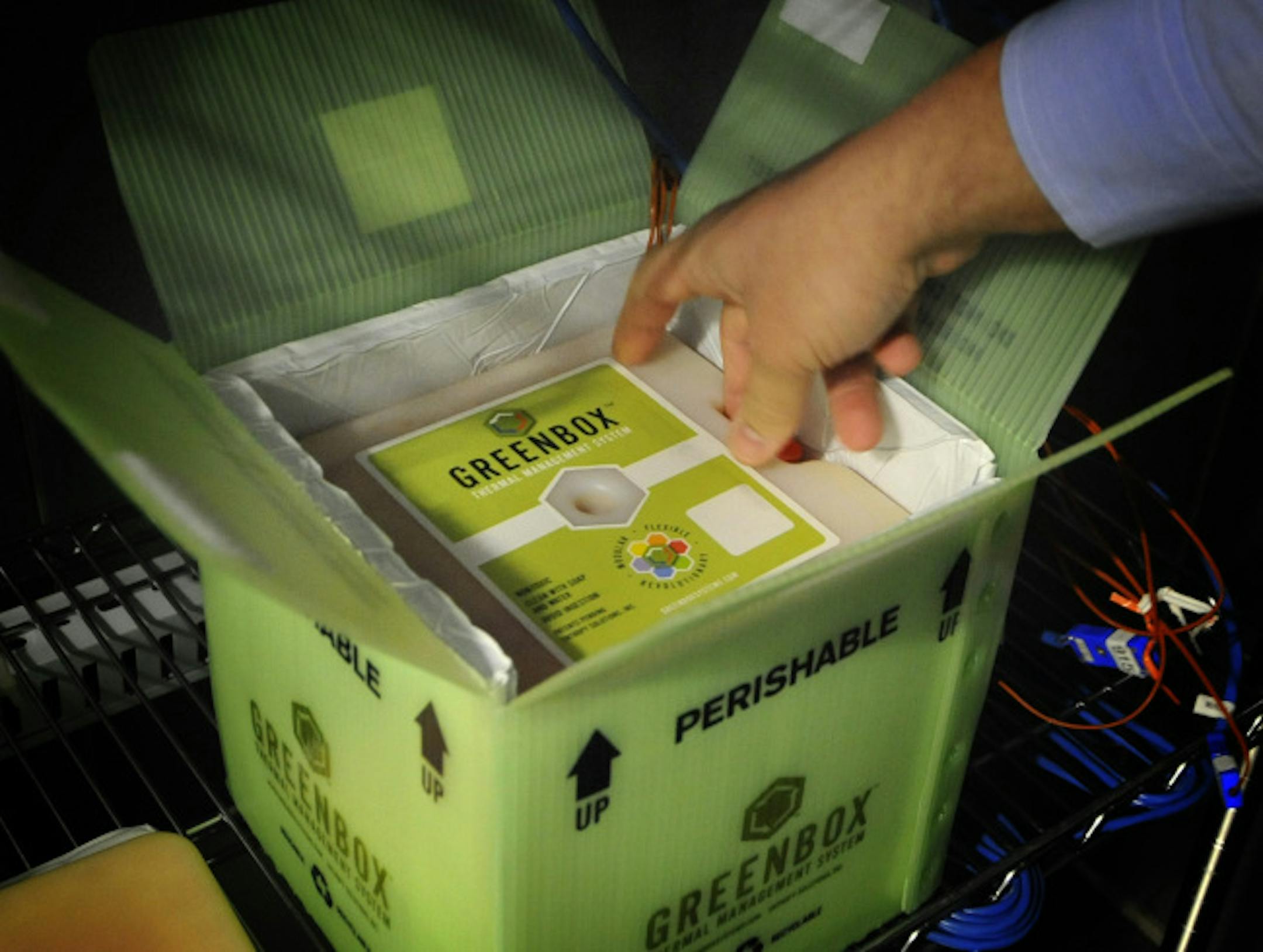
Entropy Solutions Inc. believes its box packs quite a punch. Not to mention blood, vaccines, human organs and even ice cream.¶ The Eden Prairie-based start-up has developed a high-tech packaging system that can maintain pre- programmed internal temperatures to protect perishable products like food and medical supplies for five days, long enough to reach most destinations around the world. Dubbed the "Green Box," the system, which consists of an outer shell, insulation panels, and packs of special "phase changing" materials, can be reused many times, the company says.
"Green Box will never find its way into a landfill," said Entropy President Eric Lindquist.
Entropy's customers include Wal-Mart Speciality Pharmacy, Medtronic Inc. and Memorial Blood Centers. The company, which did not disclose revenue figures, has not yet sought the venture capital that it will need to expand. But some investors say the technology appears to fill a pressing market need.
"It has the ability to solve a problem related to shipping temperature-sensitive materials over distances that cannot be solved by today's current solutions like couriers and overnight shipping," said Peter Birkeland, chief financial officer of Rain Source Capital, a St. Paul-based network of angel investors. "The question is ... 'is the market large enough to make the business a commercial success?'"
Founded in 2003, Entropy was the brainchild of Mark Wallace, a chemical engineer. Wallace, who worked at Cub Foods, was frustrated to see shipments of ice cream arriving at supermarkets already melted. He began to work on packaging that could better protect food.
Wallace died in 2006 and Entropy eventually shifted its focus to the transportation of biological, medical and pharmaceutical products, a $62 billion market "where we felt we can make the biggest difference in the short term," Lindquist said.
The company's main challenge is to explain the technology and its benefits to customers, Lindquist said.
Experts say drugs and vaccines often spoil due to extreme temperature variations during shipping. This waste costs the federal Vaccines for Children Program $20 million because of bad refrigeration, expiration, and shipping damage.


![Attendees of Frostbike made their way through the convention Saturday at the Quality Bike Products campus in Minneapolis. ] (AARON LAVINSKY/STAR TRIBUNE) aaron.lavinsky@startribune.com Frostbike 2016 was held at the Quality Bike Products Campus on Saturday, Feb. 27, 2016 in Bloomington, Minn.](https://arc.stimg.co/startribunemedia/NH2BSHB74ND2V6GF2G2HI5X4MM.jpg?&w=252&ar=3:2&fit=crop)
