

From space, the U.S. Midwest is more brown belt than farm belt right now.
At this time of year, a band of deep Kelly green should spread from Ohio to North Dakota as corn and soybeans race to pack on size before they pollinate and bear fruit. But 2019's unprecedented rains have uprooted the typical course of events. Some crops are waterlogged and stunted. Others won't be planted at all.
Unplanted, drowned or late fields have two things in common: They look brown from space, and they mean farmers will probably harvest less corn and soybeans this year than they had planned.
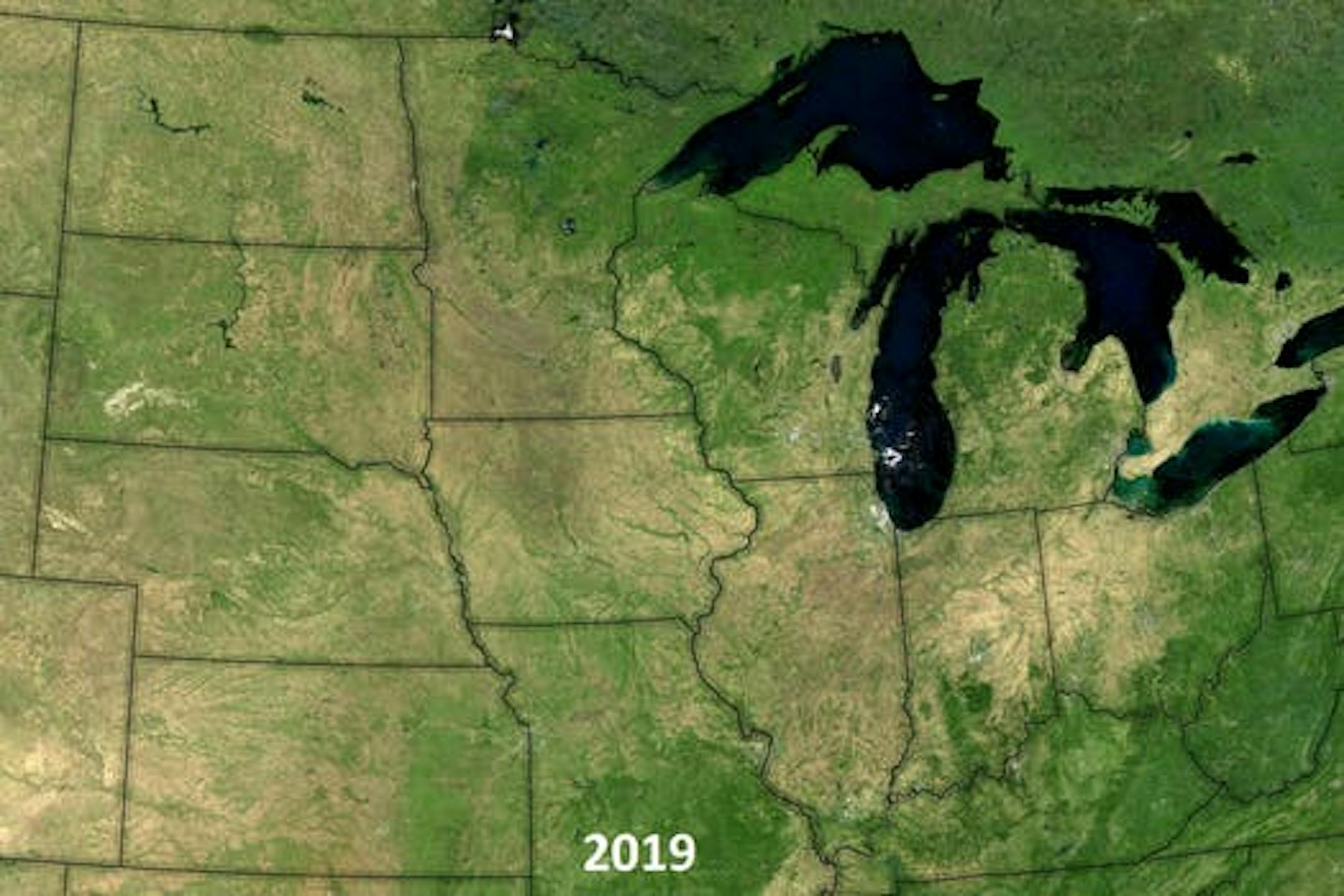
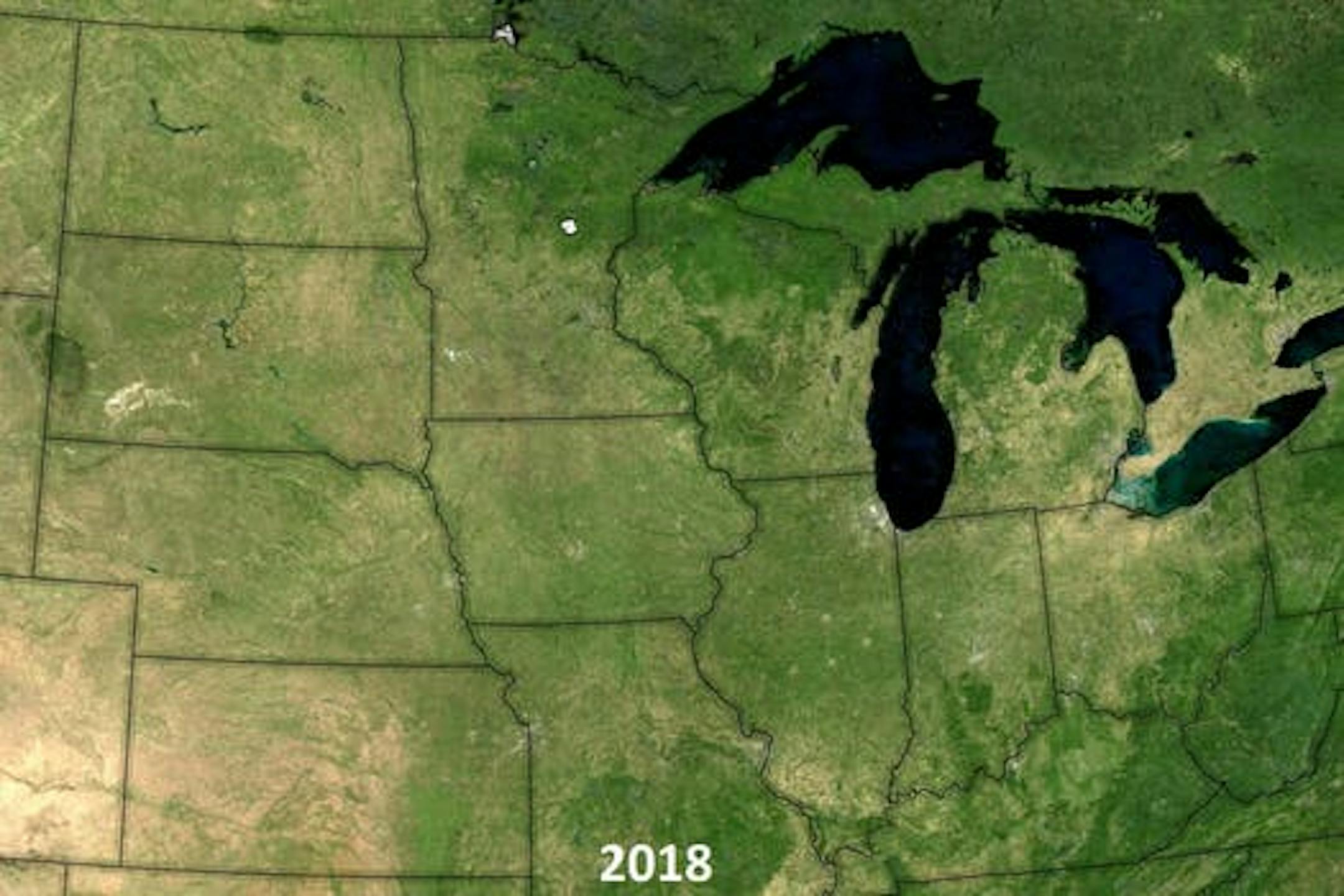
(NASA/MODIS) Composite satellite images created by The Washington Post show Midwest farmland in late June 2018 and the same week in 2019. Some farms were devastated by the deluge, particularly smaller family operations that lacked insurance coverage and those that were washed out by flooded rivers. But thanks to a recovery in commodity prices and what University of Illinois economist Scott Irwin estimated will be a $20 billion infusion of federal money, those that are not knocked out by this perilous planting season are likely to come out of the disaster ahead.
As seeds begin to germinate and emerge, corn and soybeans are further behind than they've ever been at this point in the year, according to about four decades of data from the Agriculture Department.
For corn, planting is effectively over and the die has been cast, although we won't know the results until late fall. Soybean acres are not likely to be fully planted, either — the end of the planting window, unofficially considered to be July 4 — looms large.
Now, beleaguered farmers will attempt to wring a respectable harvest out of fields Irwin likened to a "war zone for growing corn and soybeans."
"Everything that could go right went perfect for growing corn and soybeans last year," he said. "This year has been pretty much the opposite. So far, everything that can go wrong has gone wrong."


