

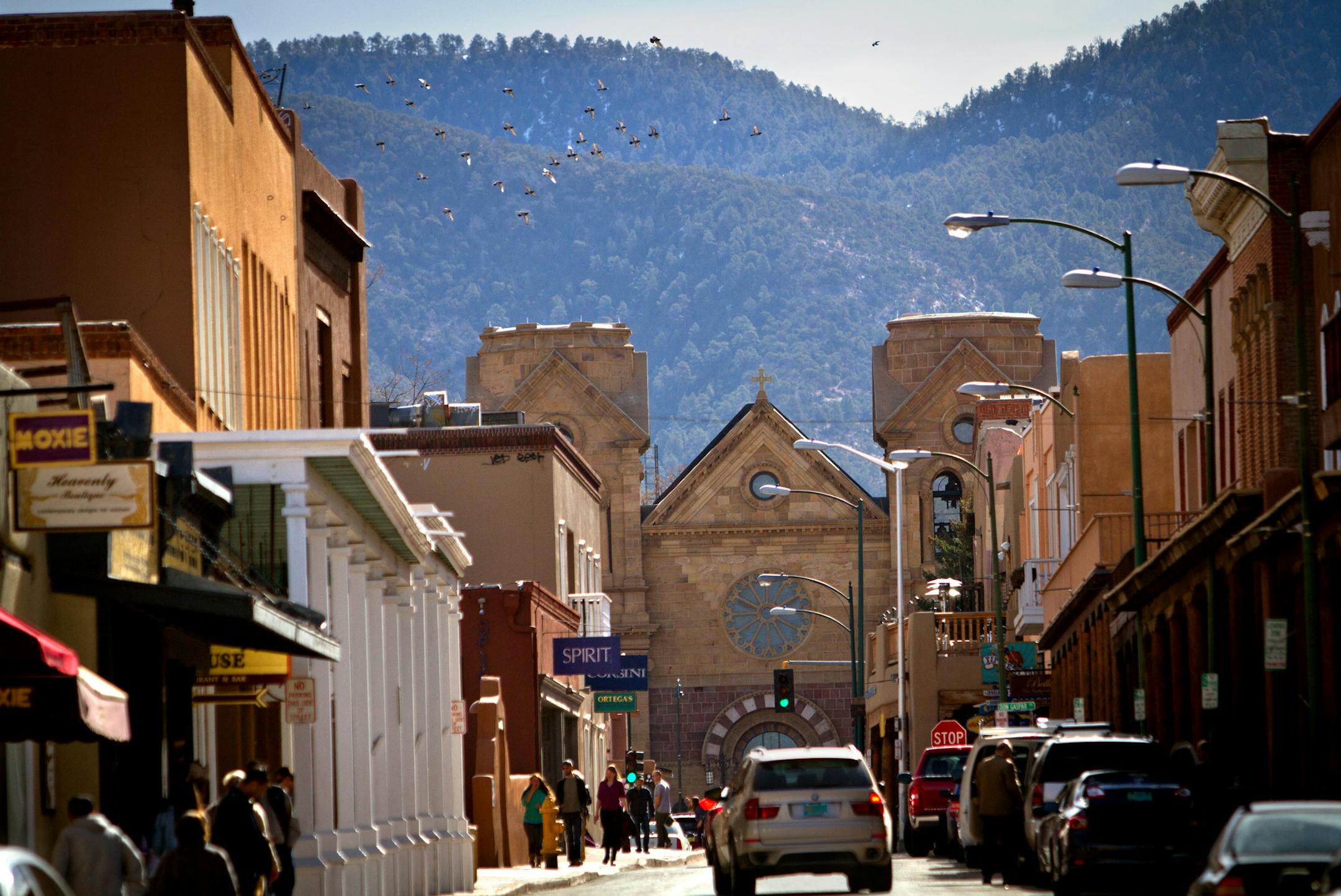
You can visit Santa Fe for the jewelry. You can go for the high desert air. You can walk the landscape that inspired Georgia O'Keeffe or hear opera under a canopy of stars.
But me? I went for red chile.
And there it was, spread over a fat enchilada and spilling across the white china platter — smoky red, tart and spicy, with a lingering burn that said: What took you so long to come back?
My wife and I first visited Santa Fe in 1994 and decided it was the perfect destination for people who like to hike and eat. Beautiful trails and unforgettable ruins lie within an hour's drive in any direction; spend the day working up a sweat in the rugged terrain, and by sunset you're sitting down to a table spread with chicken mole, chile rellenos and other specialties that have made Santa Fe the capital of "New Mexican'' cuisine.
Since our inaugural trip, Santa Fe's restaurant mix has only grown richer. Coyote Café made Mark Miller the celebrity chef of the Southwest and the Italian-inspired Trattoria Nostrani was named one of the nation's 50 best restaurants by Gourmet magazine. Meanwhile, humble cafes like Tia Sofia serve burritos so good and so cheap that customers spill out the door and down the sidewalk.
On a recent visit we explored the territory in between: restaurants that take Southwestern food to new heights, but without high-altitude prices. These are creative but casual places where tomatillos meet Brie and green chiles invigorate a plate of gnocchi. We weren't disappointed.
But first you have to work up an appetite.
For a nice easy stroll, spend a morning in old Santa Fe, a precinct of art galleries, cafes and high-end shopping that radiates from the 17th-century town plaza. History lies layers deep in Santa Fe — Pueblo Indian settlers, Spanish colonial governors, cowboys just off the Santa Fe Trail, and bohemians like O'Keeffe and D.H. Lawrence have all found it a compelling destination. Much of that history is preserved in fine, small museums around the plaza and by a municipal building code that honors the "Santa Fe style'' of construction, giving the city an architectural unity so strong that even Wells Fargo and Starbucks occupy adobe structures with protruding viga beams.


