

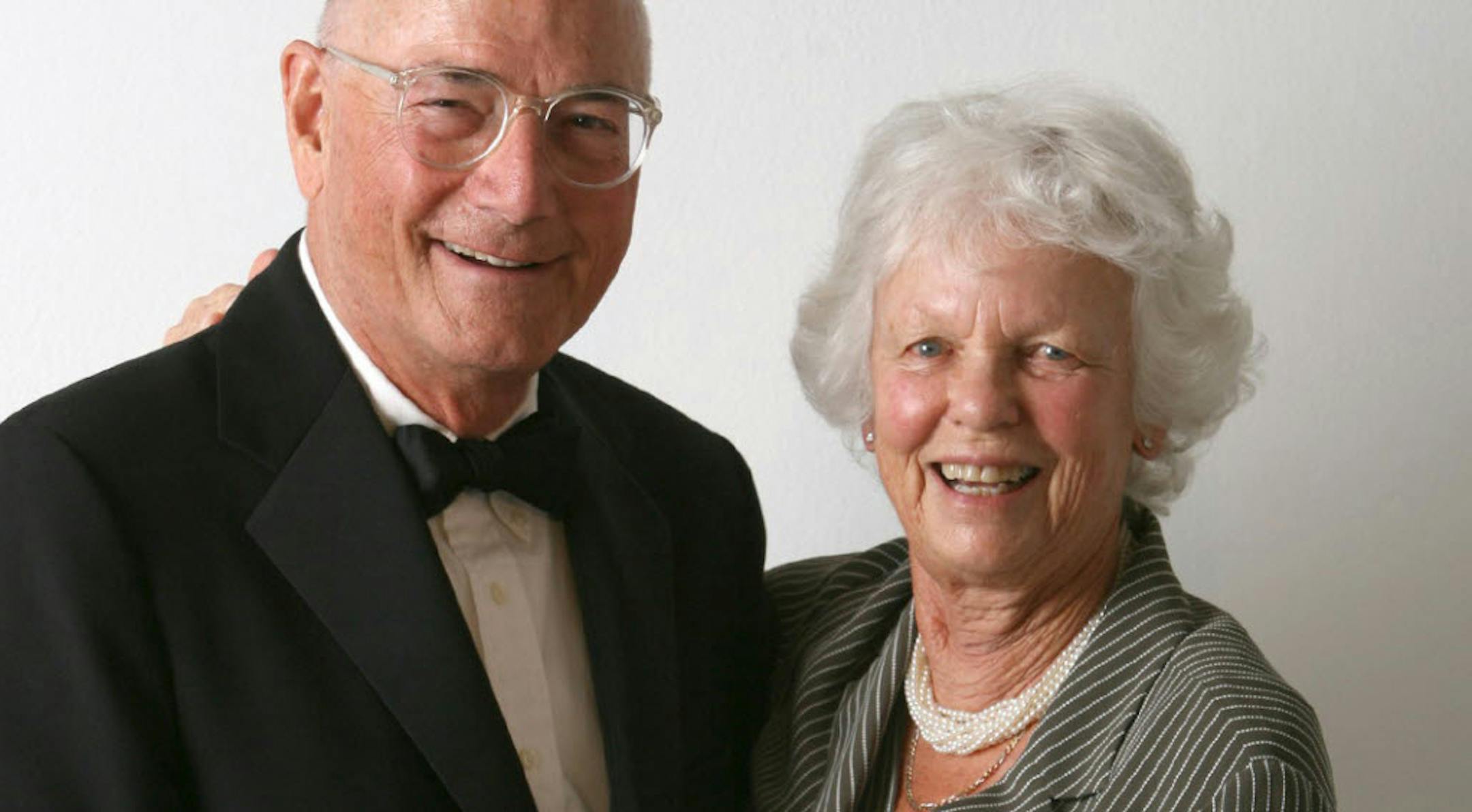
Sage Cowles, a former dancer who matured as a key Twin Cities philanthropist, died Thursday. Cowles, 88, advocated for the arts and the value of physical development in education. She and her late husband, John Jr., supported the Guthrie Theater, Walker Art Center and the local dance community — which named its annual awards program after her.
The Cowles Conservatory in the Minneapolis Sculpture Garden, the Cowles Center for Dance in Minneapolis and the University of Minnesota's Jane Sage Cowles Stadium for softball reflect the breadth and depth of their belief in community service.
"There was a generation that John and Sage were in the middle of," said Philip Bither, performing-arts curator at the Walker. "They were enlightened philanthropists who decided to take it upon themselves to make sure Minneapolis would be a world-class cultural destination. It wouldn't have happened without that vision and generosity."
Cowles was born Jane Sage Fuller in Paris and grew up on the East Coast. She studied dance at the School of American Ballet in New York and graduated from the University of Wisconsin in 1947 (she was a descendant of Lucius Fairchild, an early governor of Wisconsin). As a young student with the Martha Graham Company, she met Merce Cunningham, which led to a lifelong relationship. She co-chaired Cunningham's dance foundation for four years and instigated the epic performance of the choreographer's work "Ocean," in a granite quarry outside St. Cloud in 2008, the year before Cunningham's death.
Cowles pursued a dance career, working in the Broadway musical "Bless You All" and on television in "Lucky Strike Hit Parade" in 1950-51.
A true partnership
In 1952, she married John Cowles Jr., whose family owned the Star and Tribune newspaper company. The two formed a symbiotic partnership — he quiet and cerebral, she ebulliently demonstrative. Their friend George Plimpton once described them as "a wonderfully complementary pair. He's so self-contained and with her, it's on the surface."
They also supported each other's causes — the arts, education, athletics and early-childhood development. In a 2006 paper for the Humphrey Institute of Public Affairs, she urged funding for plans that educate "the whole child." The body, she wrote, is "central to the learning process" and not "a second-class citizen, separate from the mind."
In 1989, Cowles held the U.S. record for women race walkers in her age group at 5 and 10 kilometers.


