

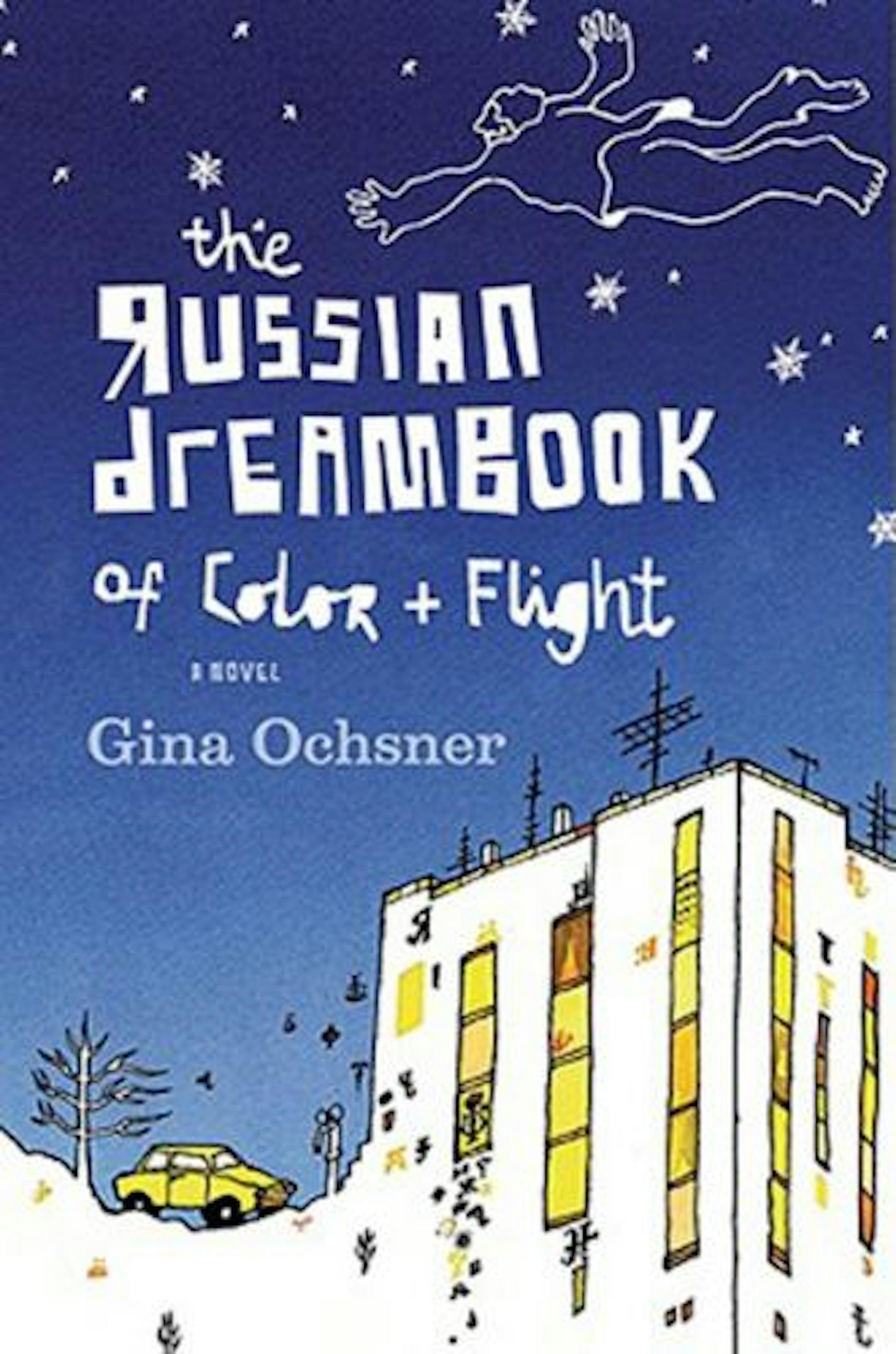
In "The Russian Dreambook of Color and Flight" (Houghton Mifflin Harcourt, 384 pages, $23), Gina Ochsner lifts the roof off of a single apartment building in the uniquely challenged post-Soviet Russia, letting us peer inside to examine the intersecting lives of its residents.
The book's chapters rotate through four main characters: 44-year-old Olga, Olga's 21-year-old son Yuri, 23-year-old Tanya, and middle-aged Azade. In the first chapter, Azade's drunkard, abusive husband, Mircha, commits suicide by jumping off the apartment building's roof. While this may make him dead, it doesn't make him gone; it's not long before his ghost begins to appear, not only to highly superstitious Azade, but also to several others in the building. Though initially a bit surprised, they generally act as if this is not an unusual development.
Mircha continues to pop up and impart (largely unsolicited) advice and opinions even as Ochsner moves into the other story lines: Olga is increasingly uncomfortable with her unethical newspaper job, where she is required to translate not only from one language to another, but also from fact to euphemism-heavy quasi-truth. (Looking at the production floor, she thinks: "How could they stand it down there, pummeled by the noise of all those words, none of them quite accurate?") Azade is almost desperately homesick for the Caucasus mountains. Yuri, enamored of fish and their undersea world, goes fishing every chance he gets, trying to escape the ticking in his head brought on by shell-shock in Chechnya. And Tanya, when not working at one of a few low-level jobs at a bogus art museum or fretting over the impending visit of a group of potentially grant-bestowing Americans, dreams about working as a flight attendant up among her beloved clouds. She carries with her at all times a "cloud notebook" in which she writes her musings about various subjects, including colors and the sky.
"Dreambook" seamlessly integrates several levels of reality. The meat of the book consists of day-to-day concerns: workplace annoyances, family troubles, romances, reminiscences. Set against a backdrop that includes factual details of historical events (including the difficulties of adjusting to life in the "new" Russia), the book can at times feel relatively straightforward. But keeping the reader from becoming too comfortable are delightful, intriguing splashes of magical realism, whether in people's lack of surprise at Mircha's post-mortem visits, their apartment building's spontaneous, relatively rapid sinking into mud, or the pack of slightly too feral children that holds sway over the building's courtyard.
Across all levels is Ochsner's fluid, poetic storytelling, conveying dry wit and imaginative metaphors. Although Tanya is the one with the cloud notebook, "Dreambook" is filled with dreamers, dreaming of their pasts, their futures and the different forms of truth, beauty and art.
Kim Hedges is an editor and book reviewer in San Francisco.


