

The style of your running shoes isn't just making a fashion statement. It may be controlling the way you run and setting you up for injuries down the road.
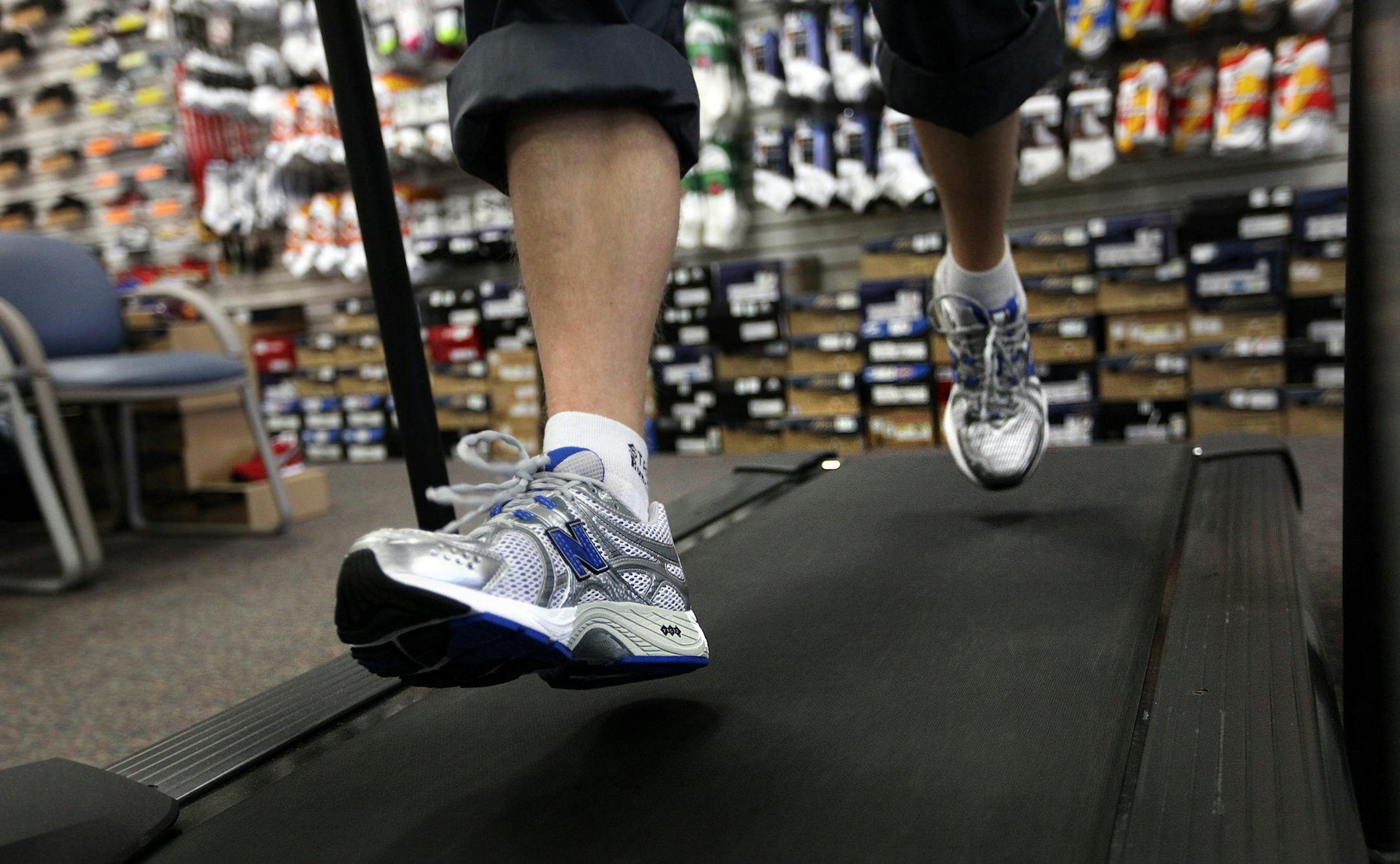
That's what researchers at the University of Kansas Hospital found when they put a dozen high school athletes through their paces on a treadmill. When the teens ran barefoot or in flat-soled racing shoes, they generally landed on the front halves of their feet, the researchers said. But when the young athletes put on standard-issue running shoes with thick, cushioned heels, they instantly switched to a radically different gait, striking the treadmills with their heels.
Although there is no direct evidence that landing on your heels leads to long-term injury, some experts say that running this way may over time increase wear and tear to knees and hips.
"It may be more natural to land on your forefoot. It's uncomfortable to land on your heel," said Scott Mullen, a University of Kansas sports medicine specialist who co-authored the study. "But there's something in the makeup of the [cushioned] shoe that promotes that kind of heel strike."
Mullen, a marathoner and triathlete, put the teens on a treadmill to add some perspective to the growing reaction among runners against thick-heeled shoes. In fact, the relative merits of different shoe soles have become regular topics of debate in recent years.
Barefoot running or running in "minimalistic" shoes with as little as a third of an inch between the sole of the foot and the ground has become popular as a more "natural" way to run. The idea was promoted by the 2009 bestseller "Born to Run," about the Tarahumara Indians of Mexico, who run for hundreds of miles without injury, wearing thin-soled sandals.
The injury-prevention message has also been fueled by research, including a Harvard study from 2010 that looked at runners in Kenya. The researchers found that even on hard surfaces, barefoot runners who landed on their forefeet gave their bodies less of a jolt than runners who wore shoes and landed on their heels.
Shoe companies, which had been adding padding to their products since the first modern running shoes were developed in the 1970s, changed course. They have come out with a variety of shoes that minimize the difference in the thickness of the heel and sole of the shoe.


